



Do your pearls disappear against a busy pattern or overwhelm a delicate neckline? This guide explains how to let pearls take centre stage or remain a subtle complement by matching their scale, shape, setting and placement to your outfit and silhouette.
Use simple, consistent rules to coordinate pearl size with visual weight, pattern scale and contrast so your accessories appear considered. Thoughtful placement and styling will help you achieve balanced proportion and a clear focal point for every outfit.

Match pearl scale to the visual weight of your outfit
Begin by considering an outfit's visual weight: fabric density, pattern scale, silhouette and colour saturation all influence how large or small a look feels. Heavier knits, closely packed patterns and layered ensembles read as substantial, so balance them with small studs or delicate strands to avoid visual competition. Minimal silhouettes and neutral palettes read light, allowing larger pearls or a single bold bead to become a considered focal point. Use the neckline as a guide to proportion. High necklines and closed collars crowd the throat, so opt for small studs, short strands or a pendant that sits above the fabric, while open necklines, V-necks and strapless cuts create negative space that comfortably carries larger or longer pieces.
Consider your hair, make-up and other accessories. An updo, slicked-back hair or minimal earrings will make pearls more prominent, so choose smaller-scale pieces if you want them to sit more quietly. Control emphasis through contrast in scale and considered layering: pair a delicate choker of small pearls with a medium-sized pendant, opt for graduated strands, or balance a single larger pearl with finer pieces to create a clear focal point. Do a few quick, practical checks before you head out: take a photograph from a normal viewing distance and at thumbnail size, and turn slowly in front of a mirror. If the pearls draw attention when you would prefer them not to, swap to smaller, subtler pieces.
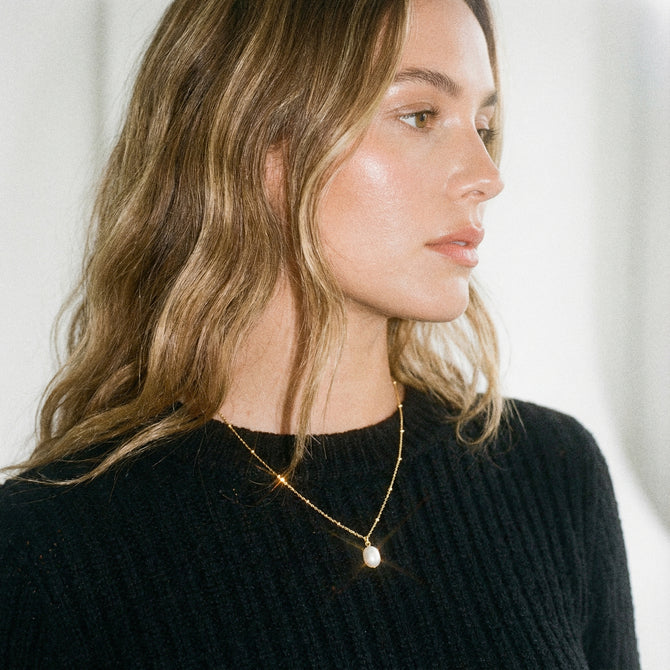
Let a single luminous pearl anchor your look

How to coordinate pearls with pattern scale and colour contrast
Match the scale and contrast of pearls to the print so the eye reads a single, coherent composition. For bold, large-scale prints choose larger pearls or multi-strand pieces; for dense or small-scale patterns favour single studs or petite pearls. Place bright white pearls against darker prints to let them take centre stage, or select cream, champagne or muted tones when you prefer the jewellery to recede. Pair shorter, collar-length strands with high necklines and busy bodices, and reserve longer drops for garments with vertical patterns to reinforce the lines.
Exercise restraint with complex prints. Pair a single strand with multi-colour patterns to avoid visual competition, and reserve layering of two or three strands for solids or minimal prints to introduce texture without overwhelming the outfit. Soften stark geometric motifs with matte pearls, irregular baroque shapes or warm metal settings, and choose high-lustre, perfectly round pearls against simple monochrome patterns for a polished, standout effect. Position pendants over clear or low-detail areas of a print to create a precise focal point, and align necklace placement with the pattern's direction to prevent visual confusion. These choices control visual hierarchy through scale, tone and texture, allowing pearls to take centre stage or recede as required.
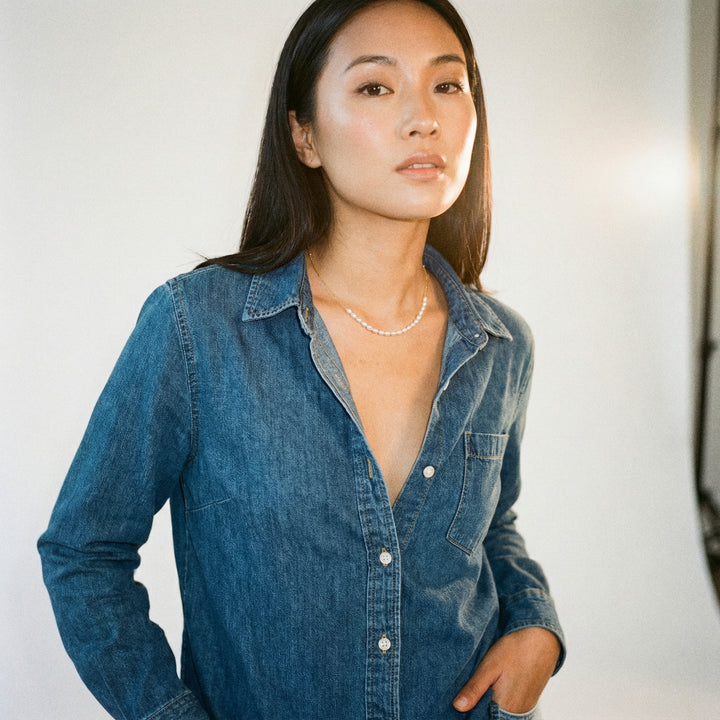
Add a versatile 18-inch layering strand.

Select pearl size, shape and setting to flatter your silhouette
Match pearl scale to your proportions. Smaller pearls or compact studs keep attention subtle on a petite frame, whilst larger, high-lustre pearls provide a clear focal point on medium or larger frames. Pair necklace length with the outfit's neckline to alter perceived torso lines: collar and choker lengths sit high and can make a long torso appear shorter; mid-length strands rest at the collarbone for balance; longer drops or opera lengths form a vertical line that lengthens the silhouette. Hold pieces against your clothing in front of a mirror and photograph from the waist up to see whether the eye is drawn to the pearls or the outfit, and to judge how different earring drops change neck and shoulder balance. Try close-set studs, small drops and longer pendant earrings in side profile to choose how much attention you want around the face.
Use pearl shape and setting to control formality and movement. Round pearls read as structured and reflective, while baroque and drop shapes introduce texture and soften broad angles. Metal settings or halo details can increase the perceived size. Layer thoughtfully: allow one strand or pair to be the focal piece, then add finer chains or smaller pearls to introduce complexity without overpowering your silhouette. Assess combinations in natural light, observing how glossy pearls stand out against matte fabrics while busy prints can overwhelm delicate pearls, so you can decide whether the pearls should take centre stage or recede.
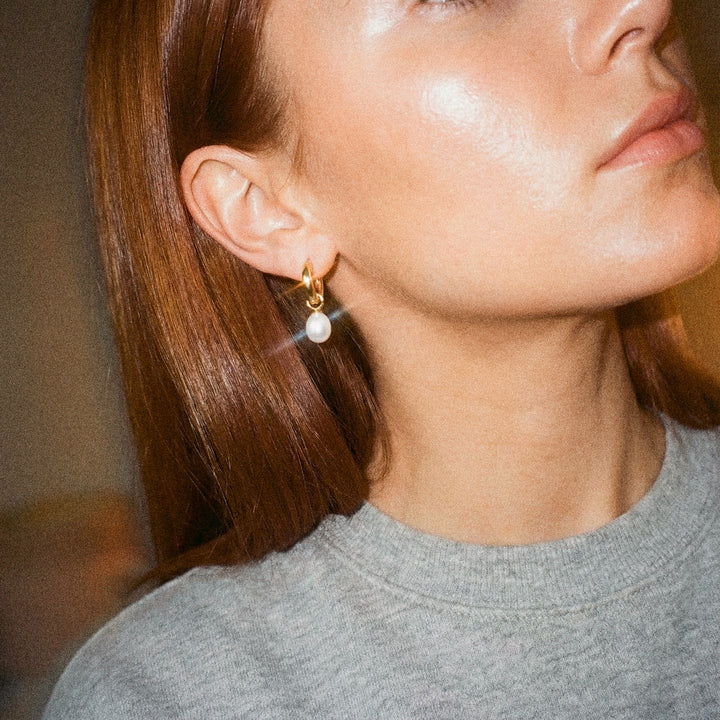
Switch between hoops and drops for versatile everyday polish

Position pearls to achieve balanced proportions and a clear focal point
Place the visual apex deliberately. Centre the largest pearl or a slightly larger bead at the necklace apex so the eye is drawn to a single focal point, or choose uniformly sized pearls for a subtler, even look. Match the pearl scale and spacing to the wearer: select smaller, closely spaced pearls for narrower necks and faces, and larger, more widely spaced beads for broader shoulders or longer torsos. Drape sample strands to judge whether the design feels balanced or overpowering, and mark where the centre pearl sits against the collarbone and sternum to verify the proportion.
Align the lowest point of the strand with the garment opening so the necklace sits above a crew neck, meets the point of a V-neck, or falls to the sternum with low necklines. This creates a harmonious relationship between jewellery and clothing. Control visual weight through knot spacing, discreet metal accents or a subtly larger centre bead, or introduce a gentle gradation of bead sizes to guide the eye without adding bulk. When layering, anchor the composition with a short strand close to the throat, then add a longer graduated strand for depth, staggering lengths so each has breathing space. View the arrangement from several distances to ensure a single, coherent focal point and that proportion feels preserved.
Adds delicate 4mm pearl layering with subtle gold accents.

How to pair pearls with every outfit for effortless elegance
Match a pearl's placement to the neckline to control the focal point. A single pendant or mid-length strand complements a V-neck, while studs or a choker suit a high or crew neck. Long strands work best worn over lower collars rather than tucked inside high necklines to avoid bunching. Select small pearls when wearing busy prints or intricate embroidery so the jewellery recedes into the outfit; opt for larger pearls or multiple strands against plain, structured fabrics to create a deliberate focal point. Choose glossy, high-lustre pearls to stand out against dark or textured fabrics, warm-toned pearls to sit naturally with earthy palettes, and matt, muted pearls for a more relaxed, casual effect. Let contrast determine whether the pearls or the clothing lead.
Anchor your look with one dominant pearl, then layer finer chains or small metal accents at staggered lengths so each element retains its own space. Keep proportions balanced so the chains never overpower the pearls, and choose metal tones that echo other accessories for a cohesive finish. Fasten clasps securely to stop strands slipping into awkward positions, avoid heavy embellishment that might rub or scratch pearl surfaces, and keep perfume, moisturiser and coarse fabrics well clear, as pearls absorb oils and are prone to abrasion. A brief dress rehearsal will reveal any chafing, unwanted noise or misaligned focal points before you step out.
Pearls look their best when their scale, tone and placement are matched to your outfit and silhouette. Proportion, pattern and contrast determine whether a piece takes centre stage or remains a subtle accent. Simple checks such as a photograph taken from a normal distance, a thumbnail view, turning in front of a mirror and trying draped samples will reveal whether the jewellery competes with your clothing or creates a clear focal point.
Use the guideposts in the headings: scale, pattern, silhouette and position to inform your choices. Choose small studs to complement intricate prints, larger strands to balance minimalist fabrics, or a centred focal pearl to anchor the eye. Experiment with a single dominant pearl element or staggered layers, and check pieces in natural light to confirm the effect and ensure the pearls read as an intentional detail in every outfit.