



Layering pearls and gold can elevate an outfit or make it look cluttered; the difference comes down to proportion, tone, and intent. If you have ever paused before fastening multiple necklaces and wondered how to combine a classic pearl strand with contemporary chains, you are not alone.
This post breaks down how to match pearls and gold by tone and scale, plan necklace lengths to flatter your proportions, and mix textures, shapes, and motifs with intent so each layer reads as a considered element. You will also find practical advice for styling restrained layers with different necklines and occasions, plus simple care steps to preserve pearl lustre and gold finish, helping your combinations remain elegant and wearable.

Image by Ari Roberts on Pexels
Match pearls and gold by tone and scale
Start by checking undertones visually: hold a pearl next to your gold to judge harmony, since warm yellow gold pairs best with cream, champagne, or peach pearls, while brighter white pearls sit more naturally with cooler golds or very pale yellow tones, and if you want contrast choose it deliberately so the mix becomes a focal pop rather than an accidental clash. Scale pieces by visual weight rather than size alone, pairing delicate chains with small seed or cultured pearls, and reserving chunkier chains for larger baroque or statement pearls; lay combinations flat and swap anything that overpowers the rest to restore balance. Pick a single anchor piece, such as a pendant or substantial pearl strand, then add subtler chains or tiny pearls staggered by small length increments so each layer reads separately and resists tangling.
Introduce texture and spacing to create rhythm: alternate smooth pearl strands with textured or faceted links, or add tiny spacer beads to give the eye breathing room. Organise candidate combinations by tone and scale, photograph them against your skin and different necklines, and walk around to test movement and comfort. Adjust lengths and chain thicknesses until the arrangement sits flat and the chosen focal point stays clear. These steps let you build layered looks that read as intentional, balanced, and wearable.
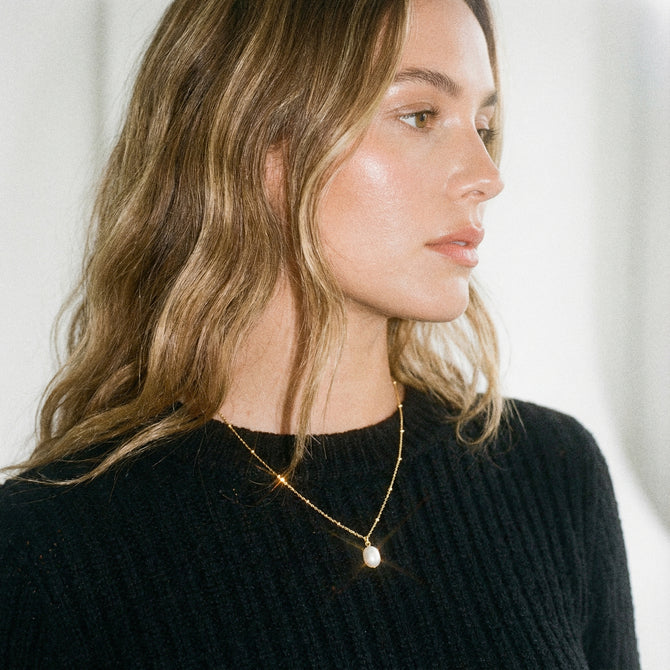
Add a delicate pearl pendant to anchor layered chains.

Image by Nur Demirbaş on Pexels
Plan necklace lengths to flatter proportions
Measure your neck and chest with a soft tape or ribbon and note where standard lengths fall on you, aiming for choker (about 35 to 40 centimetres) at the base of the throat, princess (about 45 to 50 centimetres) on the collarbone, matinee (about 55 to 60 centimetres) across the upper chest, and opera (about 70 to 90 centimetres) below the bust so pieces land on flattering planes rather than cutting across the fullest part of the torso. Use a stair-step spacing of around 4 to 6 centimetres between layers to keep each strand readable and create a vertical line that visually lengthens the neck and torso, and when you want a focal layer, make the middle or longest strand the boldest while keeping the others subtler. Alternate pearls with fine gold chains to create contrast in texture and light, placing heavier, more rigid pearl strands lower and lighter, more flexible chains closer to the neck so gravity keeps each layer in place and reduces flipping.
Match necklace lengths to neckline shapes: for high or crew necks choose longer layers that fall below the neckline, for V-necks centre a pendant at the point of the V, and for scoop or off-shoulder styles favour collarbone and mid-chest lengths to maintain balanced negative space. Make simple adjustments to prevent tangles and refine fit, such as adding a short extender of a few centimetres, anchoring a shorter strand to an inner ring on a longer chain, or choosing slightly different lengths for clearer separation. Test combinations by moving your shoulders and changing posture so you can see how strands drape during real wear, and tweak spacing until each layer sits where you want it. These practical steps help keep each strand readable, stable, and complementary to your outfit without overwhelming the neckline.
Anchor your layers with a drop pearl pendant

Image by Bruno Castelli on Pexels
Mix textures, shapes, and motifs with intent
Begin with a single anchor piece, such as a short strand of pearls or a chunky gold chain, then add one or two secondary layers so there is a clear focal point and the pieces do not compete for attention. Contrast texture and scale by pairing smooth, round pearls with a fine rope or cable chain, and stagger lengths by a couple of centimetres so each layer reads separately and catches light at different angles. Match metal tone to pearl overtone to harmonise the palette, for example warm gold with creamy or peachy pearls, and cool gold with white or grey pearls.
Introduce a repeated motif, such as a circle, bar, or knot, across the layers to create visual rhythm, because a simple repeated shape ties mixed materials together without forcing everything to match. Organise and test your layout on a flat surface, fastening the shortest piece first, and use small silicone stoppers or a single clasp converter to reduce tangling. Leave a little negative space near the collarbone so each layer breathes and the overall effect reads as deliberately layered, not cluttered.
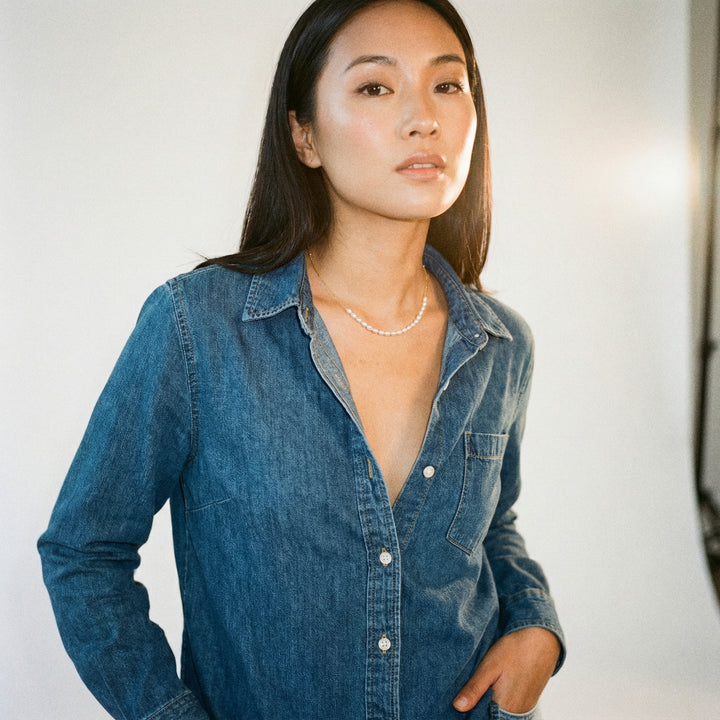
Anchor your layers with an 18-inch freshwater grey pearl strand.

Image by Jonathan Goncalves on Pexels
Style restrained layers for necklines and occasions
Choose a single focal piece first, either a small pearl strand or a bold gold chain, then add one or two supporting layers that differ in scale or texture so the eye settles on one centre of attention. Match layer lengths to the neckline: keep short strands or chokers with high or crew necklines, place mid-length pieces near a V or scoop neck, and reserve longer chains to fall over collars or buttoned shirts. Stagger adjacent layers by a couple of centimetres so each sits visibly on the body and avoids a crowded look.
Mix shapes and finishes for harmony: pair smooth round pearls with slender link chains, combine irregular or baroque pearls with textured chains, and keep a coherent metal tone so gold complements the cream of many pearls. Limit the total number of pieces to three or fewer, favour odd numbers, and use negative space to maintain restraint and an organised composition. Carry out a movement and light test before leaving: fasten all pieces, turn your head and raise your shoulders to check for tangling, then view the arrangement in daylight to assess colour and proportion. Use chain extenders or removable clasps to tweak lengths for different occasions so the same layered set adapts without appearing accidental.
Anchor layered looks with a freshwater pearl strand

Image by Jonathan Goncalves on Pexels
Care for pearls and gold to preserve lustre and longevity
Begin with a single anchor piece, either a pearl strand or a delicate gold chain, then add two contrasting pieces in different lengths and textures to create balance and keep the eye moving. Aim for an odd number of layers, vary chain thickness to prevent visual muddle, and match the scale of pearls and chains to your neckline so finer pieces suit low collars and chunkier pieces pair with higher ones. Fasten the shortest piece nearest the throat, space each layer by a couple of centimetres, and fit a small extender or use a two-ring clasp to tweak spacing without removing layers.
Pearls are organic and relatively soft, so wipe them with a soft cloth after wearing and avoid applying perfume, cosmetics, or hairspray before you put them on. Do not use ultrasonic or abrasive cleaners on pearls, while gold pieces can tolerate gentle polishing and warm soapy water, provided you keep them away from chlorine and harsh chemicals that can erode plated finishes. Store pearl necklaces flat in a soft pouch or lined compartment, separate from metal to prevent scratching, and avoid airtight plastic bags which can dry silk threads. Inspect knots and clasps regularly and restring pearls when the thread shows wear or stretch to prevent breakage and loss.
Layering pearls and gold succeeds when you prioritise proportion, tone, and intent rather than simply adding pieces. Match pearl overtone to metal, choose a single anchor piece, and use staggered lengths with about 4 to 6 centimetres between layers so each strand reads clearly.
Work through the guidance on matching tone and scale, planning necklace lengths, mixing textures, and caring for pearls to test combinations against your neckline and movement. Those practical checks let you create restrained, wearable layers that feel deliberate, adapt to different outfits, and maintain their lustre.