




Pearls can transform an outfit, yet the wrong shape may be lost against your look or overpower it. Which shapes provide a subtle daytime presence and an assured evening statement, while complementing your movement, proportions and preferred level of lustre?
This post explains the signature shapes of pearls and demonstrates how movement, scale, surface and lustre interact, so you can anticipate how pearls will sit and catch the light. It offers clear guidelines on styling pearls for daytime and elevating them for evening, tailored to your body shape, neckline and outfit.

How to identify pearl shapes and their signature traits
Pearl shapes read differently and reflect light in distinct ways: round and near-round pearls produce a crisp central highlight and act as the most mirror-like, drops and teardrops lengthen the silhouette and create moving highlights, while button and coin shapes give a broader, flatter sheen. Baroque and keshi surfaces scatter light across irregular facets for a lively, shifting sparkle. Lustre and nacre thickness determine how sharp or soft those highlights appear: thick nacre yields a deep, mirror-like flash, whereas thinner layers offer a gentler glow. Inspect pearls under both diffuse and directional light and tilt them to compare a steady specular reflection with a dynamic catch-light, and use a single-line visual cue to recognise shapes at a glance: sphere, teardrop, disc or irregular contour.
Match the pearl shape and setting to the movement you expect. For active days choose secure studs, bezel settings or close-to-ear buttons to minimise swing. If deliberate motion will amplify shimmer, favour drops, pendants or single long pearls, and test any pair by walking and turning to observe real-world behaviour. Let the garment and neckline determine scale: delicate fabrics and narrow collars suit smaller, close-to-neck pearls, while broader necklines and heavier materials can carry larger or more sculptural shapes. Stagger sizes in graduated necklaces to guide the eye, and anchor an ensemble with one dominant pearl shape, introducing at most one contrasting family for texture. Use open settings to maximise sparkle or closed bezels to mute flash and emphasise form, and always preview combinations against the outfit and the lighting in which they will be worn.
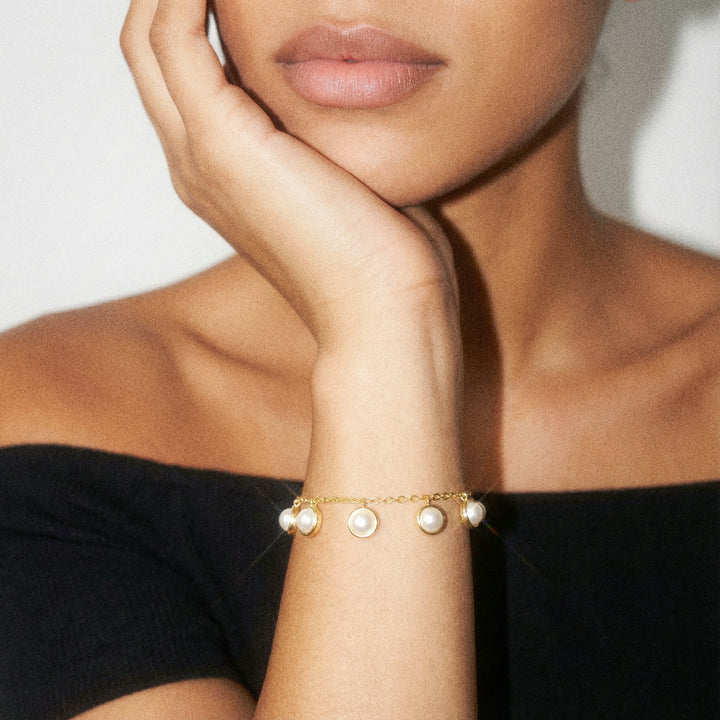
Wear secure studs for active days.

Harness movement to cultivate effortless presence and understated elegance
The shape of a pearl determines how a piece moves. Round and button pearls pivot less and sit close to the ear, while elongated drops, baroque forms and keshi pearls behave like tiny pendulums because their centre of mass sits further from the point of contact, producing a more pronounced sway. Match a pearl’s movement to the occasion: choose low-sway options such as studs, coin pearls or short drops for commutes or crowded settings, and favour articulated links, longer drops or stacked pearls for receptions or outdoor gatherings where you want jewellery to be seen from a distance. A coin stud will remain steady on a busy commute, whereas a multi-link drop will catch the eye across a room.
Use scale and proportion to modulate presence. Keep a single small pearl close to the face for subtle movement, or combine graduated sizes or a larger focal pearl to create a cascading effect. Balance length with the wearer’s lines so motion complements rather than overwhelms. Construction determines articulation. Thicker ear wires and short, rigid links reduce swing, while fine wires and multiple short links increase freedom and encourage a more flowing movement. For vigorous activity choose secure backs; for a controlled sway select short rigid links; for lively, fluid motion opt for multi-link chains. Surface and accents influence how a piece catches the light. High-lustre, mirror-polished pearls and delicate faceted accents amplify sparkle with minimal movement, whereas matte surfaces produce a steadier glow. Spacer beads or small links introduce rhythmic micro-movements that enhance light-play without adding bulk.
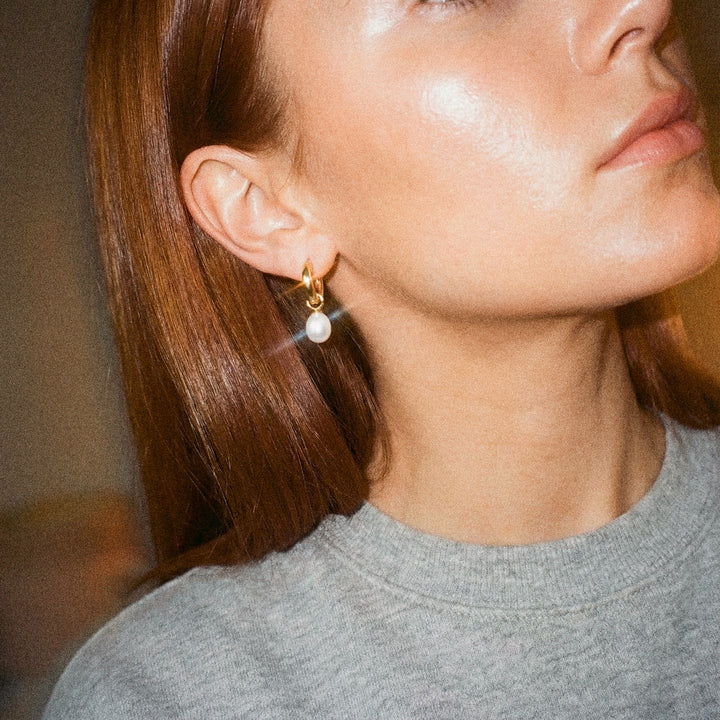
Opt for graceful drops to amplify movement.

Scale pearl size to your body, neckline and outfit
Choose pearl diameter by proportion. Small pearls, around 3 to 6 mm, read as delicate on petite frames and with fine necklines. Medium sizes, 7 to 9 mm, flatter most body types and suit everyday collars. Larger pearls, 10 mm and above, provide theatre for evening wear or structured tailoring. Harmonise necklace length with the neckline: chokers and princess lengths sit above boat and crew necks, while matinee and opera lengths layer over V-necks and plunges, with the lowest pearl positioned within the negative space. Let fabric weight guide presence: silks and lace favour smaller, high-lustre pearls that echo their texture, whereas heavy knits, tweed or structured jackets are balanced by larger or irregular pearls. When movement matters, choose tightly strung near-round pearls for a composed daytime silhouette, and reserve baroque or articulated settings for evening when extra swing and play of light add drama.
Balance the scale of necklace and earrings so no single piece overwhelms. Introduce small faceted gemstones or metal accents to add a touch of sparkle for evening wear, when pearls display a softer lustre. For active days, choose secure clasps and snug settings to keep pearls close to the body; for evenings, favour articulated links or freeform shapes that catch the light as you move. Consider proportion, neckline placement, fabric weight and setting so the jewellery complements rather than competes with the outfit.
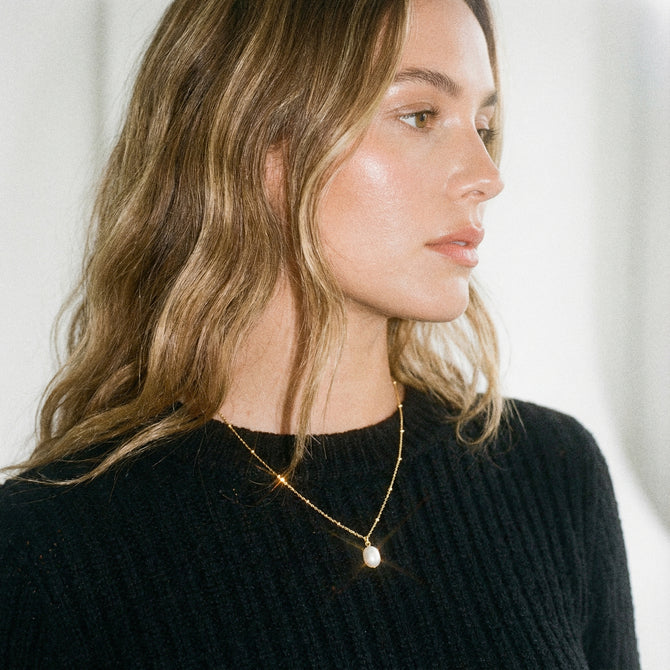
Layer delicate pearls for refined everyday polish.

Maximise your pearls' sparkle with surface, shape and lustre
Inspect lustre in natural daylight and beneath a warm lamp. Gently tilt the pearl to observe whether reflections are sharp and mirror-like or soft and diffuse. A crisp, mirror-like highlight indicates thin surface layers and strong reflectivity, while hazy, scattered highlights point to thicker surface layers, surface wear or lower lustre. Scale magnifies detail, so larger pearls expose more surface area and are more likely to reveal pits or abrasions that interrupt highlights. For the best sparkle, choose larger pearls with higher lustre and cleaner surfaces; smaller pearls can still appear bright with only moderate lustre because highlights concentrate on a smaller area.
Consider surface quality, not just cleanliness. Tiny pits, bumps and abrasions scatter light and reduce perceived sparkle, so smoother surfaces are preferable for evening pieces. Match shape to movement: choose round or symmetrical drops for steady, central highlights, or opt for baroque forms for a subtler, multidirectional twinkle when the wearer moves. For necklaces and long earrings, favour shapes that catch and redirect light. Try different settings before you decide, since open-backed settings and minimal metal allow more light to reach the surface and enhance sparkle, while heavy bezels or closed cups absorb light and mute shine.
Choose a 4mm pearl necklace to boost daytime sparkle

Wear pearls casually by day, elegantly by evening
Choose a pearl diameter to set the intent: pearls under 6 millimetres read as discreet at a glance, 8 to 10 millimetres offer visible versatility, and those over 10 millimetres make an unmistakable statement. View each size at conversational distance to confirm the effect. Shape governs movement and perceived formality: button and near-round studs that sit close to the ear feel restrained, while drops and baroque shapes sway and catch the light, adding sparkle and drama. For active daytime settings, favour low-movement shapes; choose articulated drops or asymmetric baroques when you want dynamic shine for evening wear.
Surface and lustre provide clear cues. High lustre, mirror-like surfaces return crisp reflections and tend to read as more formal, while satiny or textured surfaces scatter light and soften the overall appearance. To assess a pearl, tilt it towards a window or lamp to judge how much light it returns, then hold it against your neckline to check balance with high collars, structured tailoring or open necklines. For daytime wear, favour low-profile settings and secure fastenings to reduce the risk of snagging. For evening, introduce movement and extra sparkle with visible bails, articulated links or mixed-metal accents. When layering, choose one dominant pearl shape and pair it with smaller, matching elements to maintain clarity and avoid visual clutter.
Shape, movement, scale and surface determine how pearls appear in different settings, so understanding their interplay lets you refine their presence, poise and lustre.
Matching pearl shape and setting to your body lines, neckline and activity allows you to move from discreet daytime polish to confident evening drama. Use the simple visual cues and easy tests in this guide: view pieces in natural and warm light, move or walk to observe how they sway, and hold them against your neckline to judge how they will sit and behave in real life before you decide. Apply these guidelines when choosing or layering pieces so your pearls complement an outfit, perform with movement and deliver the presence you intend.