






Pearls sit at the crossroads of warm yellow gold and cool white gold, and the right pairing can either enhance their lustre or mute their colour. Which combinations bring out a pearl's best glow without creating a disjointed look?
This post explains how to match pearl undertones to metal tones, select pearls and settings that work in both yellow and white gold, balance mixed metals through layering and scale, and care for pieces so they age well. Read on for practical styling and maintenance steps that make mixing metals feel deliberate, wearable, and enduring.

Image by Nur Demirbaş on Pexels
Match pearl undertones to metal tones
Pearl overtones influence how a pearl reads next to metal: cream, champagne, and gold overtones appear warmer against yellow gold, while white, silver, and blue overtones read cooler with white gold. Try a simple hands-on test by holding the pearl beside samples of yellow and white gold to note which metal enhances the pearl and which creates an undesirable contrast, and check the result in a few different lighting conditions to confirm your perception. Match the pairing to the wearer, since warm skin undertones favour yellow gold with warm-toned pearls, cool undertones favour white gold with cool-toned pearls, and neutral undertones can choose whichever combination best complements the pearl.
When combining yellow and white gold in one look, introduce a small linking element in the opposite metal, such as a spacer, clasp, or thin chain, to create an intentional, cohesive link between tones. Think about setting and scale together: larger, creamier pearls will read richer and pair naturally with yellow gold, while small, near-white pearls appear crisper against white gold. Choose setting style to reinforce that effect, for example a warm-toned bezel will deepen a creamy pearl, whereas a fine white setting will emphasise a cool, luminous surface. Taken together, these choices let you organise colour relationships deliberately, so the metal, setting, and pearl size work as a coordinated whole rather than competing elements.
Try graduated pearls for deliberate scale and mixed-metal balance.

Image by cottonbro studio on Pexels
Select pearls and settings for yellow and white gold
Analyse a pearl's body colour and overtone in natural light before choosing a metal. Pearls with warm overtones such as cream or rose read as warmer beside yellow gold, while pearls with cool overtones such as silver or blue sit naturally with white gold, because overtones are interference colours within the nacre and determine perceived harmony. Select settings that control how much metal reads against the pearl: a low bezel or hidden-seat setting minimises metal contrast, whereas a fine white-gold prong or milgrain rim can create a deliberate, subtle contrast against a yellow-gold shank, so expose a thin rim or mixed-metal detail to visually tie the tones together without overwhelming the nacre.
Use neutral bridging elements to unite yellow and white gold, such as small colourless gemstones, diamond stations, or plain metal spacers that reflect both metals and act as visual connectors. In practice, a diamond halo, tiny diamond melee between pearls, or alternating metal spacer beads lets a collection read as cohesive when worn with other pieces. Organise layering and scale by anchoring the look with a dominant metal for the largest piece and adding smaller accents in the other metal, alternate chain lengths, and pearl sizes so metals do not clash at the same focal point, placing white-gold pieces closer to the face and yellow-gold accents lower or as movement pieces. Preserve coordination by choosing solid metals or robust plating where pieces rub, avoiding abrasive polishing, wiping pearls and metal with a soft cloth after wear, and storing mixed-metal jewellery with soft barriers to limit metal transfer and keep visible joins and clasps true.
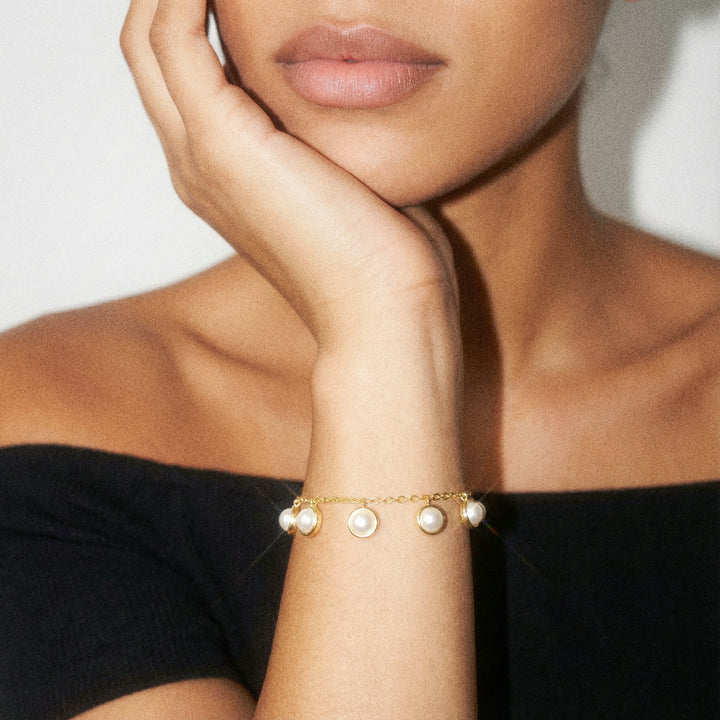
Add a gold-plated bezel bracelet to harmonize warm pearls

Image by Rosa Rafael on Unsplash
Balance yellow and white gold for cohesive mixing
Choose a dominant metal to organise the look, keeping roughly two thirds of visible pieces in that metal and introducing the other metal as smaller accents such as earring posts, chain links, or clasp details to create intentional contrast. Match the pearl's colour and lustre to the metal undertone: cream, ivory, and warm-pink pearls favour yellow gold, while bright white or silvery-lustre pearls sit better with white gold. When you mix metals, insert a small two-tone connector or jump ring at the junction to transition the eye and make the combination read deliberate.
Use pieces with two-tone settings around the pearl as deliberate bridges; rings, pendants, or bangle clasps that combine yellow and white gold help the pairing feel cohesive rather than accidental. Anchor the arrangement with one larger, single-metal statement, then layer finer chains, studs, and bangles in the other metal, varying finishes, such as polished, matt, and textured, to reduce visual competition and add depth. Coordinate the dominant metal with other accessories and consider skin undertone, veins that look greener suggest a warm undertone, while bluer veins suggest a cool undertone, which can help you favour yellow or white gold.
Add warm gold studs to anchor your mixed-metal stack.

Image by cottonbro studio on Pexels
Layer and scale jewellery to complement outfits
Begin with a focal pearl piece and add one or two supporting chains in differing lengths and metals to create a clear visual hierarchy. Vary chain thickness or pendant size so each piece reads separately, and stagger pearl sizes by at least one size step to add depth and movement without visual competition. Match necklace length and pearl size to the neckline and fabric weight, using short single pearls with high necklines and structured fabrics, and longer pearl pendants to follow V-necks or wrap dresses.
Mix yellow and white gold deliberately to control overall warmth, setting a pearl in white gold to enhance its cool lustre, or choosing yellow gold to introduce warmth that echoes skin tone or other accessories. Repeat the chosen metal in earrings, rings, or bag hardware to create cohesion, and introduce contrast through texture by pairing smooth pearls with fine chains, textured links, or small gemstone accents. Build combinations on a flat surface and fasten clasps in order to check how pieces fall, fastening the longest strand first to test overlap and prevent tangles. Finish with gentle care, cleaning mixed-metal settings with a soft cloth and inspecting joins to preserve lustre and secure settings.
Anchor layers with a warm 18-inch pearl.

Image by cottonbro studio on Pexels
Care for mixed metal pearl jewellery to ensure longevity
Match the metal to the pearl and the outfit to create seamless coordination: favour yellow gold with warm fabrics and cream or golden-tinged pearls, and white gold with cool tones and white or grey pearls, placing the dominant metal nearest the face and introducing the other metal in smaller accents to frame the lustre. Create visual harmony by choosing one anchor piece in a single metal, then add shorter or finer chains, stud backs, or small charms in the second metal to bridge the contrast. Vary chain widths, necklace lengths, and earring sizes so the mixed metals read as a considered combination rather than competing elements.
Choose settings and finishes that bridge the metals and protect pearls, such as bezel, halo, or two-tone mountings and textured connectors, noting that white gold is often rhodium plated so the cool sheen may require replating to stay visually matched. Clean pieces by wiping pearls and metal with a soft, lint-free cloth after wear, and avoid ultrasonic cleaners, acidic cosmetics, perfumed sprays, chlorine, and household chemicals that can erode nacre and alter metal finishes. Remove pearl jewellery before bathing, swimming, or vigorous activity to reduce abrasion and chemical exposure, and store mixed-metal pieces flat in a soft pouch or lined compartment, separated from harder items to prevent scratching and metal transfer. Inspect settings, clasps, and stringing regularly, and arrange professional cleaning, restringing, or replating at the first signs of wear rather than waiting for failure.
Pearls coordinate with yellow and white gold when you match their overtones, scale, and setting to the metal, skin tone, and outfit. Intentional bridging details, such as two-tone connectors, neutral gemstone stations, or small mixed-metal accents, keep combinations cohesive rather than accidental.
Follow the headings above, match undertones to metal, select settings that control metal contrast, choose a dominant metal, layer by length and scale, and care for joins and finishes, to create combinations that read deliberate and harmonious. Begin with one anchor pearl, test pairings in natural light, and adjust bridging elements and storage routines so pieces stay luminous and secure.