



Deciding between drop pearl earrings, a long strand or both can feel unexpectedly challenging when you want jewellery that complements your outfit, flatters your features and suits the occasion. Do you opt for movement to frame the face, a strand to lengthen the neckline, or a layered approach that brings both together?
This guide explains how to select pearls for different occasions and outfits, how to flatter various face shapes and necklines, and how to balance length, movement and proportion. It also explores layering with other jewellery and hairstyles, and covers practical considerations such as clasp type, weight and how strand length relates to your silhouette, helping you to choose with confidence.

How to match pearls to your outfit and the occasion
Consider how necklace and earring shapes interact with your neckline and silhouette. A long strand can fill or break up a high, plain neckline, while drop pearl earrings flatter V-necks and plunging shapes. Try combinations while seated and in motion to ensure they complement rather than compete with the outfit. Scale matters. Larger pearls or multi-strands read well against simple, solid garments, whereas smaller pearls or a single drop suit patterned or heavily detailed clothing. Aim for one clear focal point so the eye can rest naturally. Match pearl overtones and metal fittings to your outfit and your skin by holding pieces against fabric and skin to check they harmonise. Test the complete look while moving to confirm necklaces do not tangle, heavier drops sit comfortably, and earring backs offer sufficient support.
Plan your hairstyle and movement to create distinct visual zones. With hair worn up, choose drop earrings to allow them to take centre stage; with hair worn down, opt for a long strand to create a flattering vertical line. When wearing both, shorten or loop the necklace so it does not compete with the earrings. Looping a long strand once can recreate the effect of layered pieces while reducing clutter and preventing tangles. Make small adjustments and test by sitting and walking until the necklace and earrings occupy separate zones and feel secure.
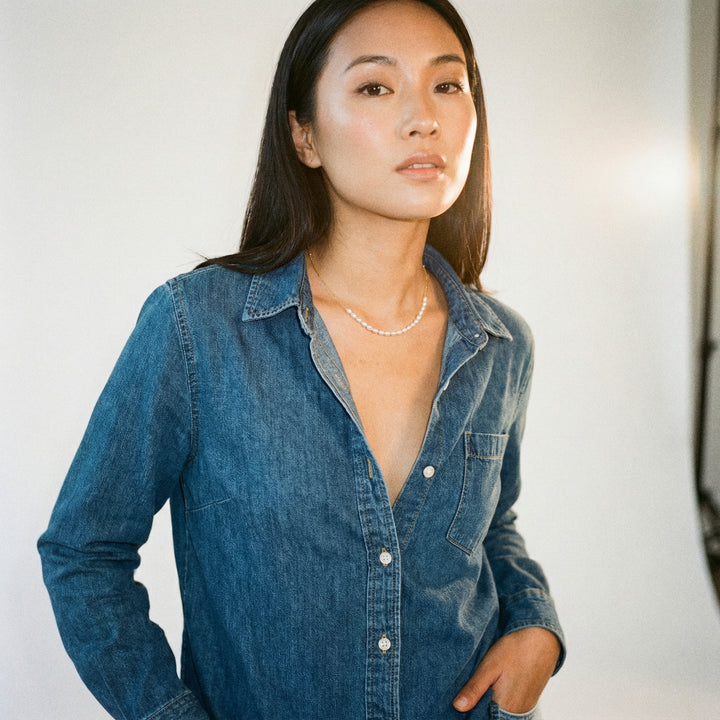
Loop a long strand for layered, tangle-free elegance.

Flatter your face shape and accentuate your neckline
Stand before a mirror, pull your hair back and trace your jawline to establish your face shape, then apply a few simple guidelines. Oval faces suit most designs; round faces benefit from vertical lines, such as long strands or drop earrings that fall below the jaw. Square faces are softened by rounded pearl drops, while heart-shaped faces are well balanced by wider or lower-hanging pieces. Longer faces gain visual width from shorter, broader drops. Also consider hair and movement: wearing your hair up reveals drops and shortens the apparent neck, while loose hair can conceal short earrings and makes a long strand more effective.
Match necklace length to the neckline to either continue or interrupt the vertical line. Scoop and V necklines create open space that a long pearl strand can elegantly fill. High necklines benefit from drop earrings which draw the eye upward, while boat and off-shoulder styles suit a mid-length strand with drops to distribute attention across the face and décolletage. When combining a strand and drops, choose a primary focal point and let the other remain supportive. If the strand is long and bold, choose small, understated drops. If the earrings are dramatic, select a shorter, subtle strand that sits near the collarbone. Try a simple home test in natural light with your hair tied back. Take straight-on and three-quarter photographs, then note where the earrings finish in relation to the jaw and where the strand sits against the collarbone. Balance these observations with face width, neck length and the neckline you plan to wear to decide whether drops, a long strand, or both will best flatter your proportions.
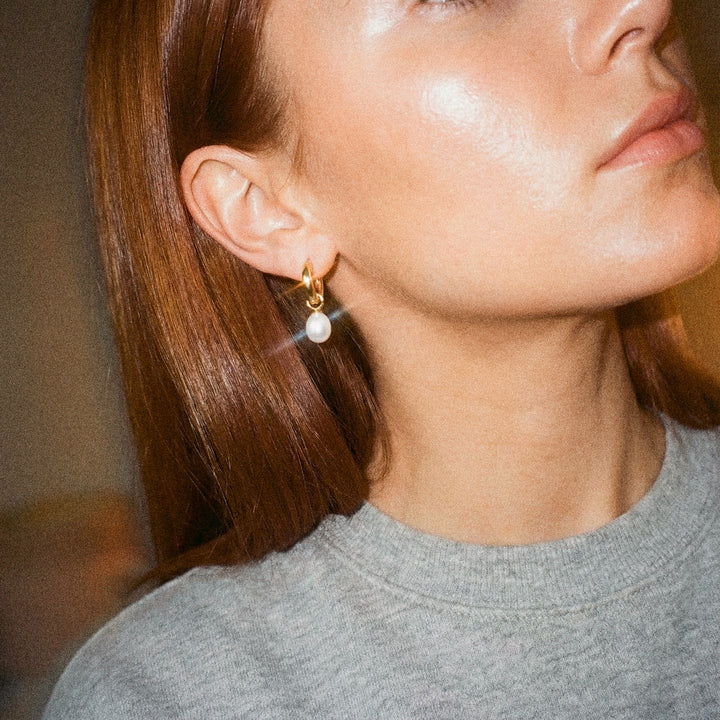
Switch between subtle hoops and elegant drops instantly.

How to balance length, movement and proportion in pearl jewellery
Apply proportion to determine scale. If drop pearl earrings fall below the jawline, balance them with a necklace that sits at the collarbone or higher so the eye has a clear focal point. Conversely, if a necklace falls below the sternum, opt for small or no earrings to avoid competing vertical lines. Designate a single dominant piece so the ensemble reads as intentional. Let a striking drop take centre stage paired with a delicate strand, or allow a bold long necklace to lead while keeping earrings to tiny studs. Assess movement by turning your head and walking a few paces in front of a mirror or on camera. Notice how swaying drops draw the gaze to the face and how a long strand creates vertical motion that lengthens the silhouette.
Always check comfort and fit before you commit. Heavier drop earrings can tug at the earlobe, and long strands may catch on clothing or hair, so fasten the necklace and wear the whole ensemble for a short while, moving as you would at the occasion. Match jewellery to the neckline and the garment's structure: high necklines and structured collars suit long strands, which read clearly, while low or open necklines give drop earrings room to sit against the skin. Consider fabric texture and pattern, since busy prints or heavy weaves can compete with multiple focal points, whereas plain, smooth fabrics allow pearls to sing. Choose one clear centre of interest, and use scale, movement and practical tests to decide whether drops, a long strand, or both create the most pleasing balance with your outfit.
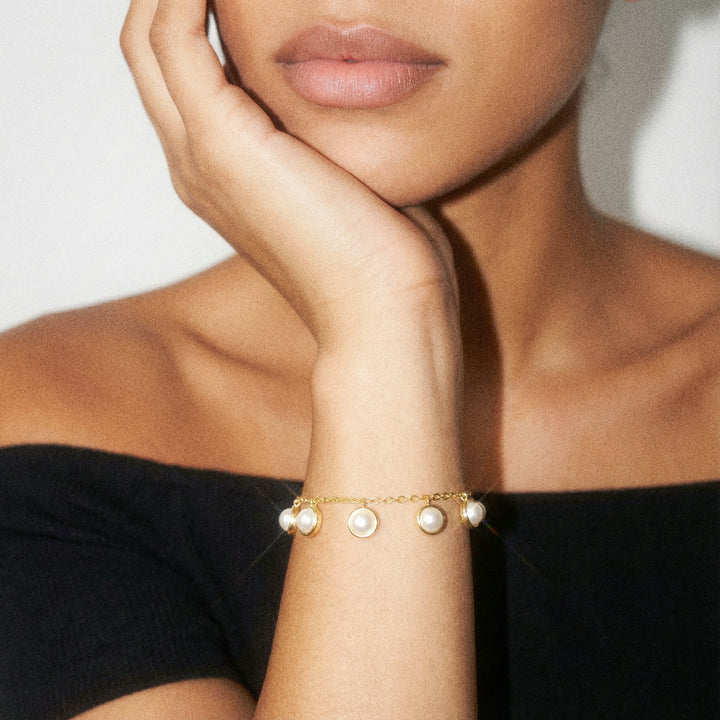
Pair with a delicate double-drop pearl strand.

How to layer pearls with jewellery and hair accessories
Choose one pearl piece to act as the focal point and arrange the others to complement it. Pair a long strand with understated drop earrings to form a single vertical line, or select slightly shorter drops for a coordinated, tiered effect. Introduce contrast by combining smooth pearls with delicate chains, textured links or matte metal finishes to modernise the grouping, or keep a single metal tone to unify multiple pieces. Stagger necklace lengths and earring sizes so each element has room to breathe, positioning strands and drops with visible gaps so each pearl can be appreciated on its own rather than blending into a single mass.
Match your hairstyle to your jewellery: wear your hair up to reveal drop pearls and the upper section of a long strand, or wear it down with slimmer drops to minimise tangling. Prioritise secure fastenings and lightweight pieces, and make small adjustments such as tucking the end of a long strand into your clothing, tying a loose knot to curb swing, or gently shifting an earring if it catches hair. Try your usual movements at home in front of a mirror, turning your head to check visibility and the risk of snagging, so you can make practical tweaks before you go out.
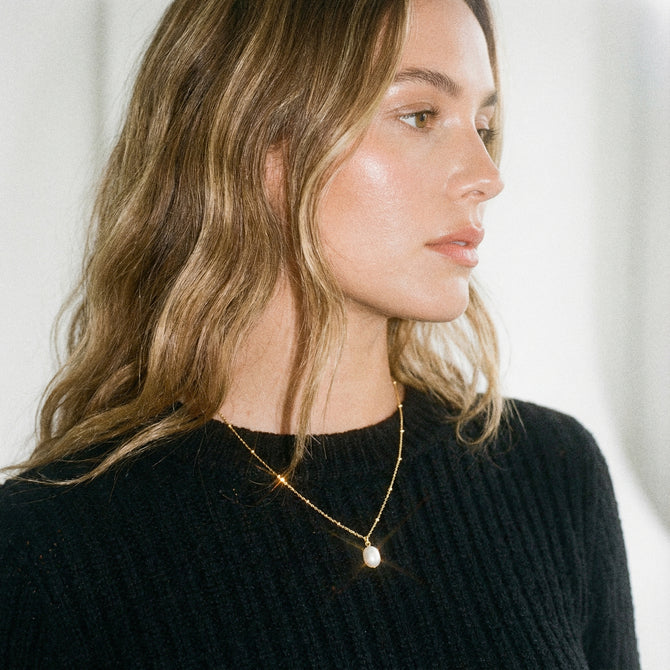
Make a long pearl strand your anchoring focal point.

Finalise practical details and perfect your finishing touches
Test comfort by wearing drops and strands while you move naturally, noting any pulling on the earlobe, snagging or tendency to tangle. If the earlobe visibly stretches or you find yourself constantly readjusting, the design is not suited to prolonged wear. Match fastenings to your activity and ear type: ensure backs sit flush and resist slipping, favouring screw-backs or lever-backs for active days and clip-ons for unpierced ears. Inspect clasps to confirm a secure closure and smooth edges so they will not catch fabric. Use your hairstyle and neckline as practical guides and, standing at arm’s length in a full-length mirror, assess proportion and focal point.
Remove pearls before applying cosmetics or fragrance. After wearing, wipe them gently with a soft, lint-free cloth and store them flat in a soft pouch, away from other metal jewellery. Ensure there are knots between each pearl to limit abrasion and prevent loss. When pairing a pendant drop with a strand, position the drop so it sits just above the top of the strand, harmonise metal tones and pearl colour, and test movement to check there is no catching. Adjust strand length by doubling or re-knotting to refine how the ensemble sits on the body.
Prioritise a single focal point and test pieces while moving, as proportion, scale and comfort will determine whether drop earrings, a long strand or both are most flattering. Simple checks include trying pieces with your intended hairstyle, photographing straight-on and three-quarter views, and noting where the pearls sit relative to your jawline and collarbone to see what best flatters your proportions.
Use the guide’s sections on matching pearls to the occasion and your outfit, flattering face shape and neckline, balancing length and movement, layering and finishing details as a simple checklist to refine your choice. Assess the complete look in natural light and move around; when the principal piece reads as the focus, fastenings sit securely and nothing catches, you can step out with the confidence that the pairing will suit the occasion.