





Pearls and contemporary gold chains often live in different style worlds, so layering them can quickly look cluttered rather than intentionally harmonious. How do you combine shapes, finishes, and lengths to achieve a clean, balanced look that reads modern and versatile?
This post guides you through selecting complementary pearl shapes and chain finishes, arranging lengths to establish a clear focal hierarchy, and balancing scale, texture and rhythm so each layer contributes to the overall composition. You will also learn how to pair necklaces with different necklines, outfits and occasions, and how to care for your pieces so layered combinations remain wearable and enduring.

Choosing pearl shapes and chain finishes for a timeless look
Round pearls read as formal and symmetrical, baroque pearls introduce organic movement, and coin or keshi pearls create flatter, contemporary planes. Choose the shape that best sets the tone you want. Pair irregular pearls with a simpler chain to avoid visual clutter. Delicate chains are best with small, uniform pearls; mid-weight chains suit mid-sized pearls; chunkier chains balance larger or irregular pearls so the chain supports the pearl as the focal point. As a quick test, hold the piece at your collarbone to check proportion and movement as you tilt or turn. If the arrangement feels crowded or the pearls disappear behind the links, swap the chain until each layer sits clearly and reads as intended.
High polish gold catches the light much like a pearl's lustre, creating a harmonious feel. Brushed or matt finishes soften reflections and read as modern, while textured or hammered surfaces introduce contrast to stop the arrangement feeling overly formal. Warm gold complements cream and rose overtones, while cooler golds sit well with silver or blue tones. Keeping the metal closest to the face consistent gives a cleaner appearance, though an intentional mix of tones can introduce contemporary contrast. For layered necklaces, choose tighter, more structured links to sit flat and frame pearls near the neck, and more open, flexible links lower down to add movement. Always check a layered set in a mirror and in motion to ensure a comfortable drape and balanced visual effect.
Frame your face with simple, modern pearl studs.

Arrange necklace lengths to establish a clear focal hierarchy
Create a clear focal hierarchy by positioning the pearl strand as the shortest layer, typically at choker or collar length, then add gold chains in progressively longer lengths so they sit below the collarbone and towards the sternum. Step back a metre, fasten each layer and, with a gentle tilt of the head and a slight movement of the shoulders, observe how the pieces fall. If two layers appear to merge or one dominates, adjust a chain by two to four centimetres or replace a thicker chain with a finer one until you see distinct bands of metal, space and pearls. Match scale and texture to support the pearl strand: opt for slimmer chains when pearls are large or highly lustrous, and introduce a more substantial chain only if it remains visibly lower than the pearls. Photograph the arrangement to check clarity, and organise the shortest piece to sit alone across the collarbone while the next creates a soft V or curve and the longest adds vertical direction.
Allow at least one clear space between layers so the eye travels from the pearls to the gold without overcrowding. This keeps the pearl strand as the central focal point. Limit the total number of layers to three or four and alternate textures to add interest. Use small connectors or an extender chain to secure a key layer, which helps reduce tangling and preserves the layered hierarchy. Do a quick movement check by turning your head. If layers slide over the pearl strand, shorten or anchor the top chain so the pearls remain prominent while the gold gently frames them.
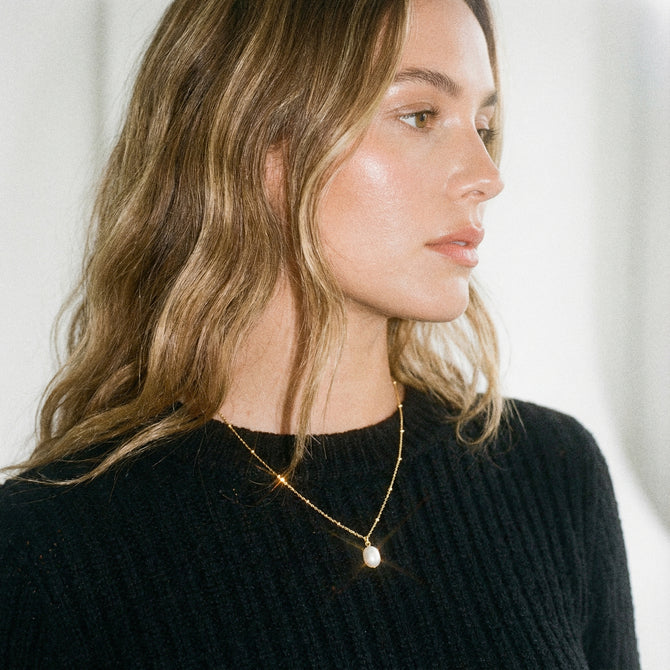
Anchor your layers with a luminous pearl at collarbone.

Balancing Scale, Texture and Rhythm in Jewellery Design
Choose a single focal piece, then arrange the remaining necklaces so the visually most substantial or largest sits lowest or at the centre; the eye reads size contrast first. Pair the pearls' smooth lustre with at least one textured chain, such as hammered, rope or satellite links, as contrasting surfaces catch the light differently and stop the set from reading as a single flat mass. Vary chain diameters and bead sizes to create a clear hierarchy, so each layer reads distinctly.
Stagger necklace lengths in clear steps: use smaller increments around the collarbone and larger intervals lower down, keeping even spacing so each strand has breathing room and a gentle rhythm. To anchor the arrangement, choose a base necklace and observe how clasps sit and how pieces move when you bend or turn; shorten or add a connector ring until the anchor remains centred. Limit mixed gold tones to a single, deliberate accent. Favour warmer golds with creamy pearls and cooler golds with whiter or grey pearls, and always check combinations in natural light to judge true colour. These checks on movement, spacing and colour help a layered set balance visually and feel secure as you wear it.
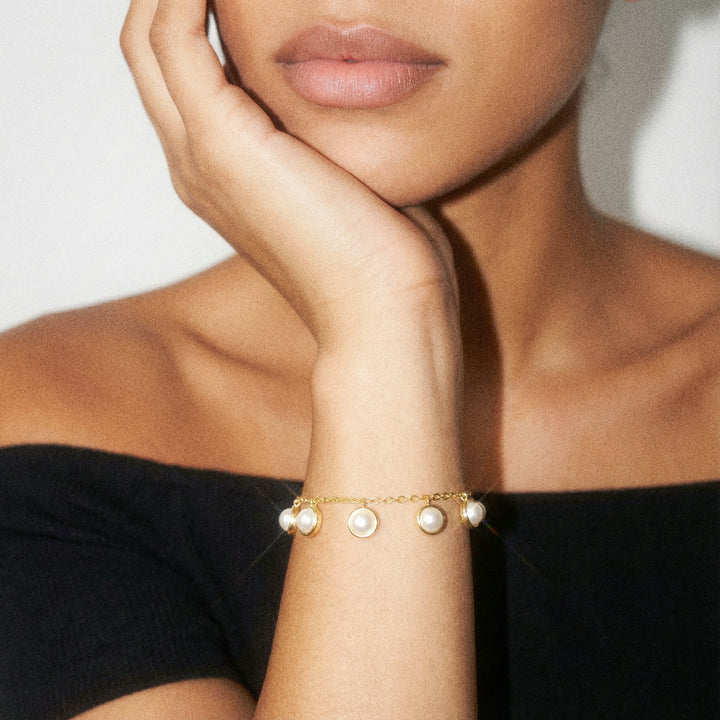
Layer warm gold and small pearls for polished contrast

How to match necklaces with necklines, outfits and occasions
Match necklace lengths to necklines so you can predict where each strand will fall: a short pearl will sit at the collarbone beneath a crew or boat neck, a mid-length gold chain will complement a V-neck so a pendant traces the line, and a single longer drop will fill a deep plunge. Balance scale and visual weight by selecting one focal piece with one or two supporting strands; for example, pair a strand of medium pearls with a slim gold chain and a delicate textured chain to introduce contrast without crowding. Consider pearl colour and choose gold with a similar warmth, or add a small linking chain with mixed finishes to bridge any difference. Continuity of undertone creates cohesion, while an intentional, repeated contrast reads modern when echoed elsewhere in the outfit.
Organise necklace layers so each piece has its own negative space, staggering lengths to prevent crowding. Secure longer chains with an adjustable slider or a small clasp hook to reduce twisting. Ensure pendants sit centred and check how they fall on the body to avoid tangling and preserve a clean silhouette. For formal settings, choose polished, simple combinations; for casual looks, introduce mixed textures or bolder links for a more contemporary effect. Consider the fabric: silk and satin enhance the lustre of pearls, matte knits soften shine, and tailored garments benefit from symmetrical, centred layering so the jewellery complements rather than competes with the outfit.
Adds a warm single pearl pendant perfect for layering.
How to care for pieces to preserve wearability and lasting beauty
After wearing pearls, gently wipe them with a soft, barely damp, lint-free cloth to lift oils and perspiration. Avoid soaking strung pearls or using ultrasonic cleaners, as these can harm the nacre. Clean solid gold chains with a mild soap solution and a soft brush, taking care to avoid abrasive polishes which may wear away plating or the surface finish. Put necklaces on last and take them off first; apply perfume, moisturiser and hair products before dressing to minimise exposure to chemicals. When layering, insert a short spacer or keep a thin chain between heavier gold pieces and a pearl strand to prevent abrasion and crushing.
Store pearl strands flat in soft pouches or fabric-lined compartments to protect the knots and the nacre. Hang delicate chains so they do not kink, and keep pieces separated. For items that are not solid metal, include anti-tarnish fabric in storage. Inspect silk threads, clasps and jump rings regularly. If you notice fraying, loose findings or loss of tension, arrange restringing or professional soldered repairs rather than attempting major repairs yourself. For everyday wear and when travelling, remove jewellery before swimming, showering or exercising. Pack necklaces flat with cushioning to prevent tangles and compression, and rotate pieces to spread wear and preserve their finish and structural integrity.
Layering pearls with contemporary gold chains is most effective when you establish a clear focal hierarchy, stagger the lengths and balance scale and texture so each piece contributes and retains its shape in movement. Test combinations against the collarbone, photograph them and adjust or shorten layers until you can see distinct bands of pearls, metal and negative space.
Choose complementary pearl shapes and chain finishes, arrange varied lengths and rhythms, and follow simple care steps to preserve the appearance and longevity of the set. Start with a dominant pearl strand, then layer supporting chains with varied textures. Observe their movement in natural light and adjust to suit necklines and occasions so the layered combination feels intentional and effortlessly wearable.