




Have you ever stood before a display of pearls and wondered which strand best suits your style? Choosing pearls that reflect your individuality creates effortless, enduring elegance, but it demands considering the occasion, the type of pearl and the craftsmanship of the piece.
This post guides you through choosing the right occasion and defining your signature look, assessing pearl varieties and quality, and selecting the length, clasp and construction that will flatter. It also offers practical guidance on pairing pearls with your wardrobe, layering jewellery and protecting pieces through proper care, authentication and storage so they remain beautiful and wearable.
![{"image_loaded": true, "load_issue": null, "description": "The image shows a woman holding a hand mirror in which the lower part of her face and neck are reflected. She is wearing a double-strand pearl necklace and a matching pearl bracelet. The background is plain and dark blue. The woman is seen from behind, with her bare shoulders and dark hair visible.", "people": {"count": 1, "roles": ["individual viewer"], "visible_demographics": "Adult female, medium skin tone, dark hair pulled back", "attire": "No c](https://cdn.shopify.com/s/files/1/0371/8817/3961/files/image_loaded_true_load_issue_null_description_the_image_shows_a_woman_holding_a_hand_mirror_in_which_the_lower_part_of_her_face_and_neck_are_reflected_she_is_wearing_a_double_strand_p_4027225d-01af-4697-ae3e-8d1807305850.webp?v=1772639373)
Identify the occasion and perfect your signature style
Start by listing the occasions you attend and note the expected dress codes so the scale and movement of pearls complement the level of formality. For everyday wear, choose low-profile studs or short strands; for business-smart attire, consider medium-length necklaces or delicate drop earrings; for formal occasions, opt for longer strands or larger pieces. Review your wardrobe for recurring colours, necklines and textures, and select pearl size, shape and overtone to harmonise with them. For example, small round pearls sit neatly against high necklines and textured knits, while longer strands or baroque shapes create attractive contrast with plain, low necklines.
Define your signature aesthetic in three words, for example classic, modern or eclectic. Choose a single pearl treatment to suit that mood: uniform rounds for a timeless appearance, mixed shapes and metals for an eclectic character, or minimalist studs and slim chains for modern simplicity. Try each option with a couple of favourite outfits to discover which reads most like you. Consider proportion and balance by aligning pearl size and necklace length with your frame and neckline. Shorter, smaller pieces tend to flatter narrow frames and high collars, while longer, larger pieces help balance broader frames. Use a mirror and photographs to see how each piece influences your silhouette. Match how often you wear a piece to its durability and care requirements. Opt for pearls with thicker nacre and secure fastenings for everyday wear, and reserve more delicate, high-lustre examples for special occasions. Store pearls flat, wrapped in a soft cloth, and test how a finish will age by wearing a sample piece during your usual activities before committing to frequent use.
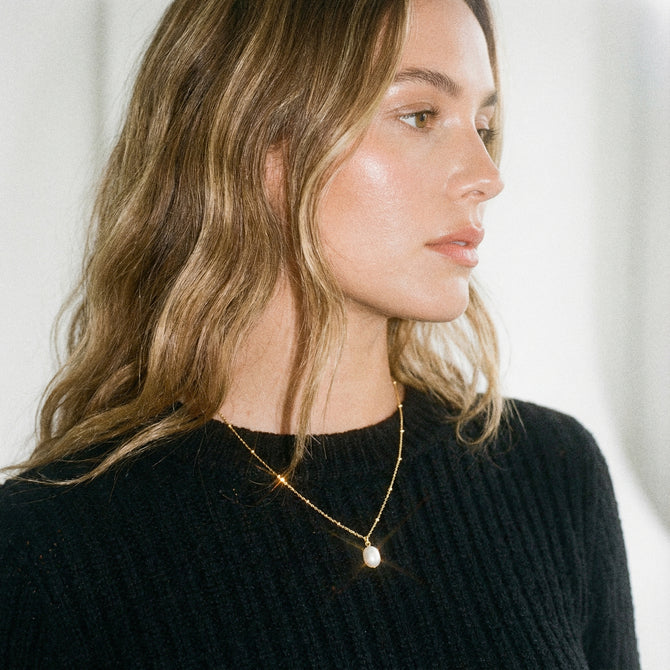
Adds a minimalist pearl for effortless everyday polish

How to assess pearl types and quality for your look
Different pearl species have distinct characters: freshwater pearls display a wide range of shapes and colour, Akoya pearls are prized for their high lustre and crisp reflections, South Sea pearls are known for their generous size and satiny surfaces, and Tahitian pearls offer deeper, moodier colour palettes. Choose the species that best suits the scale and finish you want. When assessing pearls, examine lustre and surface in daylight, noting the clarity of reflections and any concentric growth lines. Inspect the nacre around the drill hole to understand how a pearl might age. Finally, test shapes and sizes against your neckline: near-round, closely matched pearls work well for formal, symmetrical pieces, while baroque or intentionally mismatched shapes create a contemporary, relaxed look.
Hold pearls next to your complexion and favourite garments to judge base colour and overtone; these subtle differences reveal which combinations flatter you most. Pair warm overtones with yellow metals and cool overtones with white metals to help you envisage the finished piece. Inspect drill holes, knots and mountings to ensure secure construction, and favour clean nacre with minimal surface pitting to preserve lustre. When available, request cultivation and origin details, as these notes indicate typical wear characteristics and expected nacre thickness. Handle pieces to check secure stringing or settings, and consider how uniformity and matching will influence the overall impression when worn.
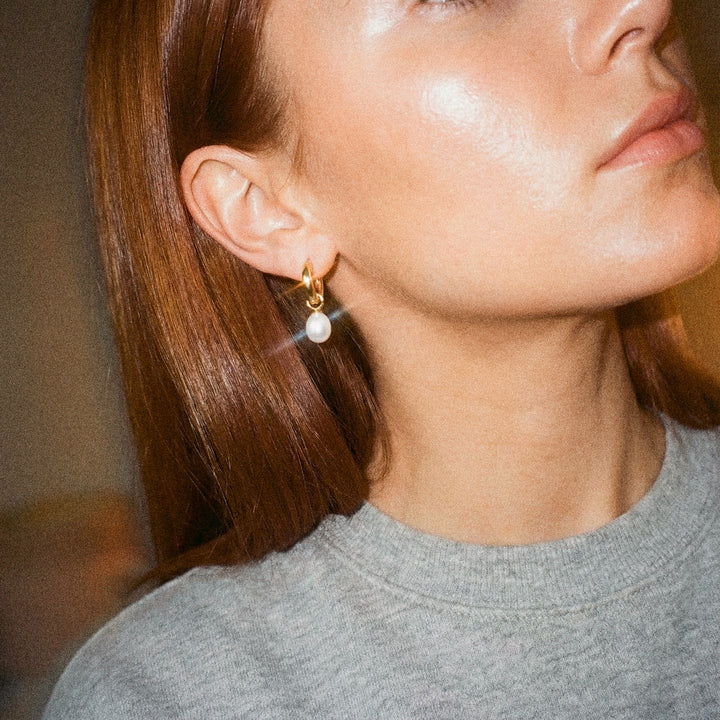
Try versatile huggies that switch from minimal to refined.
![{"image_loaded": true, "load_issue": null, "description": "Close-up image of a woman with blue eyes wearing a pearl necklace and a black top. She is holding part of the necklace with her left hand. The background is plain gray. She has light skin, light brown hair styled back with black feathers as decoration, and is wearing an earring. The lighting is soft and diffuse, highlighting her facial features and the pearls' luster.", "people": {"count": 1, "roles": ["model"], "visible_demographics": "Adult woman,](https://cdn.shopify.com/s/files/1/0371/8817/3961/files/image_loaded_true_load_issue_null_description_close_up_image_of_a_woman_with_blue_eyes_wearing_a_pearl_necklace_and_a_black_top_she_is_holding_part_of_the_necklace_with_her_left_hand_157a2e70-88f1-4df2-aa43-8208cf82d143.webp?v=1772639382)
Choose the ideal length, clasp and construction for your jewellery
Test necklace lengths against your most-worn necklines by draping a cord and marking where each sits; this reveals how collar, princess, matinee, opera and rope lengths alter facial proportion and the balance of an outfit. Opt for a secure clasp, for example a locking or box clasp with a safety catch for heavier strands, or a flat clasp to help prevent twisting. Match the metal finish to your other jewellery to avoid clashes and minimise the risk of skin reactions. Finally, try fastening the clasp one-handed to ensure it is comfortable and easy to wear daily.
Prioritise hand-knotting between each pearl to prevent abrasion. Well-made knots should be uniform and secure; they space the pearls, enhance the strand’s drape and limit pearl loss if the strand breaks. Ask about the stringing material and construction, for example single or double-threaded silk or suitable synthetic alternatives, the size of the drill hole relative to the pearl thickness, and how the ends are secured to the clasp. These details affect the necklace’s strength, its response to humidity and the recommended re-stringing intervals. Assess pearl matching and graduation by checking for an even tone and shape and a gradual progression of size, and handle the strand to judge flexibility and weight distribution. A fluid, flexible strand will drape naturally across necklines, whereas a stiff construction can sit higher and alter the necklace’s visual effect.
Choose an 18-inch gold-finish pearl strand for everyday elegance

Effortless ways to pair pearls with your wardrobe and layered jewellery
Match necklace length to the neckline. Choose a collar or choker for high necklines, a collarbone-length strand for scoop or V-necks, and longer pearls over crewnecks or tunics so the jewellery becomes the focal point rather than competing with fabric edges. Coordinate pearl colour with your wardrobe palette. Warm-cream or golden pearls harmonise with warm tones; cooler white or silver-tinged pearls suit cool palettes; neutral pearls anchor bold prints and vivid colours. Consider scale and proportion. Pair larger, statement pearls with structured tailoring, and reserve smaller, delicate pearls for flowing fabrics or intricate patterns to maintain a coherent, polished look.
Layer pearls with mixed chains and textures to create a pleasing rhythm and a contemporary silhouette. Alternate single-strand pearls with finer chains, such as box chains, and vary bead sizes for added visual interest. Insert a fine metal chain between pearl strands to prevent tangling, and stagger necklace lengths by three to five centimetres to minimise overlap so each strand sits distinctly. Add an anchor pendant or a discreet clasp to help hold the layers in place, and test the arrangement by moving gently to ensure the strands lie smoothly and remain comfortable. These simple principles help you design layered looks that sit deliberately on the body and elevate your outfit.
Add an 18" warm-toned strand for layered texture.

Safeguard pearls with gentle care, authenticity checks and considered storage
After wearing, gently wipe pearls with a soft, slightly damp cloth to remove skin oils and cosmetic residue. Use a drop of mild soap only when necessary, then rinse in clean water and dry flat on a soft cloth to protect the nacre from abrasive cleaners, ultrasonic baths and solvents. Store pearls separately in a soft pouch or a lined jewellery compartment and lay necklaces flat to avoid stretch in the silk thread. Avoid airtight plastic, which can trap moisture or leach chemicals and dull the colour and lustre. Put pearls on after applying perfume, make-up and hair products, and remove them before swimming or strenuous activity. Rotate pearl pieces with other jewellery to limit prolonged exposure to sweat, chemicals and abrasion, as pearls are relatively soft on the Mohs scale, typically scoring between 2.5 and 4.5, and are therefore vulnerable to surface damage.
Organise and retain paperwork for each piece, including any gemmological reports, to support provenance. For a simple authentication check, use low magnification to examine drill holes and bead surfaces for concentric growth patterns or subtle natural blemishes. Natural and cultured pearls typically show irregularities, whereas imitations often display mould lines or an unnaturally uniform appearance. For higher value items, obtain a formal gemmological report and keep it with the jewellery. Inspect strands regularly and restring when knots loosen, the thread begins to fray, or beads rub against one another. Knotting between pearls reduces abrasion and limits loss if the thread fails, and selecting an appropriate silk or synthetic thread preserves both the drape and the security of the strand.
To achieve effortless, enduring elegance, choose pearls that reflect your personal style by aligning the occasion, pearl type and setting with your wardrobe and lifestyle. Assess lustre, nacre thickness, shape and fastening, and test different lengths and pairings with two favourite outfits to ensure proportion, colour harmony and durability.
Use the headings as a practical checklist: identify the occasion and your signature style; assess types and quality; choose the appropriate length and construction; layer and pair with intention; and protect each piece through authentication, careful cleaning and considered storage. This approach yields a considered, wearable collection that complements your wardrobe, endures everyday wear and rewards attentive care with lasting lustre.