




The interplay of metals and pearls offers a fresh perspective on classic jewellery, inviting a seamless blend of tradition and modernity. While some may hesitate, concerned that the gentle lustre of pearls might appear at odds with either warm or cool metallic tones, achieving a harmonious, curated effect is entirely within reach.
This guide explores how to consider metal and pearl undertones, select a focal piece, harmonise tones for a unified effect, achieve balance through proportion and contrast, and layer thoughtfully with elegant finishing touches. By embracing these refined approaches, you can create cohesive, wearable ensembles that gently accentuate pearls while allowing the interplay of mixed metals to enhance your style.

How to Recognise and Enhance Metal and Pearl Undertones
To appreciate a pearl's true character, examine it in natural daylight against plain white paper. Warm undertones reveal themselves as creamy, peach, or gold, while cool undertones appear icy, blue, or silver. Notice any delicate overtones, such as rose, green, or mauve, that may add subtle depth. When considering metal tones, compare different samples or existing pieces side by side in the same light. Observe whether their colour leans yellow, pink, or silvery, keeping in mind that the metal's composition can gently shift its temperature—copper adds warmth, while rhodium introduces a cooler hue. Select a metal that naturally complements the pearl's undertone to serve as the anchor, making it the focal element in features like chains, settings, or clasps. This creates a harmonious foundation before considering any contrasting accents. For a final check, photograph your pairings worn close to the face or wrist against a neutral backdrop in daylight. Combinations that illuminate both the pearl and the skin suggest harmony, while those that appear dull may benefit from a different approach.
Consider the finish and proportion of your jewellery: a high-polished surface offers a cooler impression, while aged or brushed finishes impart a subtle warmth to the metal. Select finishes thoughtfully to complement the desired overall hue. When layering pieces, maintain approximately sixty per cent of the visible metal in the primary tone, with smaller highlights of contrasting metals to ensure harmony while introducing visual interest. Assess combinations by observing how they interact with your skin and appear in photographs, refining primary and accent tones as needed. The aim is for pearl and metal to enhance one another, creating a balanced effect that flatters the wearer without overwhelming.
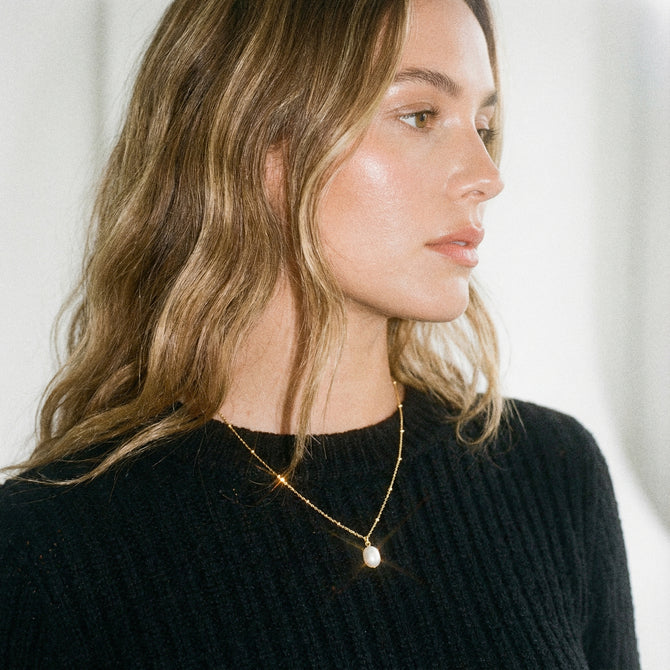
Choose gold-plated pearl drops to flatter your skin.

Selecting Your Signature Jewellery Piece
Select a single, standout piece to serve as the focal point of your ensemble, such as a pearl strand, a bold cuff, or a pendant that artfully blends materials. Decide whether the pearls or the metal elements will take precedence, allowing the rest of your jewellery to complement rather than compete. Let your anchor piece make a statement, whether through scale or thoughtful placement—chokers pair elegantly with higher necklines, while longer pendants bring definition to a V-neck or simple fabric. For a harmonious finish, consider the interplay of metal tones with the natural hues of your pearls: creamy or golden pearls are beautifully enhanced by warmer metals, while cooler white pearls are set off to perfection by silver or white metals.
Introduce texture and contrast to enhance visual interest. Pair the luminous sheen of pearls with matt or gently hammered metal, or opt for a sleek metal accent to highlight the softness of a pearl’s lustre. Limit contrasting elements to two or three, ensuring each detail feels considered rather than overwhelming. Finesse wearability by assessing the anchor for weight, movement and fastening security, and ensure it is positioned to avoid catching on clothing. Confirm the piece drapes gracefully as you move, and choose secure closures or earring backs to keep the focal point elegantly in place throughout the day.
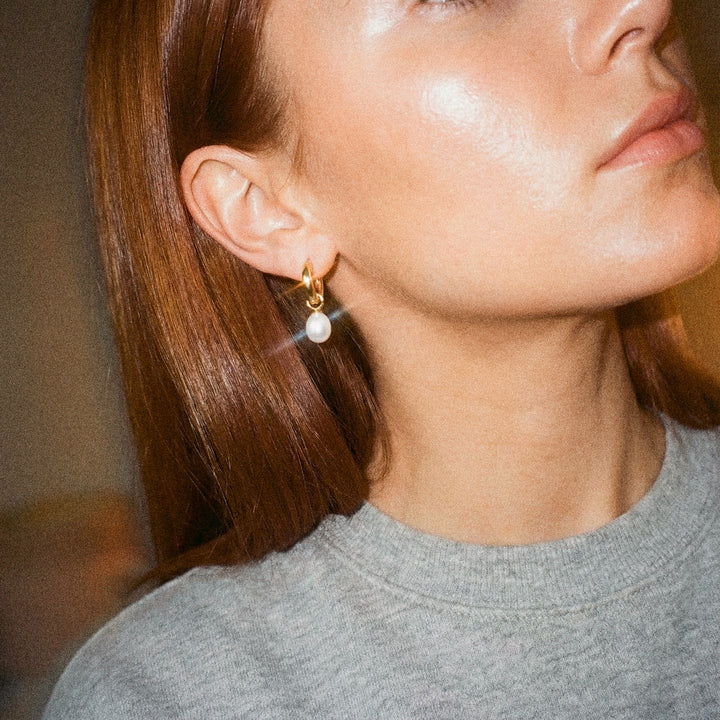
Anchor your look with textured gold hoops and pearls.

Achieve Effortless Elegance by Harmonising Tones in Every Look
Selecting a single anchor metal for jewellery worn nearest the face creates a sense of harmony, while introducing one or two complementary metals as subtle accents adds depth without overwhelming the overall effect. Consider the overtone of the pearl when pairing with metals: warm hues such as cream or champagne are beautifully complemented by yellow or rose tones, whereas cooler shades like pure white or silver are enhanced by white or grey metals. Observing how these tones interact in natural light can help ensure they flatter your skin and create a cohesive, elegant look.
Metal finishes can subtly influence a pearl’s natural beauty. Polished surfaces enhance a pearl’s lustre, while brushed or matte finishes offer a gentle, understated contrast. For a harmonious appearance, reflective metals complement pearls with a high lustre, whereas matte textures introduce a thoughtful touch of variation. Repeating delicate metal elements, such as clasps or spacer beads, across your jewellery can help create a sense of unity. To find the most flattering combination, observe your choices against a neutral background in natural light, taking note of which tones harmonise with both your skin and attire. Adjust the prominence of each metal until your collection feels elegantly balanced.
Add textured gold hoops with suspended pearls.

Image by Divaris Shirichena on Unsplash
Achieve Effortless Elegance with Proportion, Scale, and Contrast
Select an anchor piece to create a refined focal point within your ensemble, then complement it with more delicate accents to achieve visual balance. For instance, a striking baroque pearl pendant pairs beautifully with slender chains and understated earrings, while petite pearl studs can be elegantly offset by more substantial metal bangles. Consider the tonal harmony by observing the pearl’s overtone—cool white pearls are complemented by silver or white metals, whilst warmer cream pearls are gently enhanced by yellow metals. Adjust the scale of chain thickness, link size, and setting width to suit the proportions of each pearl, ensuring every detail maintains a graceful sense of hierarchy.
Introduce the anchor metal in subtle touches, such as clasps, spacer beads, earring posts or ring shanks, bringing cohesion to mixed-metal ensembles without the need for perfect uniformity. Embrace contrast not only through colour but also through finish and texture, alternating between high-polish, brushed and oxidised surfaces. A darker or matte metal can enhance the natural luminosity of pearls, allowing them to shine more brightly. This interplay of finishes lends a sense of rhythm, ensuring layered combinations remain visually captivating. By thoughtfully anchoring your choices, balancing scale, repeating gentle accents and varying finishes, you can organise mixed-metal and pearl jewellery into harmonious, elegant arrangements.
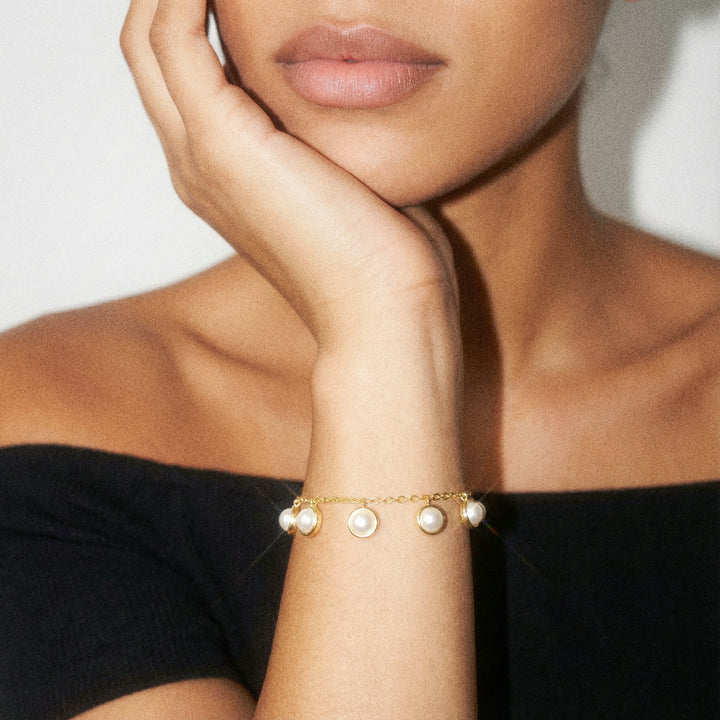
Layer with a fine pearl chain for refined balance.
![{"image_loaded": true, "load_issue": null, "description": "Close-up image of a woman from mid-face to mid-torso. She wears a white blazer with a low neckline. She has layered pearl necklaces with a gold tassel detail. On her right hand, she holds the lapel of the blazer and wears a ring with a sizable clear stone on her ring finger. Her nails are painted a dark color. The background is a blurred neutral color.", "people": {"count": 1, "roles": ["model"], "visible_demographics": "adult female, medium skin to](https://cdn.shopify.com/s/files/1/0371/8817/3961/files/image_loaded_true_load_issue_null_description_close_up_image_of_a_woman_from_mid_face_to_mid_torso_she_wears_a_white_blazer_with_a_low_neckline_she_has_layered_pearl_necklaces_with_a_7861d009-b71a-427d-a9a5-36696b36d840.webp?v=1768372451)
Master the Art of Effortless Layering and Finishing Touches
Select a distinct anchor metal to offer a focal point for your ensemble, such as a central pendant or a more substantial chain. For a harmonious look, consider matching the metal’s undertone to the pearl’s overtone; golden hues pair beautifully with warm-toned metals, silvery overtones complement white metals, and rose-tinted pearls sit elegantly alongside pinker metals. When layering, stagger chain lengths by several centimetres, vary widths and link styles, and position the shortest layer close to the neckline, allowing the anchor to rest gracefully at the lowest point.
Achieve visual harmony by pairing delicate pearls with more substantial chains, or balancing larger pearls alongside finer links, ensuring each layer settles gracefully. Opt for matte finishes to subtly unite different textures, while polished metals can introduce refined contrast by reflecting light. Secure pearls elegantly with discreet wire wraps or jump rings, and select clasps and connectors that complement the prevailing metal tones for a cohesive look. To maintain the lustre of pearls, gently buff them with a soft, dry or slightly damp cloth, using only water or a mild pH-neutral soap if needed. Protect jewellery from perfumes and hairspray, and store pieces flat in individual pouches to prevent abrasion and preserve the clarity of mixed metal details.
Blending metals with pearls achieves a harmonious look when guided by a unifying element, complemented undertones, and a thoughtful balance of scale, texture, and finish. Experimenting with combinations in natural light, echoing delicate metallic accents, and layering with an overarching tone creates an intentional and elegantly wearable ensemble.
Consider the sections on assessing undertones, selecting an anchor, matching tones, balancing proportion and embracing layers when planning your combinations. Experiment with pairings against your skin and refine your choices until the pearls and metals complement your complexion, resulting in harmonious ensembles that evoke effortless confidence.