




Combining faceted gemstones and pearls can elevate an evening look, but mismatched colour, scale, or metal can make an outfit feel disjointed. How do you create a cohesive ensemble that lets gemstone sparkle and pearl lustre complement one another rather than compete?
This guide offers practical techniques for pairing complementary lustres, balancing colour, tone and metal, and adjusting scale and proportion so each piece contributes to a single focal statement. It also explains how settings, metal detailing, layered arrangements and simple care ensure gemstones and pearls present as a unified, elegant ensemble.

How to pair faceted gemstones with pearls for complementary lustre
Pair a pearl's overtone with the gemstone's colour to create harmony. Warm golden or peach overtones sit naturally alongside citrine, warm garnet and amber, while silver or blue overtones are complemented by sapphire, aquamarine and cool tourmaline. Choose metal to bridge contrast: yellow gold enhances warm overtones, white metal keeps combinations crisp, and mixed-metal settings soften pairings while maintaining balance. Respect scale and shape by pairing round pearls with round or oval faceted gems, or by introducing baguette and emerald cuts as a geometric counterpoint. As a visual guideline, allow the pearl to appear about one and a half to three times the diameter of the surrounding stones.
Control visual energy by using faceted stones with intention. Surround a single pearl with several small gems to add sparkle without overwhelming the pearl's natural lustre, or pair one or two larger stones so each element remains distinct. Test combinations in varied lighting to judge how lustre and sparkle interact. Put pearls on after applying cosmetics, clean them gently and avoid abrasive cleaners, and store pearls and faceted pieces separately to prevent scratching. These practical steps show how proportion, colour and metal choice work together to create a balanced, elegant evening look.
Choose convertible sizes to match pearl-to-gem proportions.

Harmonise colour, tone and metals to unify your ensemble
Begin by identifying the dominant colour and the purpose of the outfit. Decide whether faceted gemstones should echo, contrast with or subtly accent that colour so the jewellery either unifies or punctuates the look. Match a gemstone's undertone to the metal: warm stones such as amber, garnet and citrine pair beautifully with yellow or rose gold, while cooler tones such as blue sapphire or aquamarine sit best with silver, white gold or platinum. Always test combinations against the actual fabric and under the lighting in which the outfit will be worn; photograph the set and adjust the metal or pearl tone if any element appears disconnected or overpowered.
Use pearls as a bridge and a buffer by positioning them between faceted gemstones and metal. Choose a pearl tone that complements the metal undertone, and vary pearl sizes so smaller pearls soften larger gems while a single larger pearl anchors a bold stone. Control scale and rhythm by matching gem size and cut to the neckline and silhouette, and by repeating metal and pearl elements elsewhere on the body. Favour odd-numbered groupings for a natural visual flow, and prioritise a single focal point so texture and sparkle do not compete. If you are unsure, photograph the complete ensemble with shoes and clutch in the intended lighting, then edit one element at a time until the composition feels unified.
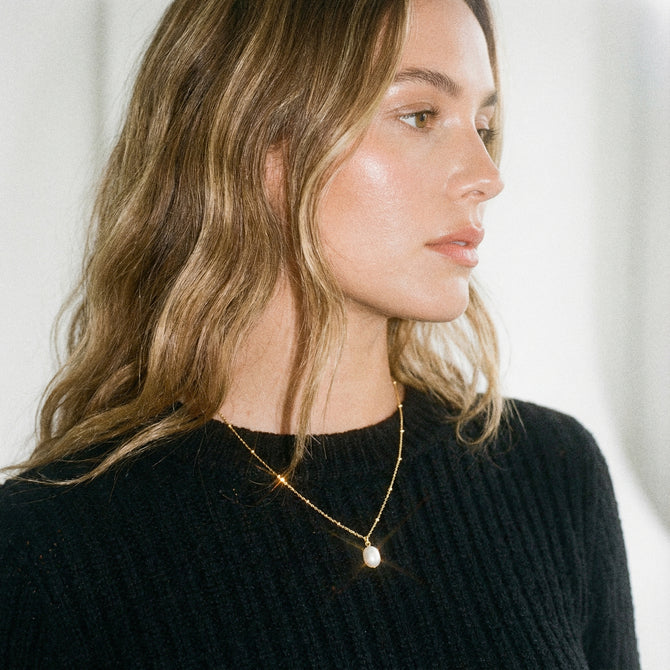
Anchor ensembles with warm gold-set freshwater pearls.

Maintain focal balance by adjusting scale and proportion
To compare visual weight, measure the pearl's diameter and the faceted stone's dimensions, place them side by side on a neutral background and photograph them in the lighting you plan to use. Faceted gems often appear larger because their facets concentrate highlights, while pearls return a softer, broader lustre. This photographic test reveals how highlights and surface texture influence perceived size, helping you decide which element should read as dominant. Take both close-up and full-length shots to observe how the pieces sit on the wearer and how they perform in different light.
Control the focal hierarchy by selecting a single dominant element. For example, opt for a large faceted pendant paired with smaller pearls, or a strand of larger pearls accented with tiny faceted stones. Refine the balance by adjusting spacing and chain width, and by introducing broader settings or spacer beads so a substantial pendant has equal visual presence and the composition avoids crowding. For cohesion, pair rounded forms with brighter finishes; for a considered contrast, combine pearls with angular facets and warmer, matte metals. Change one component at a time until the eye settles on a clear centre of interest.
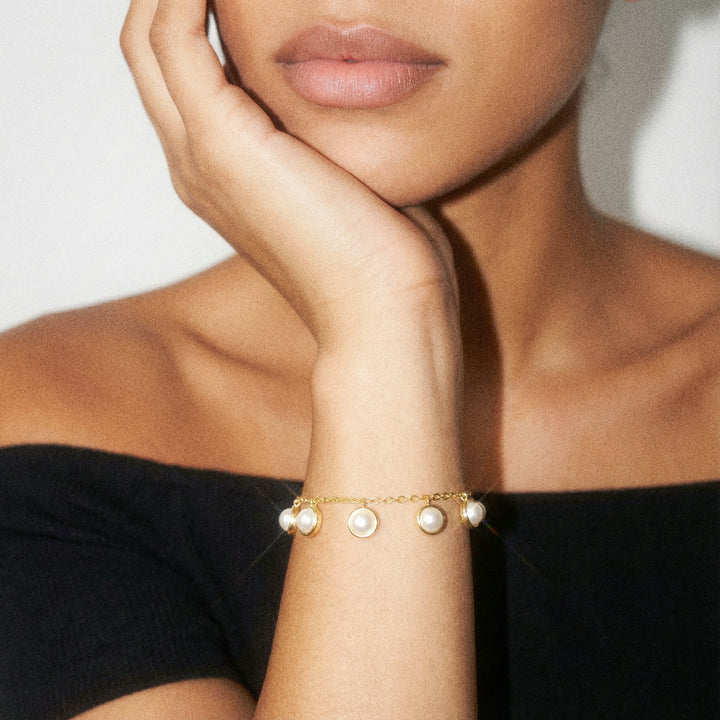
Switchable pearl charms control focus instantly.

Choosing settings and metal details to harmonise gemstones and pearls
Begin by choosing a single dominant metal tone or a considered mixed-metal motif, and repeat it in settings and links so the metal acts as a visual thread. For example, use a warm gold bezel around both the pearl cup and neighbouring faceted stones, or reserve a secondary metal for small connecting rings to avoid visual dissonance. Match setting types to the materials: low-profile cups or bezel settings help protect a pearl's softer surface, while claw or open settings allow faceted stones to catch and reflect more light. These choices protect delicate nacre while letting gemstones show their best attributes. Matching surface finishes also helps; a high polish complements pearl lustre, while satin or textured finishes temper gemstone brilliance to create the balance you want.
Manage scale and visual weight through considered proportion and repetition. For example, balance a larger pearl with several smaller faceted stones, or place a faceted centre within a pearl halo, and repeat shapes or pavé rows to spread the visual mass. Carry a motif such as a bezel rim, milgrain edge or a small geometric detail across both pearls and gemstones to harmonise the design. Finally, incorporate articulated links so components can move independently; this reduces impact on the pearls, animates faceted surfaces with light and relieves stress on the settings.
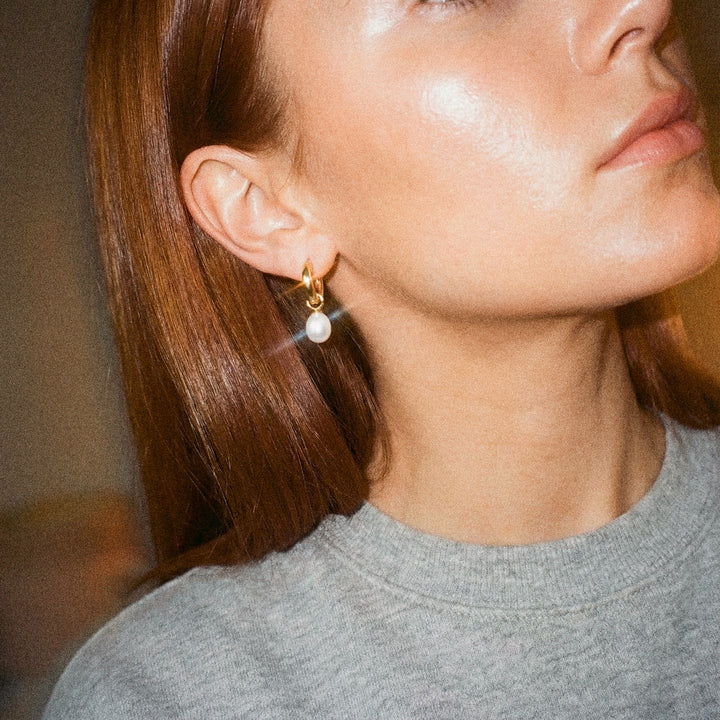
Switch to a drop for movement and protection.

How to style, layer and care for evening-ready gemstone and pearl jewellery
Begin by selecting a single focal point. Choose either a faceted gemstone or a strand of pearls as the centrepiece, and keep supporting pieces smaller and simpler so the faceted cuts that catch the light do not compete with pearls' softer lustre. Layer with intention, alternating angular brilliance and rounded pearl lustre; for example, pair a short pearl choker with a longer faceted pendant to create visual rhythm without overcrowding the neckline. Keep metal colour consistent across pieces and inspect prongs, clasps and earring backs before leaving so faceted stones cannot snag pearls or fabric while you wear them.
After wearing, gently wipe pearls with a soft, damp cloth. Store strands flat or in a soft pouch to prevent abrasion and to avoid stretching the silk thread, and have strands restrung when knots loosen to prevent breakage. Respect differences in hardness by preventing direct contact between faceted gems and softer pearls, as harder stones can abrade a pearl's nacre. If combining these materials in a single design, use protective bezels, allow secure spacing or opt for recessed settings to keep stones apart and reduce contact. These simple measures protect the materials and create a cohesive, elegant look where lustre and sparkle complement one another rather than compete.
Pairing faceted gemstones with pearls yields a cohesive evening look when lustre, colour, scale and metal are thoughtfully aligned so each element supports a single focal statement. Match a pearl's overtone to the gemstone colour, use metal as a visual bridge, and assess arrangements in the light in which they will be worn to ensure pearls appear softer while gems retain their sparkle.
Follow scale guidelines: pearls should read at roughly one-and-a-half to three times the apparent diameter of nearby gems. Choose bezels or low-profile cups to protect the nacre while allowing light to reach faceted cuts. When photographing the full ensemble, let a single piece take centre stage and keep supporting items understated. Care for pearls with simple maintenance so their natural lustre complements the sparkle of adjacent stones on the wearer.