




Pearls can instantly smarten an outfit. Subtle shifts in hue alter their character: warm cream complements camel and beige, while cool white provides a crisp contrast against navy and black. Which pearls suit your skin tone and hair colour, which anchor your wardrobe palette, and how can you layer them with ease?
This guide explains how to decode pearl colours and undertones, assess your wardrobe palette and neutrals, and match pearls to your skin and hair tones. It also offers practical ways to pair pearls with outfit colours and styles, and shows how mixing, layering and thoughtful care can build versatility so every outfit feels effortlessly pulled together.
Decode pearl colours and undertones
Each pearl has a bodycolour and a delicate overtone, and the same bodycolour can read quite differently depending on that overtone. For example, a white bodycolour with a pink overtone appears rosy, while a silver overtone reads crisp and cool. To distinguish these elements, examine the pearl in natural light and compare it to a white card. Then hold it next to your jawline and against a warm fabric to see which tint becomes more pronounced. Note whether the pearl brightens or dulls your complexion, and use those observations to classify it as cool, warm, or neutral. This provides a simple, repeatable method for identifying a pearl's colouring.
Use undertone readings to guide outfit choices. Cool undertones, such as silver, white or rose, work best with navy, charcoal and jewel colours, while warm undertones, like cream or gold, complement camel, olive and rust. A pearl's reflected light will either harmonise with or contrast against adjacent colours, so consider how it interacts with the surrounding palette. Coordinate jewellery and fabrics by matching warm pearls with yellow metals and soft, matte textures, and cool pearls with silver metals and crisper fabrics. If you choose to mix undertones, keep one dominant to avoid visual conflict. Quick checklist: identify the outfit's dominant temperature; test the pearl against your skin and a fabric swatch; favour neutral or matching undertones for a pulled-together look; reserve contrasting undertones for deliberately eclectic styling.
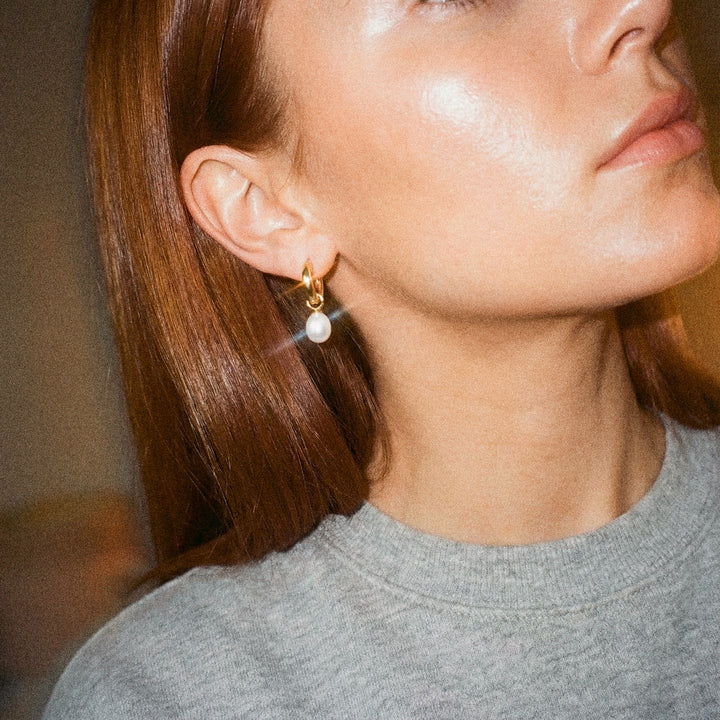
Wear gold pearl earrings to harmonise warm-toned outfits
How to audit your wardrobe palette and elevate everyday neutrals
Begin by organising your wardrobe into light, mid and dark neutrals, plus any dominant colours. Lay each group flat or hang them together, then photograph them to see which neutral base you reach for most and which pearl contrasts will have the greatest effect. Check fabric undertones by holding a pearl close to each neutral to judge whether garments lean warm, cool or neutral, and note how pearls with warm or cool overtones harmonise or clash with those fabrics. These photographs and close comparisons provide clear, objective evidence to guide future pairings.
Test contrast in natural light by pairing pearls with black, navy, charcoal, grey, cream and beige. Observe how high contrast makes pearls become the focal point, while low contrast produces a softer, more integrated look. Keep a simple record of outfits you actually wear, noting which neutral combinations recur and which genuinely elevate the ensemble, then use that evidence to curate the neutrals you retain or introduce. Create three go-to neutral outfits and photograph each while varying necklace length and layering textures; these reliable templates will reveal where pearls sit best against different necklines and fabrics.
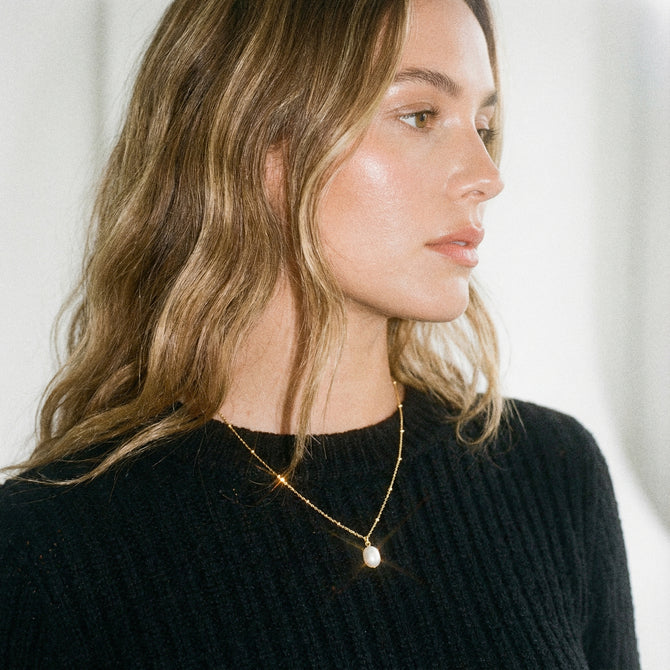
Add subtle, mixed-size pearls to anchor neutral outfits
How to match pearls with your skin and hair undertones
Discover your skin undertone with a simple wrist test. If your veins look blue or purple, you have a cool undertone; greenish veins indicate a warm undertone; and if veins are hard to make out, you are likely neutral. For cool skin, favour pearls with a silvery white overtone. Warm undertones are complemented by cream or champagne overtones. If you are neutral, you can experiment freely with different overtones. Use your hair colour to refine the choice: ash blonde and blue-black hair pair well with bright white or silver-lustre pearls, while warm blonde and red hair tend to suit golden, peach or champagne overtones. Medium brown or olive complexions can either harmonise with warm tones or introduce contrast with darker grey, peacock or chocolate pearls.
Consider whether you want your pearls to draw the eye or to sit quietly with your outfit. For a focal statement, choose darker or coloured pearls against very fair skin; for an understated, cohesive look opt for a near match. When trying pieces on, view them in natural light held at the jawline while wearing a neutral top. Take close-up photos without flash to compare, and check the pearls under both cool and warm indoor lights, as pearls reflect surrounding colour and light. Match metal settings and outfit tones to reinforce the effect: pair cool-toned pearls with silver or white metal and cool colours, and warm-toned pearls with yellow metal and warm hues. When mixing tones, use subtle metal accents to bridge differences. Bear in mind that subtle overtone shifts occur naturally due to shell and water conditions, so use these practical tests to confirm which tone performs best with your colouring in real wearing conditions.
Toggle between subtle and statement pearl styling
Pair pearls with outfit colours and styles for effortless elegance
Assess a pearl's colour and overtone by holding it against white and cream fabrics to determine whether it reads cool or warm. Pair warm overtones with earth tones and camel, and cool overtones with blues, greys and jewel tones to create visual harmony. Match necklace length and pearl size to the neckline and silhouette: select shorter strands for high necklines and tailored outfits, and opt for longer or layered strands for open necklines and relaxed silhouettes. Consider the scale of a pattern when choosing pearl size; small pearls sit comfortably with fine prints, while larger pearls balance bold patterns. These simple checks and proportion rules help you anticipate how pearls will read within an outfit before you step out.
Alter the mood of an outfit through tone and contrast. Cream or blush pearls soften bright colours, while high lustre white pearls lend polish to muted, monochrome looks. Pearls can serve as a focal accent or a coordinated colour point. For a classic finish, pair pearls with silk or satin; for a contemporary edge, juxtapose them with knitwear or denim, remembering that fabric sheen and pattern scale affect how pearls read from a distance. When mixing metals and other jewellery, layer a single pearl strand with delicate gold or silver chains, match metal tones to outfit hardware for cohesion, and keep one statement pearl piece alongside simpler supporting items to avoid visual clutter.
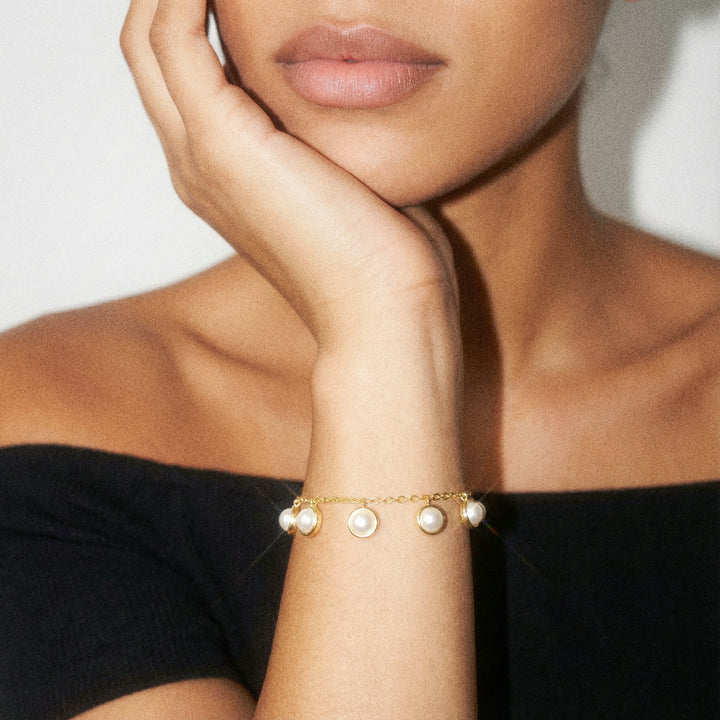
Switch hoop to pearl drop for instant polish.

Create versatile style through mixing, layering and thoughtful care
Choose lengths and scales to flatter necklines and proportions: wear the shortest piece closest to the collarbone to create a clear visual path, select smaller pearls for close-fitting tops and opt for longer strands to elongate a V-neck. Leave negative space so pieces frame the face without overcrowding. When layering, vary bead sizes and chain widths, alternate single-strand pearls with delicate chains, and include silk knots between beads to prevent rubbing and tangling. Repeat a single metal tone in clasps and chains to anchor the ensemble so the eye reads the look as intentional, and balance texture by pairing lustrous pearls with matte fabrics, hammered metal or leather to emphasise their lustre. Vary rhythm and spacing to maintain a graceful drape and keep multiple pieces readable on the body.
Match a pearl's overtone and colour to your outfit: choose warmer overtones to harmonise with earthy, muted palettes and cooler overtones to complement saturated or jewel tones, allowing the pearls to sit naturally within the composition. For patterned garments, select a pearl tone that echoes a lighter hue in the print so the pearls feel integrated rather than out of place. Care is straightforward: wipe pearls with a soft cloth after wearing, store strands flat in a soft pouch away from abrasive items and chemicals, and have strands restrung with knots when beads begin to shift to prevent loss and preserve an even drape.
Hold a pearl gently to your jawline in natural light to observe its body colour and overtone. Group your neutral garments and photograph them to reveal the contrasts you are most drawn to. Use these observations to favour warm or cool overtones, to coordinate metals and fabrics, and to create three photographed templates that show where pearls sit best against different necklines and textures.
Each heading presents a simple, repeatable test to try at home, from decoding colour and auditing your wardrobe to matching skin undertones and choosing scale and length. Apply these tests, keep your strands clean and have them restrung as needed, and you will create reliable pairings that make every outfit feel intentionally pulled together.