



Pearls paired with leather and oxidised metals can sometimes appear disjointed, turning carefully chosen pieces into an unintended clash. How can you make those contrasting materials read as a single, considered look rather than a mismatch?
This guide explains how to assess tone and texture, choose pearl shape, size and lustre, and layer pieces to balance softness with edge. It includes styling frameworks for casual, smart and formal occasions, together with practical advice on cleaning, protection and storage to help mixed-material jewellery sit in harmony.

How to assess materials for harmonious tone and texture
Begin by assessing surface sheen and temperature. Hold each piece close to your face or under a neutral light to observe how pearls scatter soft highlights, oxidised metal offers a low lustre contrast, and leather absorbs light. Place items against a neutral card or a patch of skin to judge whether they read as warm or cool; then either pair like temperatures for a quietly harmonious look or introduce a single contrasting element as an intentional focal point. Anchor the composition with a recurring detail, such as chain colour, repeated bead size or a shared motif, to give the eye an organising principle. This approach lets glossy and matt surfaces read as layers of depth, helping the mix feel cohesive.
Manage scale and placement by anchoring heavier, textured pieces lower on the body and reserving smaller, more reflective pearls nearer the face. Alternate large and small elements so textures do not compete, and lay layers flat or sketch them out to check balance before wearing. To test how materials interact, try a discreet area with a soft cloth to look for colour transfer, diminished lustre or abrasion. Depending on the result, allow a natural patina, gently polish to restore sheen, or add neutral spacers to protect delicate finishes.
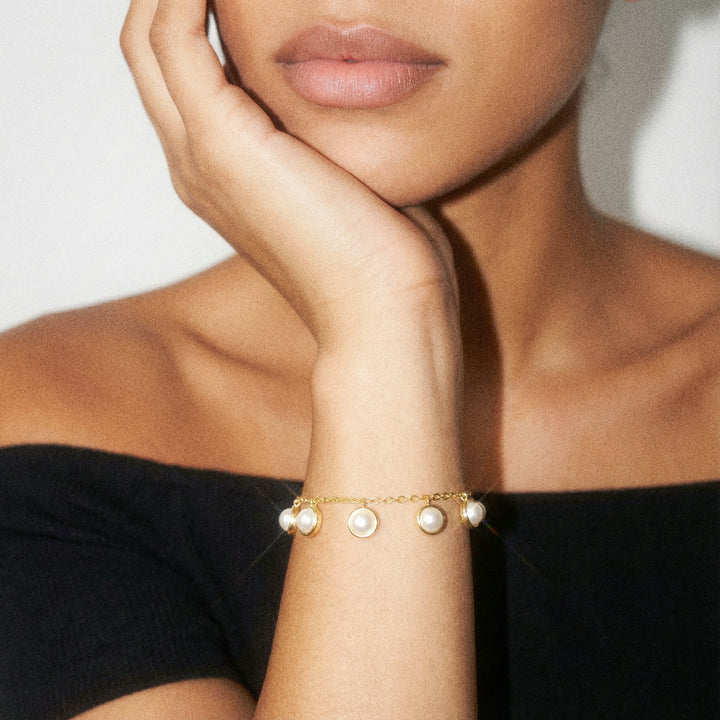
Place small graduated pearls by the face for balance.

Choose pearl shape, size and lustre to complement layered jewellery
Choose a pearl shape to define each layer's role. Round pearls read as formal and make effective focal pieces. Baroque or potato shapes introduce an organic texture that harmonises with leather and oxidised metal. Button or coin pearls sit flat, making them well suited to chokers or layered stations. Use size to create hierarchy: select a dominant pearl of around 8 to 14 mm, then add supporting strands that step down by about 2 to 6 mm, or use multiple 2 to 4 mm pearls to add texture without competing with the focal piece. Match lustre to the accompanying materials: high-lustre, mirror-like pearls contrast with polished metals and draw the eye, while satin or matte pearls absorb light and blend with darkened metals and soft leather.
Combine shape and finish to bridge different materials by pairing an irregular, tactile strand with a neat small round strand and a matt pearl station to mediate between rustic leather and oxidised metal. Adjust bead spacing so each element reads clearly: widen gaps to isolate a focal pearl or tighten them to create continuous texture. Drape the layers on the body and view them in natural and artificial light to assess how lustre and tone interact with the skin and surrounding materials. Photograph each combination, then change the order or refine lengths and spacing until the pearls sit beside materials they enhance and the overall composition feels unified.
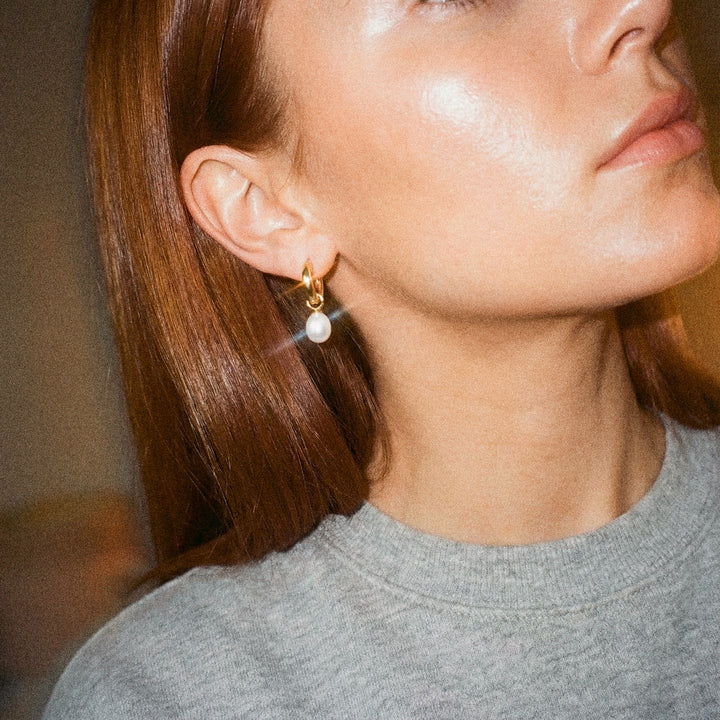
Add an organic sculptural pearl hoop to soften layers.

Layer jewellery to achieve a balanced blend of softness and edge
Begin with a single anchor piece and build the ensemble around it. Select a prominent pearl strand, a leather cuff or an oxidised pendant, then add complementary items so one piece remains the focal point while the others support rather than compete. Vary length and scale to create a clear visual hierarchy; for example, pair a choker-length pearl strand with a longer oxidised chain and a slim leather cord so staggered lengths prevent tangles and guide the eye from the neckline to the chest. Contrast finishes deliberately by placing glossy pearls beside matt oxidised metal and textured leather, and repeat a finish, such as oxidisation on a clasp or bead, elsewhere to tie the look together.
Echo small motifs and consistent colour temperature to knit disparate materials, repeating a metal tone, bead shape, or stitch detail so the eye finds continuity. Choose warm or cool undertones across pearls, leather, and oxidised metal to avoid visual dissonance. Place bulkier leather lower on the torso or at the wrist, and reserve delicate pearls near the collarbone to respect proportion and garment lines. Arrange pieces so one reads as the focal point while others support it, and echo a finish, such as oxidisation on a clasp or bead, at least once to tie the look together.
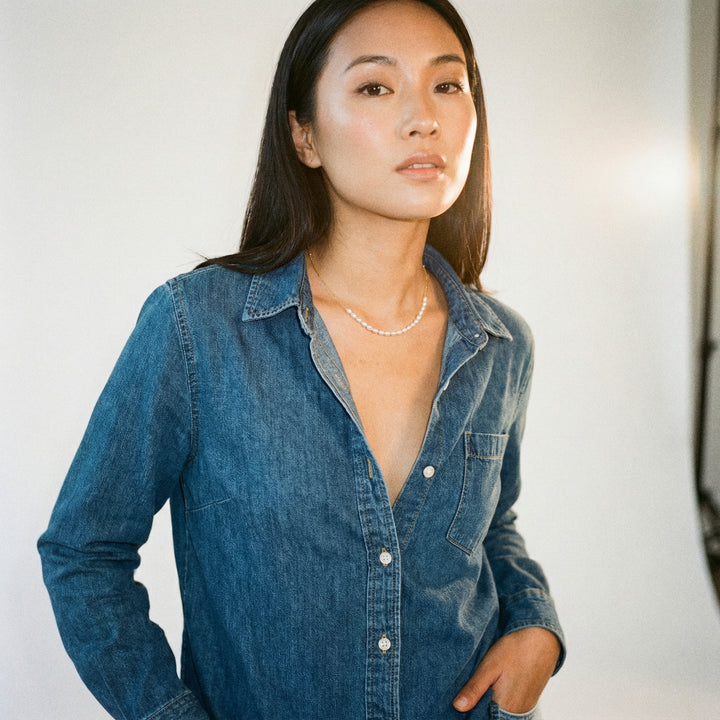
Anchor looks with a classic freshwater pearl strand.

Mix materials with effortless elegance for casual, smart and formal occasions
Choose a single anchor element, such as a dominant material or tonal centre, and echo it in smaller accents, for example a matching oxidised clasp or a leather strap across several pieces to create a visual thread. Layer by scale and proximity to the face: place delicate pearls or slim chains closest to the neck, follow with mid-weight oxidised chains or pendants, and reserve bulkier leather bands or cuffs for lower down the body to avoid visual competition and preserve clean lines. Play with texture and tonal contrast by pairing pearlescent lustre with matte leather and muted oxidised finishes, allowing a considered interplay between shine and subdued surfaces. Match warm or cool undertones across metals and findings so mixed materials read as a cohesive palette.
Consider three simple styling templates for different occasions. Casual: a single strand of pearls paired with a leather jacket and a solitary oxidised pendant for an easy, lived-in polish. Smart: a mid-length pearl necklace worn beneath a tailored blazer with a slender oxidised chain, introducing leather as a subtle accent such as a belt. Formal: a choker or layered pearls paired with a delicate oxidised cuff or a leather-trimmed clutch, keeping leather minimal and refined. To protect mixed-material jewellery, dress after applying creams and fragrance, wipe pearls gently with a soft cloth after wearing, and store pearls separately from oxidised metal to avoid abrasion or transfer. Avoid prolonged contact between damp leather and metal to reduce staining and corrosion, and treat leather sparingly so it remains a considered accent rather than a competing element.
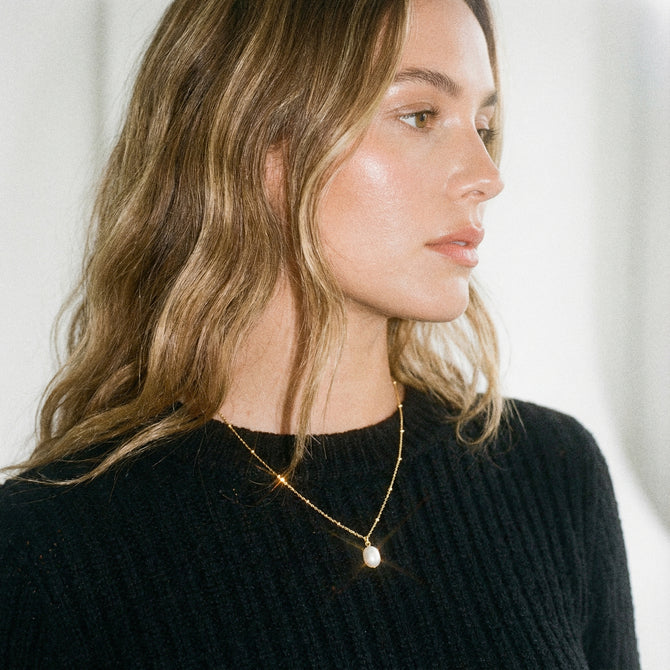
Add a single pearl necklace for effortless layered polish.

How to care for pearls, leather and oxidised metals
After wearing, gently wipe pearls with a soft, slightly damp cotton or microfibre cloth, then lay strands flat to dry so the thread does not stretch. Pearls are porous and will absorb skin oils and cosmetics, which can accelerate surface wear, so have strands restrung on knotted silk before the thread shows signs of wear to avoid losing multiple pearls if a break occurs. Remove surface dirt from leather with a soft brush or a barely damp cloth and restore suppleness sparingly with a neutral leather conditioner; avoid soaking or exposing leather to heat, which can shrink or stiffen the fibres. Bear in mind that darkened finishes on oxidised metals are often intentional. Remove loose grime gently with a soft brush or microfibre cloth and avoid abrasive polishes that will erase the patina. To slow further corrosion, test a thin layer of microcrystalline wax on an inconspicuous area first.
Organise storage so that pearls, leather and oxidised metals do not touch. Use individual soft pouches or compartmentalised trays, and lay pearl necklaces flat. Keep pieces in a stable environment with moderate humidity, away from direct sunlight to protect colour and finish. Adopt a simple after-wear routine: gently wipe items clean and visually inspect for fraying, loose fittings or colour transfer. Make a note of any green or dark staining where metals meet softer materials. When light care no longer restores condition, consult a specialist for restringing, deep cleaning or conservation.
Balancing pearls, leather and oxidised metal begins with a careful assessment of tone, texture and scale so contrasting materials read as a cohesive, considered composition. Choose pearl shape, size and lustre with intention, anchor heavier elements lower and repeat motifs to establish a clear visual hierarchy and continuity.
Begin by assessing materials, selecting complementary pearls, layering pieces, planning outfits and organising after-wear care to create looks that balance softness with a contemporary edge for casual, smart or formal occasions. Experiment with styling templates and different pairings when photographing looks, and keep post-wear care simple so mixed-material jewellery remains striking and long-lasting.