



Unsure which pearl size will best flatter your favourite V, scoop, boat or crew neckline? The right choice will harmonise your proportions, appearing bold or delicately understated depending on how much collarbone and décolletage are on display.
This guide explains pearl sizes and how the shape of your neckline and the amount of visible collarbone influence visual balance. It sets out simple proportion rules for pairing pearls with depth and width, and explains how to assess face, neck and torso proportions. Practical measuring and styling tips help ensure each necklace complements your neckline.

How pearl size shapes visual presence and style
Pearl diameter changes how a piece is perceived. Tiny pearls, around 3 to 5 mm, read as delicate and flatter high collars. Medium pearls, 6 to 8 mm, feel classic and balance most scoop and crew necklines. Larger pearls, from 9 mm upwards, make a bolder statement and suit deep V or wide boat necklines. A simple test can help you choose: measure from collarbone to chin and select pearls that occupy roughly one quarter to one third of that vertical distance to avoid visual crowding or appearing undersized. Also bear in mind that necklace length alters the effect; the same pearl will sit differently at the throat, at the collarbone, or on the décolletage, with large pearls worn high likely to overwhelm and very small pearls worn low easily lost against clothing.
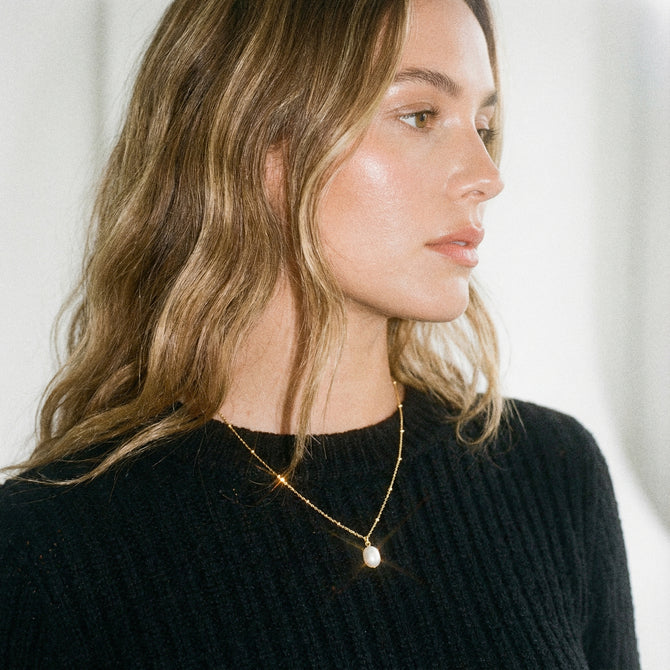
Match jewellery to neckline and body scale. For V-necklines, choose a centred pendant or a graduated strand that echoes the V. For scoop and crew necklines, select a consistent medium pearl size to softly fill the curve. For boat necklines, favour smaller, continuous pearls or delicate layered strands to mirror the horizontal line. Consider body proportions when choosing pearl size: petite frames and narrow necklines suit smaller pearls, while broader shoulders can carry larger sizes. Pair a statement pearl with a simple collar and minimal additional jewellery so the scale feels intentional rather than cluttered. Layering and graduated strands allow you to adjust visual weight across the chest, harmonising pearl size with the overall silhouette.
Choose a 6mm strand to balance scoop and crew necklines.

How to assess neckline shape and collarbone exposure for effortless styling
Use a soft measuring tape to measure vertically from the base of the neck to the top edge of the garment, and horizontally across the collarbones. Record the results in millimetres or centimetres so you can apply sizing rules consistently. Visually classify the neckline: a V or scoop frames the centre of the chest, a boat sits wide and horizontal across the collarbones, and a crew offers higher coverage at the base of the neck. With these measurements and a clear neckline category, match the scale of pearls to the available space rather than guessing.
For the vertical distance from chin to neckline, favour these pearl diameters: 3 to 6 millimetre for gaps under 40 millimetres, 6 to 8 millimetre for gaps of 40 to 60 millimetres, and 8 to 12 millimetre for gaps greater than 60 millimetres. Crew and boat necklines tend to suit smaller pearls, while deep V necklines can carry larger diameters. Use a simple proportion rule to check balance: aim for a pearl diameter of roughly one-eighth to one-quarter of the visible vertical space. For example, a 48 millimetre gap suggests a pearl range of about 6 to 12 millimetre; choose the lower end for a scoop or crew neck and the upper end for a deep V. Finally, test a bead of the proposed size at the neckline, photograph from a normal viewing distance, and adjust pearl size or strand fall until the pearls neither disappear against the skin nor overspill the neckline. Note the combination that looks most balanced.
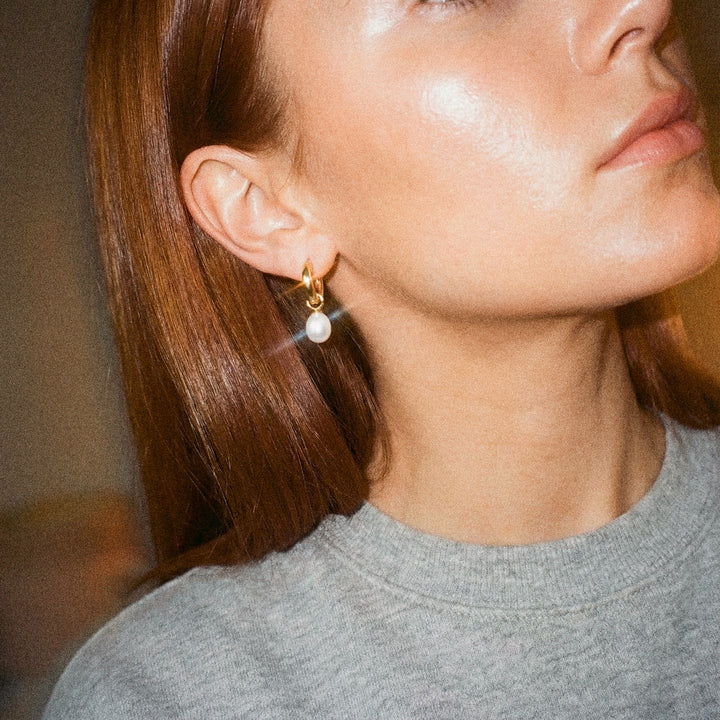
Try a 6mm strand for balanced neckline impact

How to choose the right pearl size for your neckline depth and width
Measure the depth of the neckline from the base of the throat or clavicle to the lowest point of the V or scoop, and measure the width across the collarbone. Convert those measurements to millimetres, then relate them to pearl diameter using a simple proportion. As a guideline, a pendant pearl's diameter should be roughly one eighth to one sixth of the vertical depth. For example, a 4 centimetre deep V equals 40 mm; 40 divided by 8 is 5 mm and divided by 6 is about 6.7 mm, so a practical target is around 5 to 7 mm. Translated into common necklines: crew and boat sit well at about 5 to 7 mm; a shallow scoop around 6 to 8 mm; a moderate V or deeper scoop about 7 to 9 mm; and a pronounced V or dramatic opening 9 to 12 mm. Larger pearls help to fill open space, while smaller pearls sit neatly within a framed neckline.
Position pearls so they sit in the visual sweet spot for each neckline. For a crew neck choose a short strand that rests on the collarbone; for a boat neck centre the pearl at the widest point of the shoulders; for a scoop neck seat the pearl in the hollow of the chest; and for a V-neck place the pearl just above or at the lowest point of the V. Alter chain or cord length in small increments to nudge the pearl into the ideal position, and check the bail size so the pearl hangs cleanly without catching. Adjust the basic rule for body and outfit scale: opt for a smaller diameter on a petite frame, choose larger pearls for broad shoulders or a formal gown, and consider face size, neck length and fabric, as these all change the perceived balance. Before buying or commissioning, use a simple checklist: measure neckline depth and width, select a base size from your preferred range, hold a bead or coin of that diameter at the neckline in natural light while wearing the intended garment, then refine proportions, finalise chain length, and decide on layering, using smaller pearls for a stacked look or a larger pearl for a single statement.
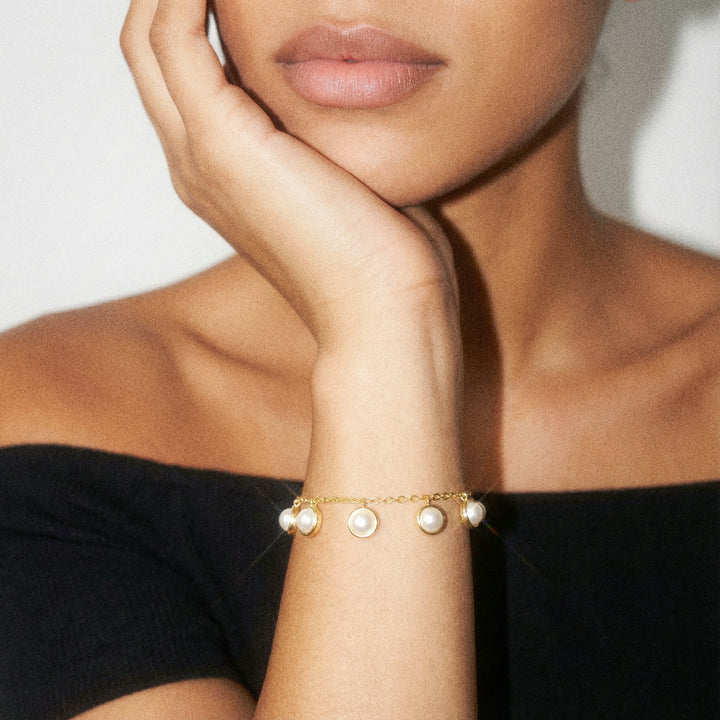
Choose a 6mm grey strand for classic neckline balance

Consider your face, neck and torso proportions to achieve a balanced silhouette
Begin by measuring your neck circumference and the distance from chin to clavicle, and by comparing jaw width with shoulder width to identify a pearl diameter that balances your proportions. If your neck is short in relation to the jaw, favour smaller pearls; a long, slender neck can carry medium to larger pearls without appearing overly delicate. Treat pearl diameter as the visual unit that should relate to the area the necklace rests on, and use visual weight to balance the torso by choosing larger pearls for broader shoulders or a fuller bust, and finer pearls for a narrow frame. To assess face shape, hold a single pearl at the base of the throat and photograph it straight on. If the pearl competes with the jawline, choose a smaller size; if it is lost on an elongated face, increase the diameter. Rounder faces often suit slightly longer lines and small to medium pearls.
Consider how each neckline frames the throat. V-necks and scoop necks open the torso, so mid-sized or graduated pearls draw the eye without interrupting the line, while boat and crew necks sit high and work best with smaller, uniform pearls that follow the edge of the neckline and avoid visual crowding. When assessing the fit, try strands with pearls in at least three different diameters while standing and seated, photograph yourself with natural posture, and note where the centre bead falls in relation to the collarbone. If the centre bead obscures the throat or extends beyond the natural frame of the neckline, choose smaller pearls or a graduated strand to refine the overall effect.
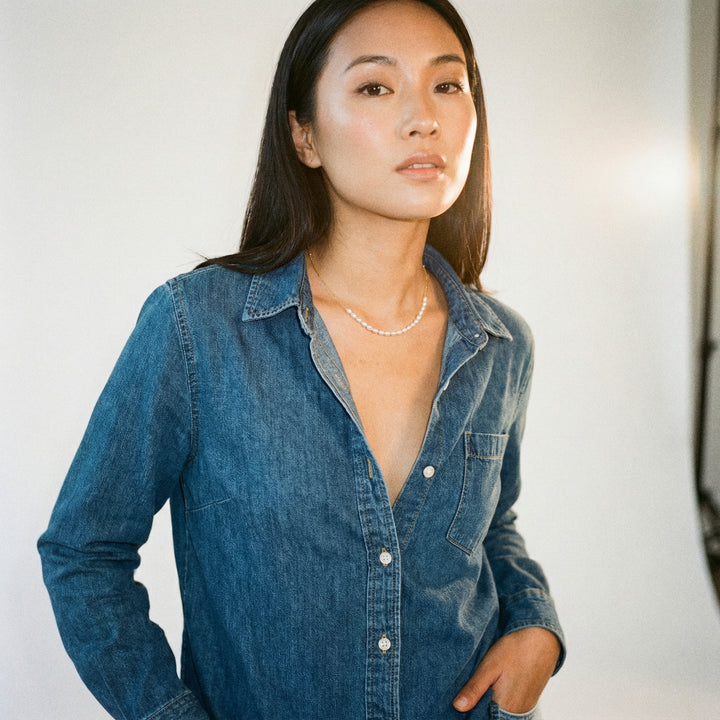
Layer a delicate pearl strand to refine your neckline.

How to measure and style pearls for every neckline
Small pearls, 3 to 4 mm, read as delicate and sit neatly against high crew and boat necklines. Mid sizes of 5 to 7 mm balance scoop necklines, while larger pearls of 8 to 12 mm create a clear focal point for deep V necklines. Because smaller pearls hug fabric and appear finer in proportion, a 6 mm pearl will look substantial on a narrow neckline yet subtle on a broader one. This gives a practical way to judge scale rather than relying on taste alone. To choose drop and centre placement, measure from the hollow of the throat to the lowest point of the neckline, and across the collarbone for boat widths. Aim to hang a pendant at the V point or roughly 5 to 20 mm below it. For scoop necklines, keep a strand at least one pearl diameter above the edge so the pearls are not hidden by the garment.
Test designs at home by stringing beads or paper discs that match the pearl diameters. Pin or hold the mock strand against the garment and observe how it behaves in motion. Notice whether the pearls sit on the fabric or in the open, if they compete with seams, and whether the focal pearl falls on the garment's natural centre, as these cues indicate balance and movement. Spacing and knotting alter perceived scale and formality: closely knotted pearls read as larger and more formal, while spaced pearls feel lighter and more modern. A graduated strand with a larger centre pearl will emphasise a V-neck, whereas evenly sized pearls suit crew and boat necklines. Match pearl scale to face shape, neck length and fabric weight. As a simple visual guide, a single pearl about the width of the wearer’s index finger suggests a delicate look, while larger sizes work better for broader faces and heavier fabrics.
Selecting the right pearl is a matter of matching the pearl diameter and necklace placement to the visible area of the neckline, so the pearls complement the body's natural lines rather than compete with them. Measure the vertical distance from the base of the throat to the edge of the garment and aim for a pearl diameter of around one-eighth to one-quarter of that distance. Hold a single pearl or a mock strand against the neckline to judge proportion and visual weight before making your choice.
Refer to the sections on pearl scale, neckline assessment, proportion rules, personal proportions and measuring and styling to translate those figures into suitable choices for crew, boat, scoop and V necklines. Measure and mock up potential necklaces, then photograph each option in natural light while wearing the intended outfit. Adjust pearl diameter, strand fall and spacing until the necklace looks visually balanced and sits comfortably.