



Have you ever purchased a necklace that looked beautiful online yet sat awkwardly against your neck? The right length should harmonise with your height and flatter your natural proportions, rather than allowing the piece to overwhelm or disappear from view.
This guide explains how to measure your neck and body, visualise where standard necklace lengths will fall, and adapt pieces to flatter both petite and taller frames. Thoughtful tips on layering and fit will help you anticipate where a chain will sit and choose combinations that complement your silhouette with confidence.

How to measure your neck and body proportions accurately
Gently wrap a soft tape measure or a length of cotton string around the base of your neck to record your neck circumference. Then measure from the centre of the collarbone, or the suprasternal notch (the small notch at the base of the throat), down to the point where you would like a pendant or chain to sit. Mark that spot with a small clip or a knot, measure the string against a ruler, and note both figures so you can compare them with common length ranges: choker 35 to 41 centimetres, princess around 46 centimetres, matinee 50 to 61 centimetres, and opera 76 centimetres and above. To mimic how a finished chain will hang, attach a small weight or a placeholder pendant when you measure, as thicker or heavier chains often sit higher and draw closer to the neck.
If your neck is short or wide, favour longer necklaces that create a clear vertical line to give the appearance of elongation. A long, slim neck often benefits from shorter lengths or a choker to balance proportions. Measure from the collarbone to the apex of the bust and test a necklace over the exact top you intend to wear, since the same length can sit notably higher or lower depending on crew, V or scoop necklines. Take straight-on photographs wearing necklaces at several measured lengths and compare where each falls relative to torso thirds, the collarbone and the sternum. Choose lengths that land at the visually narrowest point of the torso to elongate, or at a focal point to draw attention.
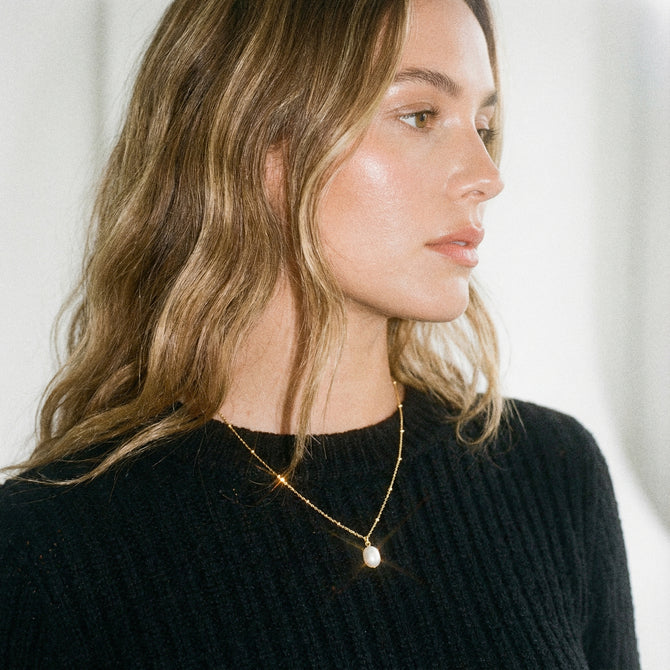
Opt for a delicate 18-inch pearl drop.

Visualise How Common Necklace Lengths Sit on the Neck
Necklace lengths correspond to familiar body landmarks: a choker of 35 to 40 cm sits at the base of the neck, a princess of about 45 cm rests on the collarbone, a matinee of 50 to 60 cm falls to the upper chest, an opera of 70 to 90 cm reaches the sternum or bust, and a rope over 90 cm hangs below the bust. This makes it easier to predict how a length will shorten or lengthen the visual line of the body. To test at home, use a length of ribbon or an old chain to mimic different clasp positions. Note where a pendant falls with a finger or pin, and photograph yourself wearing the tops you wear most often. Comparing these images will show which lengths sit on the collarbone, align with the bust or land at your preferred focal point, giving clear, practical insight into how each length affects proportion without specialist tools.
To balance height and proportions, favour pieces that sit at or above the bust if you are shorter, and choose longer lengths to emphasise verticality if you are taller. Adjust pendant size so that small drops subtly narrow the eye and larger drops form a stronger focal point. When layering, space necklaces by roughly 5 to 7 cm, vary chain width, texture and pendant size to create contrast, and anchor the arrangement with one dominant piece so each layer reads clearly. Match necklace placement to the neckline: pair crew and high necklines with chokers or long pendants worn over the fabric, use princess lengths with boat and scoop necks, and place pendants inside V-necks to avoid awkward gaps.
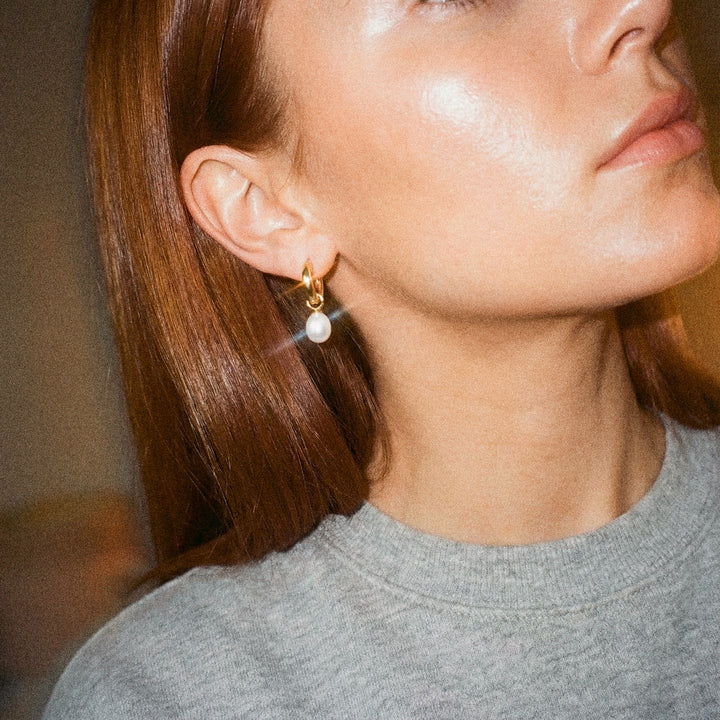
Anchor layers with a warm gold-plated pearl strand.

How to scale jewellery for a flattering fit on petite frames
Use a length of ribbon or fine cord to mark where different necklace lengths fall on your torso, then measure that ribbon with a measuring tape to compare against standard lengths in centimetres and inches. For reference, a choker sits at about 35 centimetres (14 inches), a princess at around 45 centimetres (18 inches), and a matinee between 50 and 60 centimetres (20 to 24 inches). This simple test reveals how pieces will drape on your own proportions, which is particularly useful for petite frames or when model images are not representative, and makes it easier to select lengths that maintain a balanced silhouette.
Match necklace length to the neckline. For high necklines and collars choose chokers or short princess lengths. With V-necks position a pendant so its tip sits just above the V. Avoid long chains with crew or boat necklines as they can cut across the torso. Opt for narrow, vertical pendants no wider than the distance between your collarbones to preserve balance, since smaller shapes concentrate visual weight vertically while wide, horizontal pieces can overwhelm a narrow frame. When layering, limit to three pieces or fewer with short, graduated gaps of around 4 to 8 centimetres, and keep at least one small focal pendant near the collarbone. Test spacing by knotting a chain or using a temporary ribbon before committing. Adjust lengths easily with removable extenders, by moving the clasp or removing a single link, and always try any alteration while wearing the outfit you plan to pair the necklace with to confirm the desired proportion.
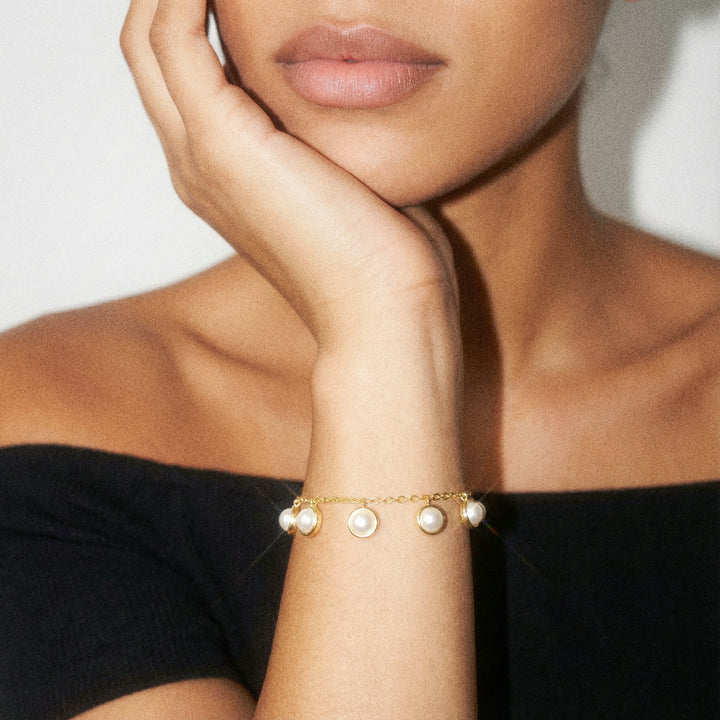
Layer a slim 18-inch pearl strand for balanced silhouettes.

How to choose jewellery proportions to flatter taller frames
For taller frames, choosing precise necklace lengths helps create visual harmony. Chokers of around 35 to 38 centimetres sit at the base of the throat; princess lengths of 43 to 48 centimetres rest on the collarbone; matinee lengths of 50 to 60 centimetres fall to the upper chest; and opera lengths of 70 to 90 centimetres reach the mid to lower torso. Measure from the base of the throat and mark where each length lands, as the same measurement will sit differently on an elongated torso. Shorter pieces anchor the neck and create a horizontal break, while matinee and opera styles introduce vertical lines that draw the eye down the body. Confirm your choice with straight-on and profile photographs worn with the intended outfit to assess sit, movement and proportion.
Scale and visual weight determine proportion. Aim for a pendant width of about one sixth to one eighth of your clavicle-to-clavicle measurement, and choose a chain thickness that reads proportionate from a short distance so it does not appear overly delicate on a longer frame. When layering, work with three pieces spaced roughly 5 to 8 centimetres apart. Vary lengths and thicknesses so the longest strand feels most substantial, and place focal pendants at different heights to guide the eye down the torso. Pair pendants with a V-neck, let a matinee sit over a crew or boat neck, and use opera lengths to break up high necklines or column silhouettes. Before committing, mimic lengths with a piece of string or an adjustable chain, take straight-on and profile photographs, and check whether the focal point aligns with the torso rule of thirds. Adjust length, scale or layering until the necklace feels balanced and draws the eye where intended.
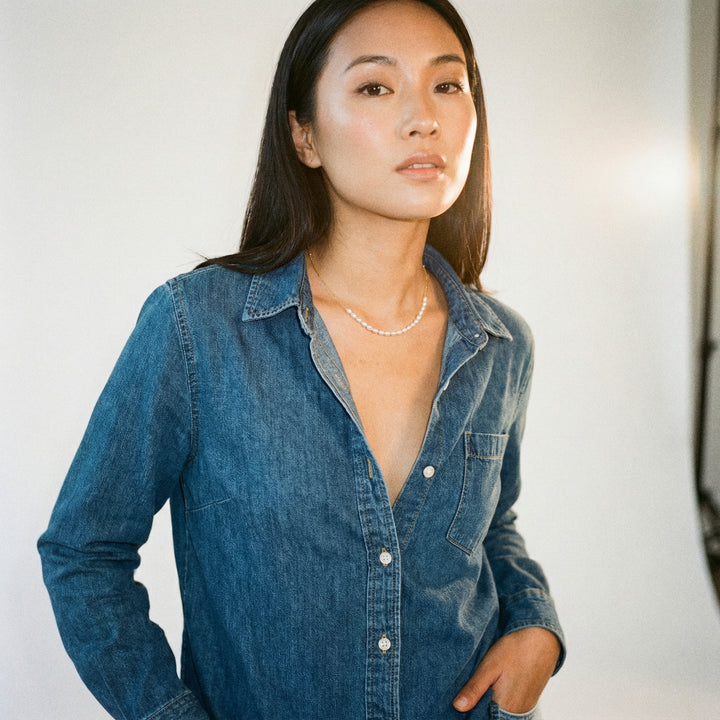
Adds substantial, layer-ready pearls to balance longer frames.

Layer necklaces for balanced proportion and effortless fit
Begin by holding a chain against your neck to see where it sits relative to the collarbone and sternum. Opt for shorter lengths on petite frames, and for taller proportions choose pieces that fall at the collarbone or mid-sternum. Match the necklace to your neckline: crew and high necklines suit short chains, while V-necks pair best with pendants that echo the V to visually lengthen the torso. Scale chain thickness and pendant size to your proportions, favouring fine chains with a centred, small pendant on narrower necks, and broader chains or larger pendants on wider shoulders. Bear in mind that rigid or heavy pieces sit and appear shorter than flexible chains, so allow for weight when choosing length.
Create clear visual planes when layering necklaces by choosing three chains with incremental lengths of around 5 centimetres so each sits on its own level. Let the longest chain or largest pendant serve as the focal point. Use line and shape to alter perceived proportions: a vertical pendant or long chain draws the eye downwards, while a horizontal collar or bib broadens a narrow shoulder line. Pair one vertical element with one horizontal to balance height and width. Photograph the outfit to judge proportion, tweak the fit with extenders or by repositioning clasps, and store layered pieces separately so their natural drape is preserved for accurate future fitting.
Choosing the right necklace length is about balancing your height and natural proportions. Measure your neck and torso, visualise where standard lengths will fall, and test with a length of string or a spare pendant. This reveals how chokers, princess, matinee and opera styles sit on you, helping you choose or alter chains that lengthen, anchor or create a clear focal point.
Follow the guide's steps: measure, visualise, scale for your frame and layer in distinct planes around a single focal piece. Experiment with combinations that suit the necklines and outfits you wear most, photographing each attempt. Adjust lengths, pendant scale or spacing until the necklace sits where you want, then store layered sets separately so future fittings remain consistent and predictable.