



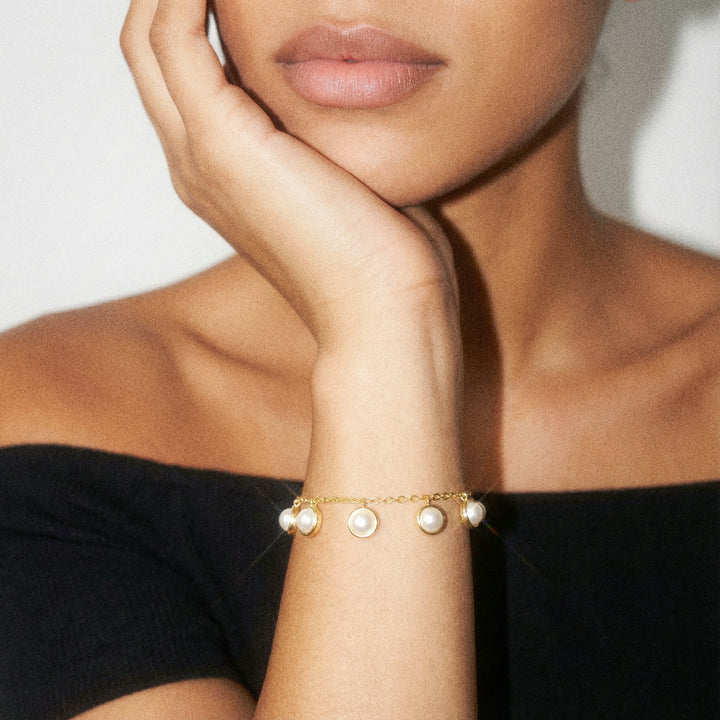



Pearls may appear radiant in photographs or under shop lighting, yet subtle variations in colour, lustre and surface texture can alter how they look when worn. To be confident a pearl will retain that appearance up close and over time, try a few straightforward checks you can carry out at home.
Begin with neutral lighting and a plain backdrop to reveal a pearl's true colour and overtone. Next, appraise the lustre and nacre depth to assess its glow and durability. Finish by inspecting the surface for blemishes and considering shape, matching and wearability, so you can choose with confidence a pearl that will suit you and endure.

How to set neutral lighting and an unobtrusive backdrop for photos
Pearls reflect surrounding colours and highlights, so view them against a mid-grey, matt backdrop to minimise colour casts and surface glare and reveal the pearl's true body colour, overtone and lustre. Make the backdrop from a mid-grey card or matt fabric, remove patterns and glossy surfaces, and position it a short distance behind the pearl to avoid hard reflections while keeping the background visually even. Employ a single diffused light source placed off to one side to enhance lustre without creating bright hotspots, and avoid mixing daylight with warm indoor bulbs. Soften harsh beams with a diffuser, for example tracing paper or a white cloth.
Lock the exposure or use manual camera settings, and set a neutral white balance or include a grey card for calibration. Take both a close-up and a slightly more distant shot so you can compare images with the unaided eye and spot reflections that might mask surface features. Run simple tests by placing the pearl on grey and white backgrounds to reveal overtone shifts. Tilt the pearl to inspect nacre thickness and orientation, and use a loupe or a macro photograph to check for surface blemishes. Observe how small changes in angle and light intensity alter perceived lustre, which helps you judge nacre depth and surface quality.
Choose simple gold-plated studs to showcase true pearl colour

How to assess colour and overtone when choosing pearls
Begin by separating body colour, overtone and orient. Describe body colour as the pearl’s dominant hue, overtone as the faint secondary hue that sits over the body colour, and orient as the iridescent play produced by the nacre layers. Gently tilt the pearl and observe whether a secondary hue appears across the whole surface or only at certain angles. A true overtone will shift predictably with angle, whereas surface pigmentation usually remains fixed. Use controlled backgrounds and lighting by placing the pearl on white paper, black cloth and a neutral grey card, and view it in indirect natural daylight and under a neutral artificial light. Colour that persists across these settings suggests a structural overtone, while colour that fades or looks patchy may indicate surface treatment.
Begin with a careful loupe inspection. Using a 10x loupe, examine the drill hole, edges and reverse for any signs of a bead nucleus, concentric layering or pigment pooling near the perforations. These features can indicate thin nacre, a coating or applied colouring. Carry out a conservative surface-transfer check by gently rubbing a discreet area with a slightly damp, clean white cloth. Inspect both the cloth and the pearl for any colour transfer; visible residue is a clear sign of surface colouring or treatment. Photograph the pearl against white, grey and black backgrounds with a neutral white balance, and take close-ups from several angles. Compare these images with reference pearls or colour swatches, noting the consistency of colour, how any secondary hue shifts with angle, and whether colour concentrates in crevices. Use these observations together to inform your judgement.
Try simple grey studs to evaluate true pearl colour.

How to assess pearl lustre and nacre depth
Place the pearl in strong, direct light and rotate it slowly to observe how it reflects nearby objects. Strong lustre will return crisp, mirror-like images; weak lustre will appear soft and diffuse. Tilt the pearl and view it at a shallow angle to assess nacre depth. Deep nacre reveals a layered inner glow and shifting overtone, whereas shallow nacre can look flat or chalky. Hold the pearl between a finger and a light source or view it with the light behind it to check edge translucency. A translucent rim and a gradual change in colour suggest thicker nacre; an abrupt, opaque edge indicates thin or absent nacre. Together, these observations reveal surface quality and whether layered nacre is present.
Inspect the drill hole and setting with a magnifying glass. A visible dark core, a smooth abrupt boundary or an exposed bead point can indicate thin nacre, whereas concentric growth lines or tiny platelets at the hole suggest layered nacre. Gently rub the pearl across the front surface of a clean tooth to detect a very fine grit, a tactile clue often associated with natural nacre. Finally, examine the surface under a loupe for oriented platelets or natural pits rather than a perfectly smooth coating, since those microfeatures provide physical evidence of layered nacre.
Try sculptural hoops to showcase natural pearl character

How to inspect pearls for surface blemishes and imperfections
In bright, diffuse daylight, use a jeweller's loupe or a magnifying glass to scan the surface for pits, scratches, bumps or raised grain. Note whether blemishes are shallow and surface-level or deep enough to penetrate the nacre, as this helps distinguish normal wear from structural issues. Tilt and rotate the pearl under the same light to judge lustre. Sharp, mirror-like reflections and clearly defined highlights point to thicker, healthy nacre, while blurred or soft reflections suggest thin nacre or surface erosion. Examine colour and overtones from several angles to reveal layered iridescence. Even, continuous colour with subtle overtones supports natural nacre build-up; blotches, streaks or a surface sheen that changes when wiped can indicate dye, coating or other surface treatments.
Inspect the drill hole and edges under magnification for chips, flaking, visible core material or glue residue. Exposed bead material or abrupt colour shifts near the hole are strong indicators of re-drilled, assembled or imitation pearls. Gently feel the surface with a fingertip to detect gritty, chalky or unusually smooth textures, then perform a safe wipe test by blotting with a clean, lint-free cloth slightly dampened with water to check for any residue or colour transfer. Persistent chalkiness or powder suggests degraded or coated surfaces and should be referred for professional assessment.
Opt for AAA-grade studs to ensure thick, healthy nacre

How to evaluate pearl shape, matching and wearability for everyday style
Roll each pearl across a clean, level surface and measure its diameter along two perpendicular axes using calipers or a ruler. A steady roll and matching measurements indicate a true round, while uneven rotation or differing readings point to an off-round shape. View each pearl first from arm's length in natural daylight, then bring it closer to examine lustre and surface texture. Sharp, well defined reflections and layered highlights suggest a substantial nacre, whereas soft reflections or visible pits can indicate wear or irregularity. Lay pearls side by side on a neutral background and rotate them to compare base colour, overtone and orient, and photograph them under identical lighting to capture subtle differences that will affect matching.
Examine drill holes and mountings for chipping, glazing issues or loose thread, and temporarily restring the pearls or wear the piece to observe how it sits against the skin. Look for gaps, rocking or sections that catch in hair or clothing, as these physical signs can reveal practical faults not obvious from a static inspection. Measure the pearls' diameter and consider their proportion relative to your face shape and other jewellery to judge overall balance. Gently move, turn and shake the piece to see whether the pearls lie flat, shift awkwardly or flatter your silhouette, and use those observations to decide suitability.
A few repeatable checks reveal whether a pearl's colour, lustre and surface are intrinsic or the result of treatment, and whether its nacre is likely to endure. In neutral light against a mid-grey backdrop, use magnification and gentle handling to assess overtones, nacre depth, blemishes and construction. These straightforward tests allow you to judge appearance and longevity without specialist equipment.
Begin by setting up suitable lighting, then assess colour and overtone, examine lustre and nacre, inspect for blemishes and evaluate shape and wearability to compare pearls objectively. Use photographic checks, a loupe inspection, a gentle wipe and roll-and-measure techniques to reach an evidence-based conclusion about a pearl's suitability for wear or purchase.