





Pearls often wear tiny maps of their own history, with pits, ridges, and subtle colour shifts that record how they grew. But what do those surface marks tell you about a pearl's formation, origin, or value?
This post explores the natural processes behind surface variations, how to interpret cues such as nacre layers and growth lines, and how to assess provenance and authenticity. It also explains why certain imperfections can enhance a pearl's character, and offers practical care and styling tips to help preserve a pearl's charm.
![{"image_loaded": true, "load_issue": null, "description": "The image shows a close-up side view of a person examining something small in their hands using a white magnifying lamp with built-in circular light. The person is seated at a wooden desk with various tools and items in the background, including boxes and small equipment. The person is wearing a green sweater and a black smartwatch on their left wrist. The magnifying lamp dominates the left side of the image, and the person's face is mostly in profile looking downwards towards the object in their hands.", "people": {"count": 1, "roles": ["craftsperson", "hobbyist"], "visible_demographics": "Adult, female presentation", "attire": "Green sweater, black smartwatch", "pose_or_activity": "Holding and inspecting a small object with both hands under a magnifying lamp"}, "setting": {"environment_type": "indoors, workspace or desk area", "location_hints": "Wooden desk, tools in background, boxes, magnifying lamp with light, electrical outlet on wall", "depth_scale": "close-up", "lighting": "artificial, diffused via magnifying lamp ring light", "temperature": "neutral"}, "objects": {"primary_objects": ["magnifying lamp with circular light", "small object held in hands"], "secondary_objects": ["tools", "boxes", "wooden desk", "electrical outlet"], "object_interaction": "Person holding small object and examining it under magnifying lamp"}, "composition": {"subject_focus": "Person's hands and face near magnifying lamp", "relationships": "Hands centered under magnifying lamp; face close and focused on object", "depth_structure": "Foreground hands in sharp focus; background softly visible", "camera_angle": "eye-level, profile view", "cropping": "close crop framing person from waist to head, focusing on hands and lamp"}, "motion": {"motion_type": "implied", "motion_direction": null, "energy_level": "low", "sequence_implied": "single moment"}, "aesthetic": {"medium": "photograph", "style_subtype": "realistic", "color_palette": "muted, natural tones", "contrast_level": "moderate", "texture_and_grain": "smooth", "postprocessing": "minimal"}, "tone": {"visual_mood": "focused, calm", "lighting_influence": "soft, well-lit workspace", "camera_distance_effect": "intimate, detailed view"}, "confidence": {"demographic_confidence": 0.9, "activity_confidence": 0.85, "setting_confidence": 0.8}}](https://cdn.shopify.com/s/files/1/0371/8817/3961/articles/a_woman_sitting_at_a_table_with_a_magnifying_glass_SP5A7n2Qks.oZKU52I9zq.webp?v=1771688443)
Discover how nature shapes each pearl's unique imperfections
Natural pearls often display a recognisable palette of surface and internal features. Concentric growth rings and zonal colouration reflect episodic nacre deposition, while pits and chips arise from mechanical abrasion or predator contact. Mantle folds and flares are caused by soft-tissue movement, and irregular lustre can result from variable orientation of aragonite crystals. Each of these marks can be linked to a formation mechanism by comparing micrographs and cross sections. A straightforward observational protocol makes those links easier to establish. Examine pearls under raking and diffuse light, photograph them with a scale and suitable magnification, and record the location, size, depth and reflectivity of any imperfections before matching them to reference images. Repeated layering and thicker nacre commonly indicate slower growth in some saltwater molluscs, whereas granular surfaces and multiple focal growth centres characterise tissue-initiated freshwater pearls. Annotated examples help readers draw direct parallels between visible evidence and a pearl’s formation history.
Non-destructive techniques enhance visual examination. Radiography can reveal bead nuclei or concentric layering, microscopy resolves aragonite platelet stacking and thin organic matrix films, and straightforward spectroscopic signatures help confirm mineralogical composition. Interpret these outputs with care, distinguishing manufacturing or post-harvest damage from natural growth marks. For example, a bead nucleus will show on an X-ray, whereas surface pits appear in cross-section as interrupted nacre. Treat imperfections as investigative clues rather than automatic faults, and combine direct inspection, imaging and contextual evidence to form considered conclusions about provenance and quality. Organise findings with a concise checklist that records observed traits, probable causes and a confidence level so others can reproduce the assessment and compare results with reference images.
Compare growth patterns using graduated freshwater pearls.
![{"image_loaded": true, "load_issue": null, "description": "The image shows a woman working at a jeweler's bench. She is seated, holding a small piece of jewelry in one hand and using a rotary tool with the other hand to work on the item. The woman is wearing a white long-sleeve shirt and a black apron. The background is a dark workshop environment with various tools visible on the bench, including a red toolbox, a yellow hammer, and some small metal tools arranged on stands. Lighting is focused on the workbench, creating a dim and concentrated atmosphere. The camera angle is a close to medium side profile shot, capturing the woman's focused activity.", "people": {"count": 1, "roles": ["jeweler", "craftsperson"], "visible_demographics": "adult female", "attire": "white long-sleeve shirt, black apron", "pose_or_activity": "working with hands using a rotary tool on jewelry"}, "setting": {"environment_type": "indoor workshop", "location_hints": "workbench with jeweler tools, focused lighting, dark walls", "depth_scale": "medium", "lighting": "focused task lighting, dim ambient light", "temperature": "neutral"}, "objects": {"primary_objects": ["rotary tool", "small jewelry piece"], "secondary_objects": ["workbench", "red toolbox", "yellow hammer", "metal tool stands"], "object_interaction": "woman holding jewelry and rotary tool to work on it"}, "composition": {"subject_focus": "woman's hands and jewelry", "relationships": "woman closely positioned to workbench; tools arranged around", "depth_structure": "shallow depth of field focusing on hands and jewelry", "camera_angle": "side profile, close to medium shot", "cropping": "half-body crop"}, "motion": {"motion_type": "implied", "motion_direction": null, "energy_level": "moderate", "sequence_implied": "single moment"}, "aesthetic": {"medium": "photograph", "style_subtype": "realistic", "color_palette": "muted, neutral tones", "contrast_level": "moderate", "texture_and_grain": "smooth", "postprocessing": "natural lighting, minimal editing"}, "tone": {"visual_mood": "focused, professional", "lighting_influence": "concentrated task lighting creates a serious tone", "camera_distance_effect": "intimate, showing detail and craftsmanship"}, "confidence": {"demographic_confidence": 0.8, "activity_confidence": 0.9, "setting_confidence": 0.85}}](https://cdn.shopify.com/s/files/1/0371/8817/3961/files/a_skilled_woman_jeweler_focusing_on_detailed_craftsmanship_in_an_indoor_workshop_SP5A7n2Qks.72l6pxaYP9.webp?v=1769509723)
How to assess pearl quality from surface cues
Examine pearls with a 10x loupe or a low-power microscope under neutral white light, complemented by an oblique raking light. Rotate each pearl slowly and photograph every face beside a small scale for reference to capture lustre, orientation and surface texture. Catalogue surface features such as pits, pinholes, wrinkles, concentric growth rings, chalky patches and drill-hole bevels, recording size, depth and location, since each mark produces a distinct visual signature under magnification. These standardised steps reveal subtle texture and layered effects more reliably than a brief visual inspection and make later comparison with reference images straightforward.
Interpret marks by pattern rather than by label. Fine, parallel growth lines and layered banding seen under oblique light indicate steady nacre deposition, while irregular pits and calcified deposits often point to interrupted growth or environmental stress. To distinguish surface deposits from structural defects, check whether a blemish compresses the surrounding nacre and inspect drill-hole edges for abrupt transitions to a core. Superficial material may polish away, but deep pits, blowholes or a sudden change at the drill edge suggest thin nacre or a nucleus that could compromise durability. Document findings with standardised photographs and clear notes on magnification and light angle, compare them with species-specific reference images, and where formation, provenance or natural versus cultured origin remains uncertain, request gemmological imaging such as X-radiography.
Prefer AAA freshwater pearls for consistent lustre and durability
![{"image_loaded": true, "load_issue": null, "description": "A man in a denim jacket is seated indoors, looking through a complex optical instrument or microscope attached to a mechanical arm. He is closely examining a small object placed on a metal tray. The background is dimly lit and industrial, with various tools and equipment partially visible. Lighting focuses on the man's face and the object, casting shadows.", "people": {"count": 1, "roles": ["technician", "scientist"], "visible_demographics": "Adult male, light skin tone", "attire": "Denim jacket", "pose_or_activity": "Examining an object through an optical device"}, "setting": {"environment_type": "indoor, workshop or lab", "location_hints": "Metal surfaces, tools, mechanical equipment, industrial-style room", "depth_scale": "medium", "lighting": "focused artificial lighting, high contrast shadows", "temperature": "neutral"}, "objects": {"primary_objects": ["optical microscope device", "metal tray", "small mechanical or scientific object"], "secondary_objects": ["tools", "machinery in background"], "object_interaction": "Man adjusting or examining small object with optical device"}, "composition": {"subject_focus": "Man's face and hands centered on right side of frame", "relationships": "Man closely interacting with microscope and object", "depth_structure": "Shallow depth of field focusing on man and object, background blurred", "camera_angle": "eye-level", "cropping": "medium shot from side"}, "motion": {"motion_type": "implied", "motion_direction": null, "energy_level": "low", "sequence_implied": "single moment"}, "aesthetic": {"medium": "photograph", "style_subtype": "realistic, documentary", "color_palette": "muted, neutral tones", "contrast_level": "high", "texture_and_grain": "smooth", "postprocessing": "minimal, natural"}, "tone": {"visual_mood": "focused, serious", "lighting_influence": "dramatic with strong shadows", "camera_distance_effect": "intimate"}, "confidence": {"demographic_confidence": 0.8, "activity_confidence": 0.9, "setting_confidence": 0.85}}](https://cdn.shopify.com/s/files/1/0371/8817/3961/files/close_up_of_a_jeweler_using_a_magnifying_tool_for_precise_craftsmanship_indoors_SP5A7n2Qks.72l6pxaYP9.webp?v=1768631359)
Interpreting pearl imperfections to reveal their origin and authenticity
Begin by mapping a pearl's surface architecture and lustre. Note pits, fine concentric rings that mark seasonal growth pauses, and matte or chalky patches, since these reveal variations in nacre thickness and irregularities in how the mollusc deposited material. Use magnification to verify internal structure. Examine pearls with a 10x loupe and, where possible, a microscope or radiographs to reveal layered aragonite platelets, the presence or absence of internal bead nuclei, and surface striations that help distinguish natural growth from cultured intervention. Perform simple, non‑destructive checks yourself by viewing pearls against diffused light and raking light to reveal orient and surface relief, inspecting drill holes for concentric nacre layering, and using long-wave ultraviolet light. Uneven nacre around a drill hole tends to indicate natural deposition, while very uniform layering can suggest a heavily coated cultured bead.
To establish provenance, request trace-element analyses, oxygen isotope analyses and specialist microstructural reports. Strontium to calcium ratios often reflect local seawater chemistry, while isotope values can reveal the temperature and salinity of the waters in which a pearl grew. Species-specific microstructure, such as the arrangement of aragonite platelets, can link a pearl to particular mollusc types and habitats when compared with reference imagery or databases. Building a reliable conclusion requires combining careful physical observation, simple in-field tests and laboratory results to form a consistent picture. Any contradictions between paperwork and observed characteristics should prompt non-destructive laboratory confirmation. When visual evidence remains inconclusive, ask for radiography, trace-element mapping or further isotope studies, and evaluate those findings against documented reference standards to authorise a confident interpretation.
Compare samples using genuine freshwater reference pieces.
![{"image_loaded": true, "load_issue": null, "description": "A middle-aged woman with light skin and light-colored hair styled back is seated at a table and holding a string of large white pearls in both hands. She is wearing a white button-up shirt with wide cuffs. In the foreground on the table are additional pearls, a glass bowl, and a cluster of red grapes, as well as a blurred floral arrangement with white and dark red flowers. The background is plain and light-colored.", "people": {"count": 1, "roles": ["woman"], "visible_demographics": "middle-aged adult female, light skin", "attire": "white button-up shirt with wide cuffs", "pose_or_activity": "holding and inspecting a pearl necklace"}, "setting": {"environment_type": "indoor", "location_hints": "table setting with glass bowl, grapes, floral arrangement; plain light background", "depth_scale": "medium", "lighting": "soft, diffused, likely natural or studio lighting", "temperature": "neutral"}, "objects": {"primary_objects": ["pearl necklace"], "secondary_objects": ["glass bowl", "red grapes", "flowers"], "object_interaction": "woman holding and inspecting the pearl necklace"}, "composition": {"subject_focus": "woman's hands and pearl necklace in foreground, face slightly out of focus in background", "relationships": "hands centered with pearl necklace, face behind hands, flowers partially obscuring side", "depth_structure": "shallow depth of field with blurred background and foreground elements", "camera_angle": "eye-level", "cropping": "close crop on upper torso, hands, and face"}, "motion": {"motion_type": "static", "motion_direction": null, "energy_level": "low", "sequence_implied": "single moment"}, "aesthetic": {"medium": "photograph", "style_subtype": "realistic", "color_palette": "muted with soft whites and natural tones", "contrast_level": "moderate", "texture_and_grain": "smooth, clean", "postprocessing": "minimal, natural color grading"}, "tone": {"visual_mood": "calm, refined", "lighting_influence": "soft and diffused, even lighting", "camera_distance_effect": "intimate, focused on hands and jewelry"}, "confidence": {"demographic_confidence": 0.9, "activity_confidence": 0.95, "setting_confidence": 0.85}}](https://cdn.shopify.com/s/files/1/0371/8817/3961/files/sophisticated_mature_woman_examining_pearl_necklace_at_an_elegant_table_setting_SP5A7n2Qks.72l6pxaYP9.webp?v=1769301781)
Embrace natural imperfections to reveal character and timeless beauty
Examine and photograph surface features under magnification. Pits, fine lines and tiny cavities often record episodes of stress or rapid growth, while concentric rings and layered textures reveal successive nacre deposition. View the pearl with a 10x loupe or a macro lens, turning it beneath soft, diffused light, and observe whether lustre and orient remain consistent across the surface. Shape and symmetry also offer clues to formation: perfectly spherical natural pearls are uncommon, whereas baroque contours, keels and ridges frequently reflect mantle movement and the environmental conditions in which the pearl developed.
Inspect drill holes and settings to assess nacre continuity and any signs of treatment. Thin, powdery material at the hole, abrupt colour shifts or a uniform filling often indicate re-drilling or filling, whereas a gradual colour change and uninterrupted nacre layers point to natural growth. When provenance matters, seek scientific examination: radiography can reveal internal concentric growth rings and possible nuclei, and microscopy and spectroscopy can distinguish organic signatures, trace elements responsible for colour, and surface coatings. Combine these physical observations with shell morphology, mineral inclusions, collection records and independent gemmological analysis to assemble verifiable provenance evidence.
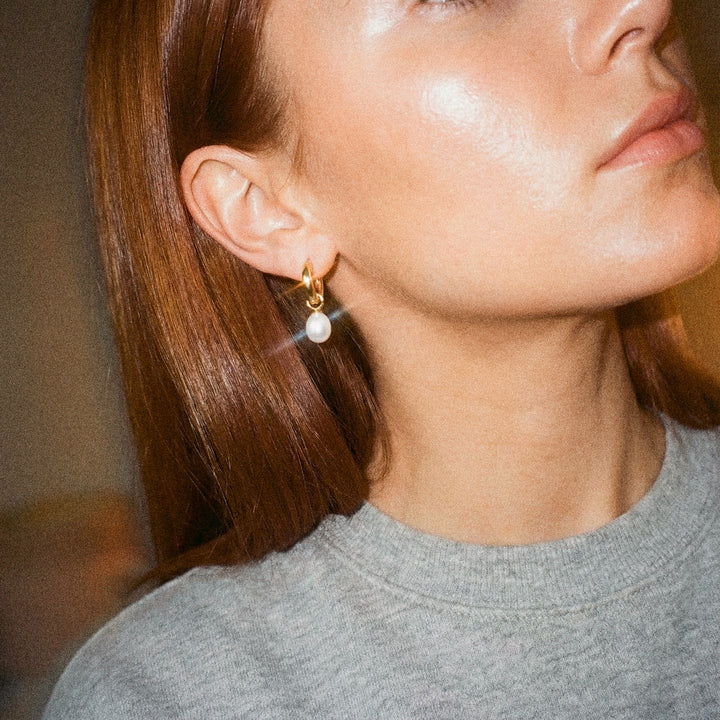
Showcase natural baroque texture in sculptural gold hoops
![{"image_loaded": true, "load_issue": null, "description": "An older man with gray hair viewed from behind is examining objects on a wooden desk using a magnifying loupe eyeglass. He is dressed in a white shirt and dark vest. The desk has various small tools and items typically associated with detailed craftsmanship or inspection, including small containers and pencils, scattered across a light wooden surface. The lighting is warm and focused, illuminating the workspace.", "people": {"count": 1, "roles": ["craftsman", "inspector"], "visible_demographics": "older adult male with gray hair", "attire": "white shirt under dark vest", "pose_or_activity": "looking through a magnifying loupe eyeglass at objects on the desk"}, "setting": {"environment_type": "indoor workspace or workshop", "location_hints": "wooden desk, small tools and craftsman-related items, warm lighting", "depth_scale": "medium", "lighting": "warm, focused on workspace", "temperature": "warm"}, "objects": {"primary_objects": ["magnifying loupe eyeglass", "small containers", "tools", "pencils"], "secondary_objects": ["desk items", "paper or workspace mat"], "object_interaction": "man is closely inspecting objects on the desk using magnification"}, "composition": {"subject_focus": "man\u2019s head and hand inspecting objects in foreground", "relationships": "foreground man with tools on desk in immediate workspace", "depth_structure": "shallow depth of field with blurred background", "camera_angle": "slightly elevated over the shoulder", "cropping": "close-up framing focusing on man\u2019s head, hand, and desk area"}, "motion": {"motion_type": "static", "motion_direction": null, "energy_level": "low", "sequence_implied": "single moment"}, "aesthetic": {"medium": "photograph", "style_subtype": "realistic", "color_palette": "muted, natural tones", "contrast_level": "moderate", "texture_and_grain": "smooth", "postprocessing": "natural lighting, possibly minor color correction"}, "tone": {"visual_mood": "focused, professional", "lighting_influence": "warm and directed", "camera_distance_effect": "intimate, detailed view"}, "confidence": {"demographic_confidence": 0.9, "activity_confidence": 0.85, "setting_confidence": 0.9}}](https://cdn.shopify.com/s/files/1/0371/8817/3961/files/senior_watchmaker_carefully_examining_a_timepiece_with_a_loupe_in_workshop_SP5A7n2Qks.72l6pxaYP9.webp?v=1770652029)
Caring for and styling imperfect pearls to preserve their natural charm
Viewed at around 10x magnification, surface pits, concentric growth rings and colour zoning reveal a genuine pearl's natural accretion, variations in nacre thickness and whether it formed in salt or freshwater. Ask a qualified gemmologist to confirm those observations using non-invasive imaging, and request written disclosure of any coatings or stabilising resins, since such treatments influence how a pearl should be cared for. For conclusive information about internal structure or provenance, arrange non-destructive testing with a recognised laboratory.
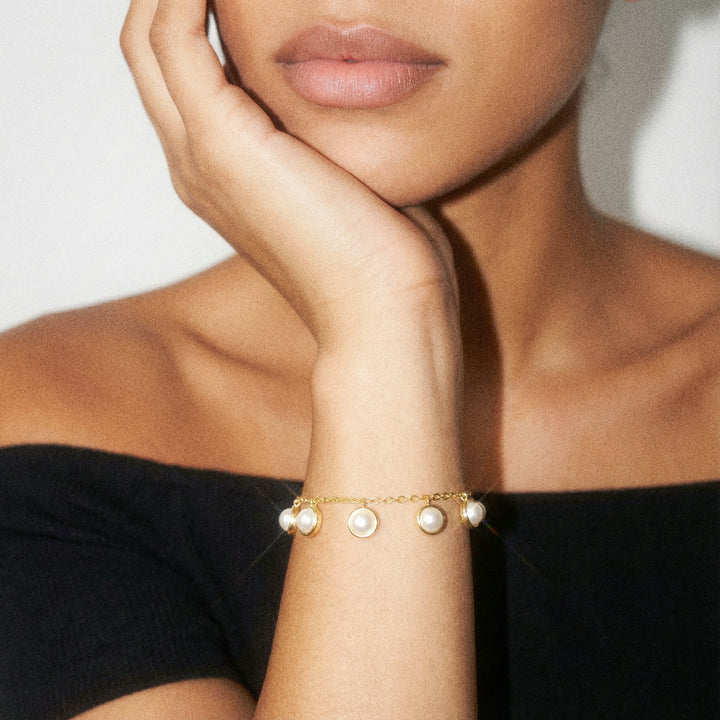
After wearing, gently buff pearls with a soft, lint-free cloth to remove skin oils and cosmetics. For a deeper clean, use a mild, pH-neutral soap with lukewarm water, then lay the strand flat to dry on a soft surface. Avoid ultrasonic cleaners, solvents and contact with harder jewellery, as these can abrade delicate surfaces and worsen pits. Protect vulnerable points by knotting between pearls and by asking a jeweller to check drill-hole integrity before restringing. When setting pearls, favour protective options such as bezels, low-profile mounts or halo surrounds to shield weaker areas. Embrace irregularity in design by choosing asymmetrical layouts, single-peg pendants or layered necklaces, or by pairing baroque pearls with matte metals or textured finishes to contrast their lustre and emphasise surface detail.
Surface marks on pearls, such as concentric growth rings, zonal colouration, pits and mantle folds, record where and how a pearl formed, revealing episodes of nacre deposition, periods of environmental stress and the mollusc's behaviour. Careful examination with a 10x loupe using raking or diffused light, supported by non-destructive imaging such as radiography and microscopy, and, when necessary, micro-destructive analyses such as trace-element or isotope testing, helps distinguish natural growth features from manufacturing or post-harvest damage.
Adopt a consistent inspection routine and keep clear photographic records alongside checklist notes to assess quality, establish provenance and create a reliable audit trail. Regard natural variations and minor imperfections as characterful details rather than automatic faults. By inspecting, recording and caring for pearls with attention, and commissioning specialist tests when provenance is important, you preserve their charm, build verifiable evidence and can confidently appreciate irregularity in design and wear.