



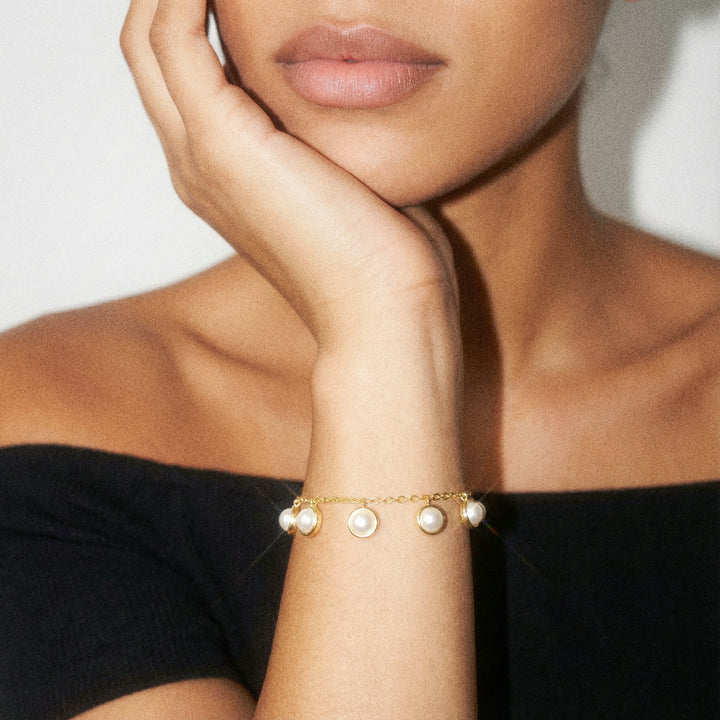



Concerned your freshwater pearls are losing their lustre after only a few wears? The pearls' soft nacre and porous surface absorb oils and acids and are vulnerable to surface abrasion, so everyday handling, exposure to harsh cleaners and dry storage can quickly dull their natural sheen.
This post outlines how recognising the delicate nature of pearls, handling them with care, adopting a simple cleaning routine, and storing them in a suitably humid, protected environment while travelling can reduce wear and preserve their lustre. It also explains when to restring or repair strands and when to consult a professional, so you can enjoy them for years to come.
![{"image_loaded": true, "load_issue": null, "description": "The image shows a close-up of a person with dark hair viewed from behind as another individual's hands clasp a pearl necklace around their neck. In the blurred background, a woman with light hair and a focused expression is partially visible. The scene appears indoors with warm lighting highlighting skin tones and textures.", "people": {"count": 2, "roles": ["person wearing necklace", "person fastening necklace"], "visible_demographics": "One person with dark brown hair, skin tone medium; another person with lighter skin and blonde hair visible out-of-focus in background.", "attire": null, "pose_or_activity": "One person turning head slightly forward, another fastening a pearl necklace around the neck."}, "setting": {"environment_type": "indoor", "location_hints": null, "depth_scale": "close-up", "lighting": "warm, soft light", "temperature": "warm"}, "objects": {"primary_objects": ["pearl necklace"], "secondary_objects": null, "object_interaction": "The hands are fastening the pearl necklace on the person's neck."}, "composition": {"subject_focus": "neck and hands fastening necklace", "relationships": "Foreground hands interacting with the pearl necklace and neck; blurred background face partially visible.", "depth_structure": "shallow depth of field with blurred background", "camera_angle": "eye-level, close-up", "cropping": "tight framing focused on neck and hands"}, "motion": {"motion_type": "implied", "motion_direction": null, "energy_level": "low", "sequence_implied": "single moment"}, "aesthetic": {"medium": "photograph", "style_subtype": "realistic", "color_palette": "warm, natural skin tones", "contrast_level": "moderate", "texture_and_grain": "smooth skin texture visible", "postprocessing": "natural with slight warm color grading"}, "tone": {"visual_mood": "intimate, careful", "lighting_influence": "soft, warm lighting enhances texture and detail", "camera_distance_effect": "intimate close-up invites focus on interaction"}, "confidence": {"demographic_confidence": 0.8, "activity_confidence": 0.9, "setting_confidence": 0.7}}](https://cdn.shopify.com/s/files/1/0371/8817/3961/files/recreating_celebrity_pearl_looks_where_timeless_elegance_meets_personal_style_SP5A7n2Qks.Gv6QdJ010P_bbab79a9-1cff-405a-8997-895951a5ca4e.webp?v=1770565057)
Understanding the Structure and Vulnerabilities of Freshwater Pearls
Freshwater pearls have a central nucleus wrapped in concentric layers of nacre. Those layers are formed from stacked aragonite platelets bound by conchiolin, and it is the fine layering that creates a pearl's characteristic lustre through light interference. The thickness and evenness of the nacre determine how long a pearl keeps its shine, so any abrasion or thinning will reduce its reflected colour and perceived depth. Because nacre is mainly calcium carbonate, it is prone to attack by acids, while the proteinaceous conchiolin can be weakened by solvents and alkaline cleaners. Exposure to perfume, hairspray, cosmetics, perspiration or chlorinated water may etch, stain or alter the surface microstructure. Pearls are relatively low on the Mohs scale and can be scratched by harder materials or by rubbing against neighbouring beads, which is why knotting between beads and avoiding direct contact with hard surfaces helps to limit abrasion.
Pearls retain moisture and are sensitive to sudden changes in temperature or humidity, which can cause surface crazing, cracking or loss of lustre. The nacre, the pearl's fragile and porous surface layer, should be cleaned gently with a soft, slightly damp cloth and, when necessary, a mild pH neutral soap. Avoid ultrasonic cleaners, steamers, harsh detergents, abrasives and prolonged soaking. Organise regular inspections and re-stringing to prevent wear from loose threads and to protect the nacre. Apply cosmetics, perfumes and lotions before putting on pearls and handle them only with clean, dry hands to minimise chemical exposure.
Choose drop styles to reduce rubbing and preserve nacre
![{"image_loaded": true, "load_issue": null, "description": "The image shows a person from shoulders to hands wearing a sleeveless white top, holding a beige textured cloth. The person is cleaning or wiping the leaves of a green houseplant with long, pointed leaves. The background is indoors, blurred out and neutral-toned. The scene appears softly lit with natural or diffused light, with a medium depth of field focusing on the hands, cloth, and plant leaves.", "people": {"count": 1, "roles": ["houseplant caretaker"], "visible_demographics": "adult, feminine-presenting", "attire": "sleeveless white top", "pose_or_activity": "wiping or cleaning plant leaves with a cloth"}, "setting": {"environment_type": "indoor", "location_hints": "neutral-toned walls, possibly home interior, soft lighting", "depth_scale": "medium", "lighting": "soft, natural or diffused light", "temperature": "neutral"}, "objects": {"primary_objects": ["houseplant with long green leaves", "beige textured cloth"], "secondary_objects": null, "object_interaction": "person is wiping the plant leaves with the cloth"}, "composition": {"subject_focus": "hands and cloth cleaning plant leaves centered in the frame", "relationships": "hands closely interacting with the cloth and leaves", "depth_structure": "shallow depth of field blurs background", "camera_angle": "eye-level, close-up", "cropping": "cropped at shoulders and hands, close-up on plant"}, "motion": {"motion_type": "implied", "motion_direction": null, "energy_level": "low", "sequence_implied": "single moment"}, "aesthetic": {"medium": "photograph", "style_subtype": "realistic", "color_palette": "muted, natural greens and neutrals", "contrast_level": "moderate", "texture_and_grain": "smooth, soft textures visible in skin and cloth", "postprocessing": "natural color grading with warm tones"}, "tone": {"visual_mood": "calm, peaceful", "lighting_influence": "soft, diffused and even lighting", "camera_distance_effect": "intimate and focused"}, "confidence": {"demographic_confidence": 0.9, "activity_confidence": 0.95, "setting_confidence": 0.8}}](https://cdn.shopify.com/s/files/1/0371/8817/3961/files/close_up_of_woman_wiping_indoor_plant_leaves_for_dust_removal_enhancing_plant_care_SP5A7n2Qks.webp?v=1766903515)
How to handle pearls gently to preserve their natural lustre
Genuine freshwater pearls are delicate. Their lustre comes from thin, iridescent layers of nacre, which makes them vulnerable to micro-scratches; on the Mohs scale they sit at roughly 2.5 to 4.5 and can be marked by metal, the teeth of a zip or coarse fabrics. Handle pearls gently by lifting them between thumb and forefinger rather than pinching across the surface, and place items on a soft cloth when inspecting or cleaning. Acids and solvent-based cosmetics can etch the nacre, while salt and perspiration may discolour the surface and weaken silk thread. For best care, put pearls on only after applying perfume, hairspray and moisturiser, and remove them before bathing, swimming or strenuous activity to minimise chemical and mechanical damage.
After wearing, gently wipe pearls with a soft, lint-free cloth to remove oils. For deeper cleaning, use a cloth dampened with warm water and a drop of pH neutral soap; avoid soaking strung strands. Lay pearls flat to air dry on a soft towel to protect the silk, and avoid plastic bags that trap moisture. Fasten clasps gently before packing to prevent tangles and grinding. Store pearls flat and apart from other jewellery in a soft pouch or fabric-lined compartment. Inspect regularly for frayed or stretched silk, loose knots and chipped drill holes, and restring with knots between each pearl when the thread shows wear to reduce friction and guard against loss.
Choose delicate gold hoops to highlight and protect pearls
![{"image_loaded": true, "load_issue": null, "description": "The image features a young woman smiling directly at the camera. She is wearing an off-the-shoulder black top or dress and a pearl necklace with matching earrings. Her long dark hair is flowing backwards, suggesting slight motion or a breeze. The background shows a dimly lit room with a clothing rack on the left side holding various garments, including jackets and dresses in neutral and dark colors. The lighting is warm and soft, creating a cozy atmosphere with focused illumination on the woman and softer brightness behind the clothing rack. The image is a photographic portrait taken at a medium-close distance with a shallow depth of field that blurs the background.", "people": {"count": 1, "roles": ["model"], "visible_demographics": "young adult female", "attire": "black off-the-shoulder top/dress, pearl necklace and earrings", "pose_or_activity": "smiling at camera with hair flowing backward"}, "setting": {"environment_type": "indoors, possibly a dressing room or boutique", "location_hints": "clothing rack with garments, warm ambient lighting", "depth_scale": "medium", "lighting": "warm, soft, directional on subject, backlit rack, low ambient light", "temperature": "warm"}, "objects": {"primary_objects": ["clothing on rack", "pearl necklace", "earrings"], "secondary_objects": ["rack", "various garments"], "object_interaction": "woman is wearing jewelry; background clothes are on rack only"}, "composition": {"subject_focus": "woman centered right", "relationships": "subject in foreground, clothing rack in blurred background", "depth_structure": "shallow depth of field with strongly blurred background", "camera_angle": "eye-level", "cropping": "medium-close portrait"}, "motion": {"motion_type": "implied", "motion_direction": "hair flowing backward", "energy_level": "moderate", "sequence_implied": "single moment"}, "aesthetic": {"medium": "photograph", "style_subtype": "realistic portrait", "color_palette": "warm, muted with some contrast", "contrast_level": "moderate", "texture_and_grain": "smooth skin texture, soft focus background", "postprocessing": "likely some color grading and softening"}, "tone": {"visual_mood": "warm, inviting, elegant", "lighting_influence": "soft warm lighting highlights subject", "camera_distance_effect": "intimate but not extreme close-up"}, "confidence": {"demographic_confidence": 0.9, "activity_confidence": 0.8, "setting_confidence": 0.85}}](https://cdn.shopify.com/s/files/1/0371/8817/3961/files/description_a_young_woman_is_standing_indoors_near_a_clothing_rack_she_is_smiling_and_looking_at_the_camera_the_setting_appears_to_be_a_store_or_a_boutique_with_dresses_and_garments_h.webp?v=1772206709)
Clean pearls gently and maintain a simple care routine
Freshwater pearls owe their lustre to a delicate nacre layer of calcium carbonate. This layer readily absorbs oils and acids, so exposure to perspiration, perfume and harsh cleaning products can dull the surface. To protect the nacre, gently wipe pearls with a soft, dry cloth after wearing. For light soiling, use a cloth lightly dampened with mild soapy water, rinse with a clean damp cloth, then allow the strand to dry flat on a soft towel until the cord is completely dry. Put pearls on after applying cosmetics and hairspray, and remove them before swimming, exercising or using household cleaning products to minimise contact with substances that accelerate discolouration.
Store pearls separately in a soft pouch or a lined box, and lay necklaces flat to avoid stretching, while avoiding airtight plastic which can trap moisture and alter the colour. Inspect cords regularly for fraying, stiffness, or darkening, and notice any beads that move unevenly as signs of wear. Have the strand restrung when you spot wear, and use knotted stringing so a break limits abrasion and loss by keeping individual pearls in place. A routine of gentle handling, appropriate storage, and timely maintenance keeps pearls looking their best and reduces the need for intensive cleaning.
Choose an everyday pearl hoop for effortless daily wear
![{"image_loaded": true, "load_issue": null, "description": "The image shows a close-up of a person's hands gently holding a floral-patterned teacup filled with tea and decorated with floating flower petals. The person is wearing a long-sleeved garment with a white cuff and a patterned fabric in muted blue and gray tones. The scene is set indoors on a wooden surface that holds various items including an ornate silver tray containing a pearl necklace, a garnet bead necklace, a ring, a brooch, and two small binoculars or opera glasses. A small, hammered brass container with a lid and a stack of old books are also visible near the cup. Soft natural light casts warm shadows across the objects.", "people": {"count": 1, "roles": ["person handling teacup"], "visible_demographics": null, "attire": "long-sleeved patterned garment with white cuffs", "pose_or_activity": "holding a floral teacup gently with both hands"}, "setting": {"environment_type": "indoor", "location_hints": "wooden table surface, soft natural lighting, presence of nectarines and vintage objects suggests a cozy, vintage indoor setting", "depth_scale": "close-up", "lighting": "soft natural light from side casting warm shadows", "temperature": "warm"}, "objects": {"primary_objects": ["floral-patterned teacup with tea and flower petals", "silver tray with jewelry and objects"], "secondary_objects": ["pearl necklace", "garnet bead necklace", "ring", "brooch", "small binoculars/opera glasses", "hammered brass container with lid", "old books", "flowers"], "object_interaction": "person holding the teacup above the table with vintage items arranged around it"}, "composition": {"subject_focus": "hands holding the teacup near center frame", "relationships": "items arranged closely on table surface with some overlapping in front and around the cup", "depth_structure": "shallow depth of field, objects in foreground and mid-ground in focus", "camera_angle": "eye-level or slightly above, angled downward", "cropping": "close-up crop focusing on hands, cup, and table items"}, "motion": {"motion_type": "static", "motion_direction": null, "energy_level": "low", "sequence_implied": "single moment"}, "aesthetic": {"medium": "photograph", "style_subtype": "realistic, vintage aesthetic", "color_palette": "muted warm tones with natural light", "contrast_level": "moderate", "texture_and_grain": "soft texture with visible wood and metal details", "postprocessing": "natural look with slight warmth and shadow emphasis"}, "tone": {"visual_mood": "calm, intimate, nostalgic", "lighting_influence": "soft, warm natural light enhances cozy tone", "camera_distance_effect": "intimate close-up conveys quiet personal moment"}, "confidence": {"demographic_confidence": 0.7, "activity_confidence": 0.9, "setting_confidence": 0.8}}](https://cdn.shopify.com/s/files/1/0371/8817/3961/files/a_classic_tea_scene_featuring_vintage_porcelain_jewelry_and_an_elegant_atmosphere_exemplifying_russian_cultural_style_SP5A7n2Qks.webp?v=1766558298)
Store pearls to preserve lustre: humidity control, protection and travel care
Store pearls separately in a soft, breathable pouch or a fabric-lined jewellery box, keeping them away from metal and gemstones to prevent abrasion. Pearls have a delicate outer nacre that scratches easily, so separate compartments help reduce contact and surface wear. Avoid sealing pearls in plastic; instead maintain a stable, moderate level of ambient humidity. Pearls absorb moisture and may crack or craze if overly dry, while trapped dampness can encourage mould and discolouration. In very dry environments, consider using a room humidifier to protect their lustre.
Store necklaces flat and unfastened to avoid stretching the silk or thread, and coil bracelets loosely on soft padding to minimise strain on knots and clasps. After wearing, gently wipe pearls with a soft, slightly damp cloth and allow them to air dry before storing to remove skin oils, sweat and traces of cosmetics. When travelling, cushion pearls in a soft cloth inside a rigid case and keep them in your hand luggage; avoid packing them next to cosmetics, perfumes or heat sources. Inspect the string and clasps before and after travelling, and replace any worn thread promptly to prevent loss.
Choose a sterling-silver clasped strand to enjoy worry-free wear.
![{"image_loaded": true, "load_issue": null, "description": "Close-up image of two hands holding and displaying a string of white pearls against a black background. The upper hand is grasping the pearls from above, fingers gently curled, while the lower hand supports the pearls from beneath, palm open. The pearls are round, shiny, and consistent in size.", "people": {"count": 1, "roles": ["hand model"], "visible_demographics": "One adult person; hand only visible with light skin tone", "attire": null, "pose_or_activity": "Hands holding and displaying a string of pearls"}, "setting": {"environment_type": "studio", "location_hints": "Black background, controlled lighting", "depth_scale": "close-up", "lighting": "soft, focused lighting highlighting the pearls and hands", "temperature": "neutral"}, "objects": {"primary_objects": ["string of white pearls"], "secondary_objects": null, "object_interaction": "Hands carefully holding and displaying the pearls"}, "composition": {"subject_focus": "Centered on the hands and pearls", "relationships": "The two hands positioned vertically with pearls hanging between them", "depth_structure": "Sharp focus on hands and pearls, background completely black and out of focus", "camera_angle": "Eye-level", "cropping": "Close-up framing focused on hands and pearls"}, "motion": {"motion_type": "static", "motion_direction": null, "energy_level": "low", "sequence_implied": "single moment"}, "aesthetic": {"medium": "photograph", "style_subtype": "realistic", "color_palette": "neutral with emphasis on white and skin tones", "contrast_level": "high", "texture_and_grain": "smooth, clear", "postprocessing": "likely enhanced for clarity and contrast"}, "tone": {"visual_mood": "calm, elegant", "lighting_influence": "bright and focused lighting enhancing lustre of pearls", "camera_distance_effect": "intimate, detailed view of hands and pearls"}, "confidence": {"demographic_confidence": 0.8, "activity_confidence": 0.95, "setting_confidence": 0.9}}](https://cdn.shopify.com/s/files/1/0371/8817/3961/files/image_loaded_true_load_issue_null_description_the_image_shows_two_hands_holding_a_long_string_of_white_pearls_against_a_solid_black_background_one_hand_is_positioned_below_palm_facing_d34515a8-5c9f-454a-8b56-a91e62f97426.webp?v=1771082919)
When to restring pearls and when to consult a professional
Inspect the strand for frayed, discoloured or stretched thread, visible gaps between pearls, slack at the clasp, or wear around the drill holes. These signs increase the risk of loss or abrasion and indicate the strand should be restrung. Before replacing the thread, photograph the strand and record its pattern and length. Detach the clasp, gently clean each pearl with a soft cloth, then restring with a suitable thread, tying neat, evenly spaced knots between beads to restore the drape and prevent rubbing. Choose thread with care. Silk offers the most graceful drape but absorbs oils and may weaken over time, while synthetic thread resists stretch and generally provides greater longevity.
Seek professional help for genuine pearls with damaged or flaking nacre, oversized or eroded drill holes, integrated or soldered clasps, complex multi-strand constructions, or pieces of high sentimental or monetary value. Specialists can stabilise holes, advise on lining or re-beading, and reattach fittings without harming the surface. Before restringing, clean pearls to remove oils that can degrade the thread. Store strands flat to avoid constant tension, and gently test knots and the clasp to ensure security. Inspect a strand after wearing to catch emerging issues before a break occurs, and maintain a simple cleaning routine to prolong both the thread and the nacre. Carefully executed knotting cushions each pearl and ensures a single break will not result in total loss.
Freshwater pearls owe their lustre to thin layers of nacre. To preserve their natural sheen, handle them gently. Wipe away skin oils after wearing and avoid acids or abrasive cleaners. Store strands flat in breathable, fabric-lined pouches, inspect regularly for frayed or stretched thread, and knot between pearls to minimise abrasion, prevent drying and reduce the risk of losing pearls.
Adopt a gentle cleaning routine: wipe pearls with a soft cloth lightly dampened in mild soapy water, then allow the strand to dry completely. Have the piece restrung when the cord darkens, stiffens or gaps appear to protect both the nacre and the silk or synthetic thread. If drill holes show erosion, nacre begins to flake, or the item is multi-strand or fitted with intricate clasps, consult a professional to stabilise repairs. Combining everyday care with humidity-aware storage and timely maintenance will keep pearls lustrous for years.