



Pearl shape can transform the way jewellery sits on you, subtly altering scale, formality and overall impression. Which shape will flatter your features, balance your proportions and suit the occasion?
This guide outlines common pearl shapes and their defining characteristics, shows how to harmonise them with your proportions and wardrobe, and explains how to style, layer and care for pearls for every occasion. Use these practical tips to select pearls that flatter, complement and endure.

Recognise pearl shapes and the characteristics that define them
Pearls present in distinctive shapes: round, near-round, button, coin, drop or pear, baroque and keshi. Each form shows a characteristic geometry and behaviour in the way highlights reflect across the surface. Symmetrical pearls concentrate a clear central highlight, making them well suited to classic studs and uniform strands, while irregular surfaces scatter light and read as sculptural when worn alone. Shape can be assessed objectively by comparing diameter and length to calculate a length-to-width ratio, examining the rotation axis to distinguish drops from ovoids, and placing a pearl on a flat surface to see whether it sits flush or rolls. These simple observations help predict how a strand will drape and how a pendant or earring will balance on the wearer.
Match pearl shape to the intended setting and silhouette. Reserve round and near-round pearls for formal studs and classic strands, choose teardrop and button shapes for vertical pendants and drop earrings, and favour baroque or keshi pearls for asymmetrical statement pieces. Consider construction needs when selecting pearls: flatter button and coin shapes sit securely against clothing and suit low-profile settings, elongated drops benefit from reinforced drill holes or a sturdy bail to avoid stress, and highly irregular baroque forms present more surface area where blemishes can be noticeable. Use simple design principles to communicate intent: repeat a single shape for measured symmetry, alternate contrasting shapes to introduce texture and movement, and pair pearl silhouettes with complementary metal mounts, such as rounded bezels for a softer look or angular settings for a more sculptural finish.
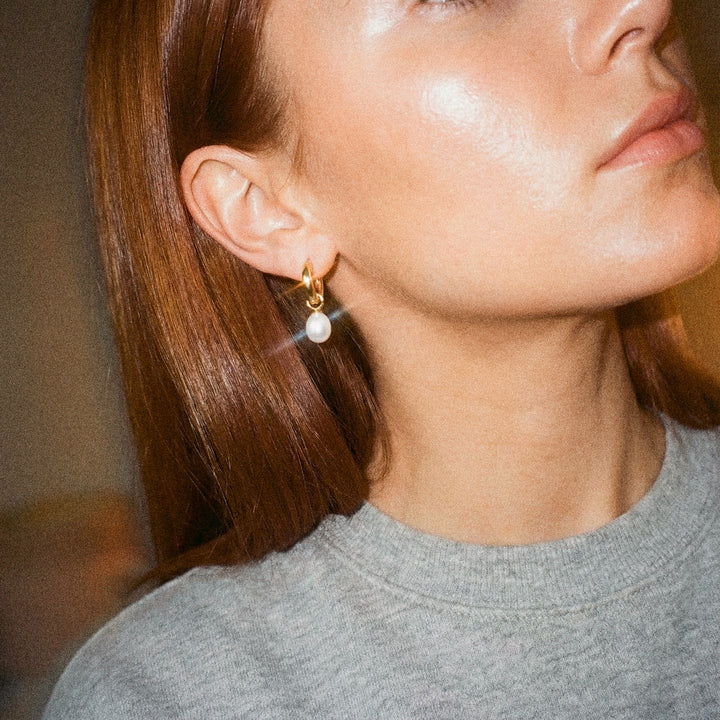
Choose an angular hoop to highlight a single pearl.

Balance your proportions with the right pearl shape
Begin by assessing proportions. Measure face height against width and note how the neck sits in relation to the collarbone. Next, try a simple mirror test: hold different pearl shapes at the base of the neck, photograph each option and compare whether vertical or horizontal lines bring more balance. Match shapes to features with straightforward visual logic. Round pearls soften an angular jawline; oval or rice shapes create a visually slimmer effect for fuller faces; teardrops and pendants lengthen shorter necks; and button or coin pearls add width at the throat. Use your measurements and the photographed comparisons to select the shape that achieves the optical effect you want.
Necklace length and pearl shape work together. Short, round strands create a balanced central band, longer strands and elongated pearls draw the eye vertically, and a central drop becomes the natural focal point. For layered looks, anchor the arrangement with the largest or most elongated piece at the centre, combine round and baroque shapes for contrast, and graduate sizes so each strand increases by about one to two millimetres to avoid top heaviness. Surface and silhouette also change perceived scale: flatter coin or button pearls sit close to the skin and appear larger, baroque forms catch the light and attract the eye, and high lustre rounds read as a clean, formal centrepiece. Choose shapes with your intention in mind—to emphasise the neckline, soften features, or make a statement — and always try pieces on and photograph them to confirm the effect.
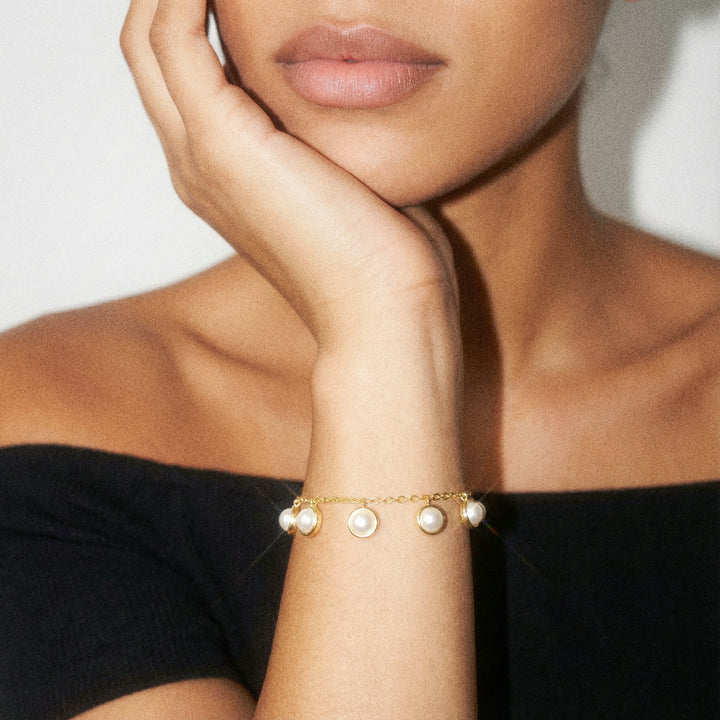
Anchor layered looks with a button-pearl pendant

How to pair pearl shapes with occasions and outfits
Opt for perfectly round pearls with structured, formal outfits — their symmetry complements tailored lines and draws the eye to the face. In contrast, irregular baroque or keshi pearls introduce texture and serve as engaging conversation pieces in relaxed or creative looks. Echo a V-neck with a pendant or teardrop to lengthen the line. For high or boat necklines, wear a short, uniform strand or button pearls close to the collar so the jewellery does not compete with the fabric; position the pendant's lowest point at the V's apex to maintain balanced proportion. Match scale to pattern and fabric: pair small, uniform rounds with busy prints and lightweight materials, and reserve larger drops, coin or baroque pearls for plain backgrounds so the jewellery becomes a clear focal point.
For evening occasions, choose dangling drops, sticks or long strands; their subtle movement catches and reflects light to enhance presence. For active days or professional settings, opt for studs, button styles or low-profile coin pieces to minimise snagging and keep the look neat. Use open settings or delicate bails to showcase a pear-shaped drop, and employ bezels or halo frames to give an irregular baroque pearl a considered, composed silhouette. Match the metal tone to the outfit's colour palette, and pair a uniform strand with a single baroque pendant to introduce modern contrast while keeping the ensemble appropriate for the occasion. These choices balance function, movement and visual weight so the pearls complement the wearer rather than compete with the outfit.
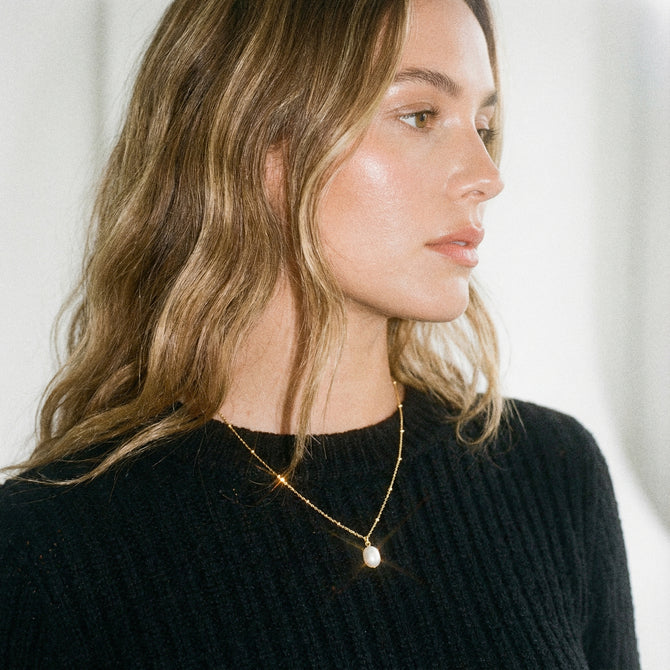
Layer a delicate gold pendant to accent V-necks.

How to style, layer and combine pearls with effortless confidence
The shape of a pearl sets its visual language and the level of formality it conveys. Round pearls reflect light evenly and read as orderly and classic, while irregular or baroque shapes scatter light and emphasise texture, giving a more contemporary, relaxed feel. Choose symmetrical shapes for a structured, timeless look and irregular shapes to introduce a modern edge. Match the scale of the metalwork and align the necklace silhouette with the neckline so the pearl complements rather than competes with your outfit. When layering, start with a dominant piece, stagger the lengths so each strand sits clearly, vary shapes and sizes to create depth, and use knots or separate clasps to reduce abrasion and prevent tangling.
Construction and setting should respect a pearl's natural form. Ensure drops or teardrops hang in the correct orientation, check drill-hole placement or peg fit on non-spherical pearls, and assess movement so the piece sits comfortably on the body. When pairing pearls with other jewellery, match the scale of the metalwork to the pearl size and introduce contrasting textures to draw the eye where you wish. After wearing, gently wipe pearls with a soft cloth and store pieces separately to avoid scratching irregular surfaces. Where possible, have pearls knotted between beads to reduce friction. Inspect drilled or thin areas regularly for signs of wear to prevent failure, and favour constructions that allow easy repair or restringing to prolong the life and appearance of the jewellery.
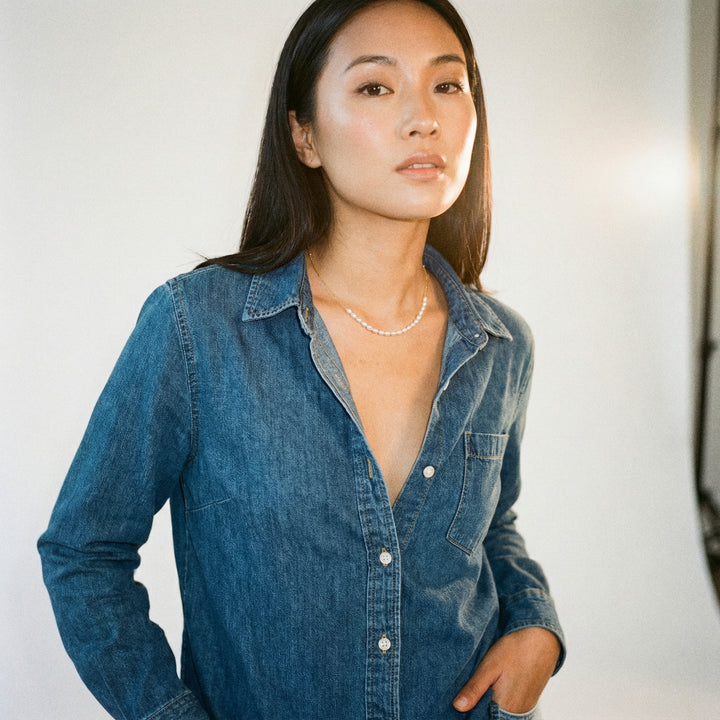
Anchor layered necklaces with a delicate pearl strand

How to select quality pearls and care for them
Round and near-round pearls suit formal, classic looks because their even curvature reflects light symmetrically, creating a polished sheen. Drop and pear-shaped pearls work particularly well for pendants and evening wear, as they visually elongate the neck. Baroque and irregular pearls read as contemporary, relaxed pieces that celebrate individuality. Choose button and coin pearls for studs and flush settings, since they sit close to the skin. For drops, opt for secure cup or peg settings to prevent rotation and reduce stress on the drill hole, and be prepared for baroque forms to need custom bezels or prong work. Inspect a mount under strong light to check for any wobble before wearing.
Judge a pearl's quality beyond its shape by rotating it under a single light to see whether reflections are sharp or chalky. Inspect the surface for blemishes that could shorten its life, and enquire about nacre thickness, since thicker nacre produces deeper orient and greater durability. Match symmetry, size and colour across multi-pearl pieces so the jewellery sits and wears evenly. After each wear, wipe pearls with a soft cloth, store them separately in soft pouches to prevent abrasion, and clean baroque crevices gently with a soft brush. For strung items, check the thread regularly and have strands reworked when fibres begin to show wear. Choose metal settings and gemstone companions deliberately: a slim cap keeps a drop refined while a chunkier setting gives the same pearl a more casual, sculptural character.
The shape of a pearl changes proportion and perceived formality, and shapes how a piece sits against the body. Choosing the right silhouette helps jewellery flatter the wearer. Symmetry lends a clear central focus, ideal for classic studs and strands, while irregular baroque surfaces scatter the light and read as sculptural focal points.
Match a pearl’s shape to its setting, the wearer’s proportions and the intended occasion by trying pieces on the neck and photographing options to compare. Inspect drill holes and mount construction to ensure comfort and longevity. Use these practical checks, together with guidance on proportions, occasions and care, to compose, layer and maintain pearls that complement outfits and stand the test of time.