




Even the most captivating pearl may hide qualities that affect its longevity or provenance, such as delicate nacre or uncertain origins. For those who value heritage and everyday elegance, how can you be sure of the authenticity and enduring quality of the piece you choose?
This guide explores how to evaluate genuine pearls, considering key elements such as nacre thickness, lustre, surface quality, and shape. It outlines the importance of scrutinising settings and metalwork, as well as understanding the characteristics of plating and its resilience. Additionally, it highlights which certifications, warranties, and aftercare assurances are worth noting, helping you confirm authenticity and safeguard your cherished pieces.

How Can You Identify Genuine Pearls and Their Origins?
To appreciate the authenticity of a pearl, a careful visual inspection is invaluable. Use a jeweller's loupe or a low-power microscope to observe the surface texture, nacre thickness at the drill hole, and the presence of delicate growth rings or a bead nucleus. Examining the pearl's orient and overtones under different lighting also reveals its natural beauty. If in-person examination is not possible, request detailed, high-magnification photographs. Simple checks at home can offer insight as well: gently glide the pearl against your tooth to sense a subtle grittiness characteristic of genuine nacre, compare the weight with pearls of a similar size to discern differences in density, and observe colour consistency and the play of light across the surface. While these observations will not confirm origin, they can indicate whether further professional assessment may be worthwhile.
When considering a pearl purchase, it is prudent to seek objective verification from reputable laboratories, such as radiographic or cross-sectional imaging, as these can confirm the presence of a bead nucleus and help differentiate between natural pearls, bead-nucleated cultured varieties, and non-nacreous imitations. Under magnification or through radiography, look for indications of treatments or repairs: uneven colour near drill holes may reveal dye, while surface films with an unnatural gloss can behave differently from authentic lustre, and fillings or adhesives may be evident within cavities. It is also advisable to retain written documentation regarding origin and cultivation methods, along with certificates and detailed photographs, to establish a clear provenance. Securing the possibility of an independent gemmologist’s assessment or a well-defined returns policy offers further reassurance. Bringing together laboratory findings and visual assessment provides a sound basis for an informed decision and helps facilitate any necessary resolution in the event of a dispute or return.
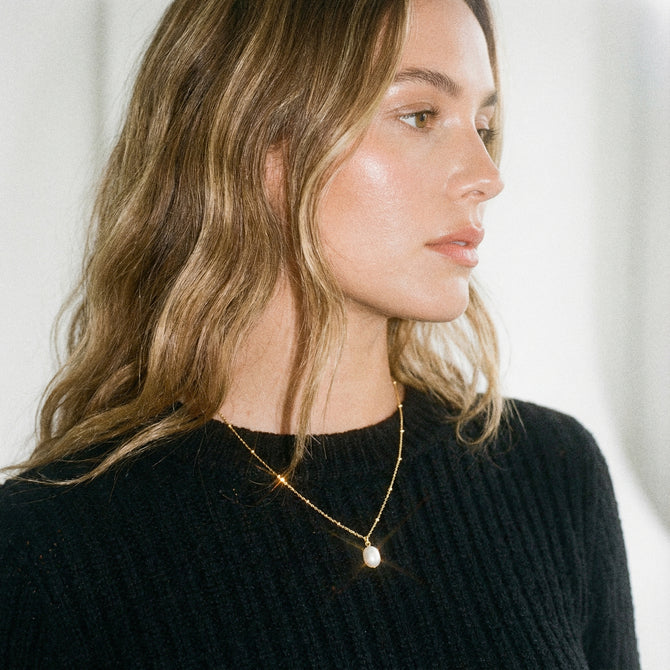
Choose jewellery verified as genuine freshwater pearls.
![{"image_loaded": true, "load_issue": null, "description": "The image shows a woman holding a hand mirror in which the lower part of her face and neck are reflected. She is wearing a double-strand pearl necklace and a matching pearl bracelet. The background is plain and dark blue. The woman is seen from behind, with her bare shoulders and dark hair visible.", "people": {"count": 1, "roles": ["individual viewer"], "visible_demographics": "Adult female, medium skin tone, dark hair pulled back", "attire": "No c](https://cdn.shopify.com/s/files/1/0371/8817/3961/files/image_loaded_true_load_issue_null_description_the_image_shows_a_woman_holding_a_hand_mirror_in_which_the_lower_part_of_her_face_and_neck_are_reflected_she_is_wearing_a_double_strand_p_4fb07b44-674c-4210-be22-4b5ebf050852.webp?v=1771602124)
Exploring Nacre, Lustre, Surface, and Shape in Pearls
Begin by examining the nacre and lustre under a focused light, gently turning the pearl to observe sharp, mirror-like reflections that signify a rich and even nacre. A softer, hazier sheen may suggest thinner layers. Using magnification, inspect the drill hole and surface for subtle concentric growth patterns or overlapping platelets, which hint at natural nacre formation. Take note of any exposed rounded core or smooth cavity, as these can indicate a bead nucleus. When comparing shape and surface texture, consider the colour overtones and any natural blemishes. Pearls that are perfectly matched and near-round are often cultivated with a bead nucleus, while more asymmetrical or baroque shapes typically reflect beadless or naturally formed origins.
When uncertainty remains, consider seeking non-destructive laboratory evidence, such as X-ray imaging or an independent gem laboratory report, to help verify the internal structure and determine the presence of a bead nucleus. Compare these findings with observations made using a loupe and carefully controlled light. Consistent, repeatable measurements—such as diameter recorded with callipers, weight, and carefully composed photographs under uniform lighting—can provide objective details for each pearl. Observing matching features across a strand, including consistent measurements and visual harmony, often provides a clearer understanding than labels alone. By bringing together visual cues, magnified inspection, laboratory insights, and precise measurements, one can arrive at an informed conclusion regarding a pearl’s authenticity and origin.
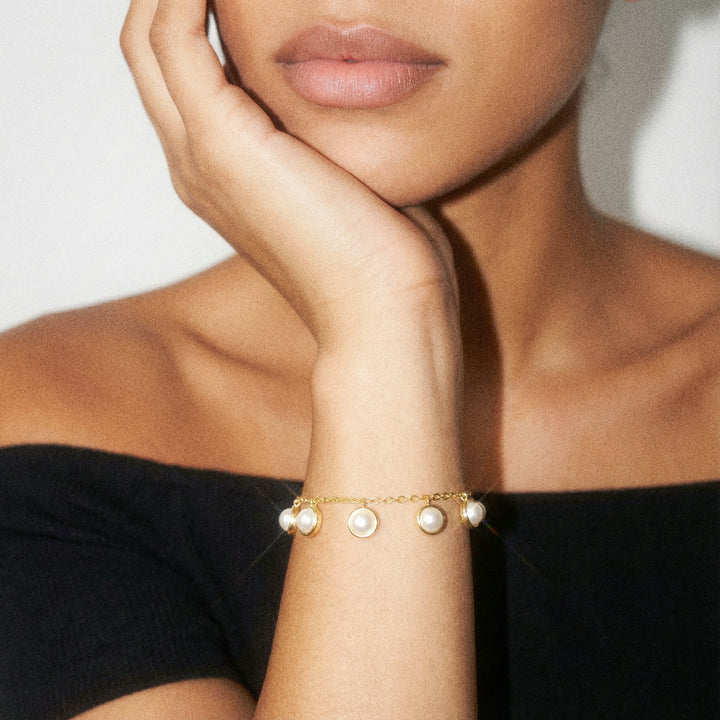
Wear naturally formed freshwater pearls to highlight authentic character.

How to Assess Craftsmanship and Quality in Jewellery Design
When examining pearl jewellery, look closely from different angles to appreciate the craftsmanship and ensure each pearl sits neatly and securely in its setting. Under magnification, check for smooth edges around drill holes and a consistent layer of nacre, both of which are signs of careful selection and quality. Subtle marks or irregularities may point to previous repairs, so gentle lighting can help reveal any fine cracks or imperfections. Requesting detailed images can offer further insight into the piece’s condition and authenticity.
Assess the metalwork and joins for crisp hallmarks, neatly finished prongs or bezels, smooth solder lines, and a consistent surface finish, as signs such as pitting, uneven joins, or excessive polishing may suggest previous repairs or the presence of a plated base metal. With necklaces, ensure that knots rest closely against each pearl, the thread remains free of fraying, and the clasp is securely attached to the strand rather than to an individual bead, which might indicate recent restringing or less attentive craftsmanship. It is wise to request high-quality images from various perspectives, including close-ups of hallmarks and joins, allowing for thoughtful comparison. Should you notice any irregularities, consulting a qualified jeweller can provide reassurance before making a final decision.
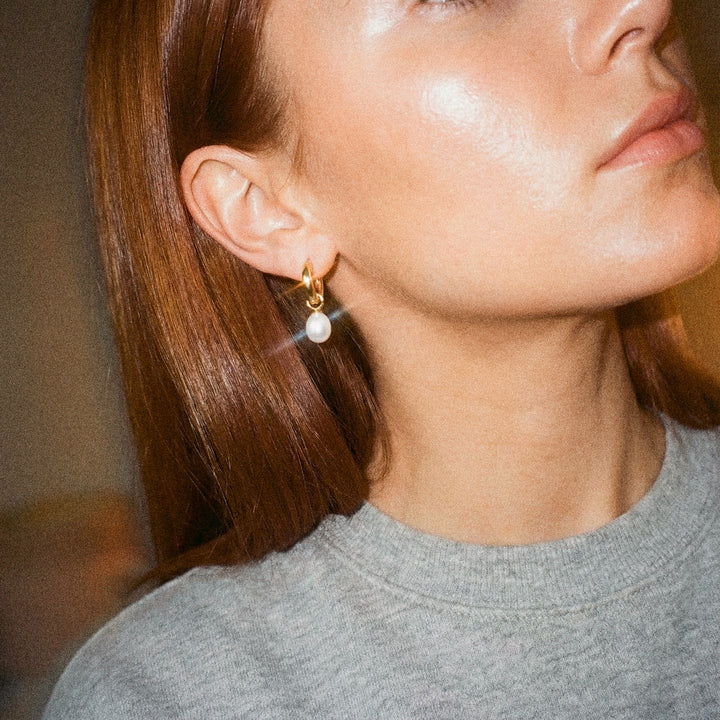
Choose textured hoops with securely set pearls.

How to Assess Jewellery Plating Quality and Durability
When evaluating a piece of jewellery, consider enquiring about the type of plating, the method of application, and the thickness in microns from the seller or maker. If available, a production or test report can provide insight into the piece's quality, as different techniques and thicknesses may influence durability. Careful inspection using a jeweller's loupe or high-resolution images can reveal subtle variations in colour at edges, prongs, clasps, and pierced areas. Look for any exposed base metal or minor imperfections where signs of wear may first appear. Consistent colour under magnification and the absence of colour transfer may suggest a well-adhered finish, though it is important to remember that such observations are indicative rather than definitive.
To ensure lasting beauty in plated jewellery, consider the underlying metal and the care taken during surface preparation, as well-prepared sterling silver or stainless steel tends to hold plating more gracefully than untreated brass or copper. Poor preparation or an unsuitable base can sometimes result in visible wear or tarnishing over time. For those with sensitivities, it is wise to enquire if the base metal includes nickel or if any anti-tarnish treatments have been applied. Subtle, non-invasive checks—such as gently buffing a discreet area with a soft white cloth to observe any colour transfer, or examining the piece under bright light for fine marks—can provide helpful insights; for greater assurance, a professional jeweller can conduct more thorough testing. Everyday factors like friction, skin chemistry, cosmetics and even humidity each play a role in how plating endures, so following care guidance—such as wearing jewellery after applying lotions and storing pieces separately—can help preserve their finish. If concerns arise, discussing repair or re-plating options, including when such steps might be recommended, is always worthwhile with a trusted specialist.
Choose gold-plated studs on sterling silver for longevity.
![{"image_loaded": true, "load_issue": null, "description": "The image shows a close-up of a person's wrist and part of their hand. The wrist is adorned with a pearl bracelet featuring irregularly shaped white pearls. The person's index and middle fingers, polished with light pink, glossy, almond-shaped nails, gently touch the bracelet. The person is wearing a white sleeve, and the background is softly blurred, showing hints of light blue and neutral tones.", "people": {"count": 1, "roles": ["model"], "visibl](https://cdn.shopify.com/s/files/1/0371/8817/3961/files/image_loaded_true_load_issue_null_description_the_image_shows_a_close_up_of_a_person_s_wrist_and_part_of_their_hand_the_wrist_is_adorned_with_a_pearl_bracelet_featuring_irregularly_sh_d8018dee-fd36-4985-b4a5-a226b730f5c8.webp?v=1771602136)
Understanding Certification, Warranty, and Aftercare Commitments
When considering the authenticity of a pearl piece, it is advisable to seek a written certificate from an independent, accredited gemmological laboratory. Such documentation should specify the pearl species, detail any treatments, and provide measurements and nacre characteristics, as well as reference the photographed item or an individual serial number for clarity. To ensure the certificate's reliability, review the laboratory's accreditation and contact information, and consult any available online records or verifiable references. Should verifiable documentation not be available, arranging an independent appraisal prior to making a decision is prudent. Keeping photographs, serial numbers, and laboratory references together with the certificate allows for straightforward verification in the future.
Request a clear, written warranty that details what is included, what is not, the process for making a claim, and any responsibilities regarding repair or external servicing. It is advisable to ask how any obligations are fulfilled if the piece requires specialist treatment or attention beyond the original seller. Confirm which aftercare services are provided, such as cleaning, restringing, or reconditioning, how any completed work is documented, and whether routine maintenance is included or offered for an additional fee. Retain all provenance and service documentation, including invoices, treatment disclosure forms, magnified images, and any relevant export or import paperwork. Maintaining thorough records will support insurance, future resale, or independent verification should questions of authenticity, origin, or condition arise.
Assessing a pearl’s nacre, internal structure, and setting is essential for ensuring its enduring beauty and value. Utilise a combination of careful visual examination under directional light, recorded measurements or serial numbers, and independent laboratory imaging to establish authentic provenance and quality. Taking these thoughtful steps supports informed, confident choices in pearl jewellery.
Conduct a thorough assessment by examining features such as nacre quality and lustre, as well as the finish of any metalwork and drill holes. Seek documentation including certificates of authenticity, aftercare guidance, and written guarantees. Maintaining detailed provenance and service records will support you in insuring your jewellery or resolving any concerns that may arise, ensuring peace of mind with well-documented proof of authenticity and care.