



A single pearl pendant can elevate an outfit, but layered necklaces often compete, tangle, or push the pearl out of focus. How do you keep the pearl front and centre while creating a flattering, balanced layered look?
This guide shows how to match pendant size to your neckline, build balanced layered lengths, and pair complementary hoops and earrings so the pearl remains the focal point. It also covers harmonising bracelets and wristwear with your layers, refining metal mix and texture, and caring for pearls so your arrangements stay elegant and long lasting.

Image by Ari Roberts on Pexels
Match pendant size to your neckline
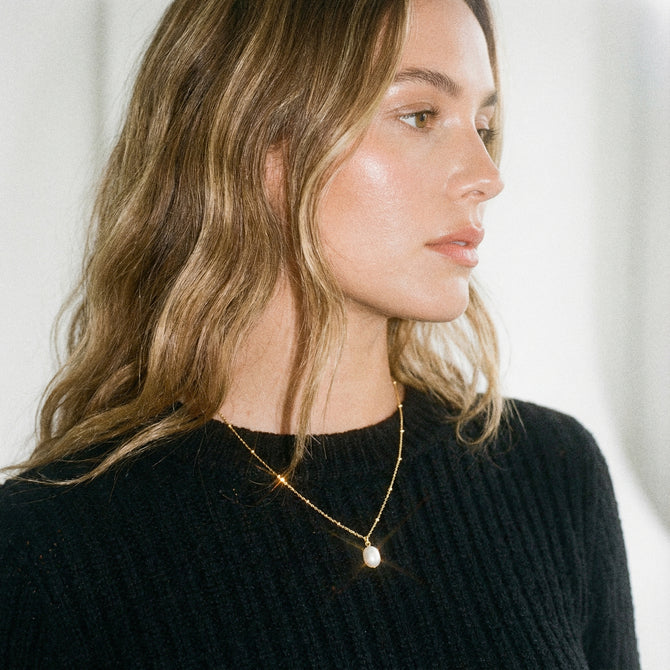
Measure your neckline in the mirror and pick a pendant width roughly one third of the visible opening to keep proportions balanced. For V-necks, position the pearl tip to mirror the V, centre it on strapless tops, and keep it within the opening of scoop or crew necklines. Let the pearl fall well below bulky high necklines so it reads clearly against the fabric.
When layering, stagger chain lengths by about 4 to 7 centimetres so each layer sits distinct, make the chain carrying the pearl slightly finer or smoother to keep the pendant as the focal point, and vary chain texture or thickness to prevent visual repetition. Test combinations in front of a mirror using ribbon or an adjustable chain, tweak lengths so the pearl clears the neckline edge by a couple of centimetres, and check movement to ensure the pendant stays centred when you move. These adjustments help the pearl sit comfortably, avoid catching on delicate fabrics, and read clearly against different patterns and materials.
Try an 18" freshwater pearl pendant for balanced layering.

Image by Alina Vilchenko on Pexels
Create balanced layered lengths around the pearl
Anchor the pearl just below the collarbone so it reads as the clear focal point, and space remaining chains about 3 to 5 centimetres apart to keep each layer distinct while maintaining a cohesive fall. Use an odd number of layers, ideally three, and vary lengths in stepped increments so pendants do not overlap and the eye returns to the pearl. Balance chain thickness and pendant scale by placing a delicate chain closest to the neck, then medium and heavier chains outward, and if the pearl is large keep immediately adjacent chains slender so it retains dominance.
Mix chain textures and finishes so links catch light differently, rest on one another more cleanly, and reduce tangling while framing the pearl. Match length choices to the neckline you will wear: choose shorter layers for crew and boat necks, and longer drops for V-necks and open collars. Try combinations on with the outfit and make small adjustments to ensure each layer reads clearly and the pearl remains unobstructed. Organise chains in this way to create rhythm, maintain clear focal hierarchy, and ensure the pearl sits comfortably as the anchor of the composition.
Anchor layers with a single delicate pearl pendant.

Image by Ari Roberts on Pexels
Pair hoops and earrings to flatter the pearl pendant
Position the shortest chain about 4 to 6 cm above the pearl pendant so each strand reads separately, and let the stepped spacing create a triangular composition that draws the eye to the pearl. Mix scale and texture by pairing a delicate chain with a chunkier or flatter chain, or combine a fine link with a crisp box chain, because contrasting finishes frame the pendant and highlight the pearl's lustre rather than competing with it. Match pendant placement to the neckline and body, letting the pearl sit at the collarbone with crew or boat necks and choosing a longer drop for higher necklines or V-necks so the pendant falls within the natural visual opening.
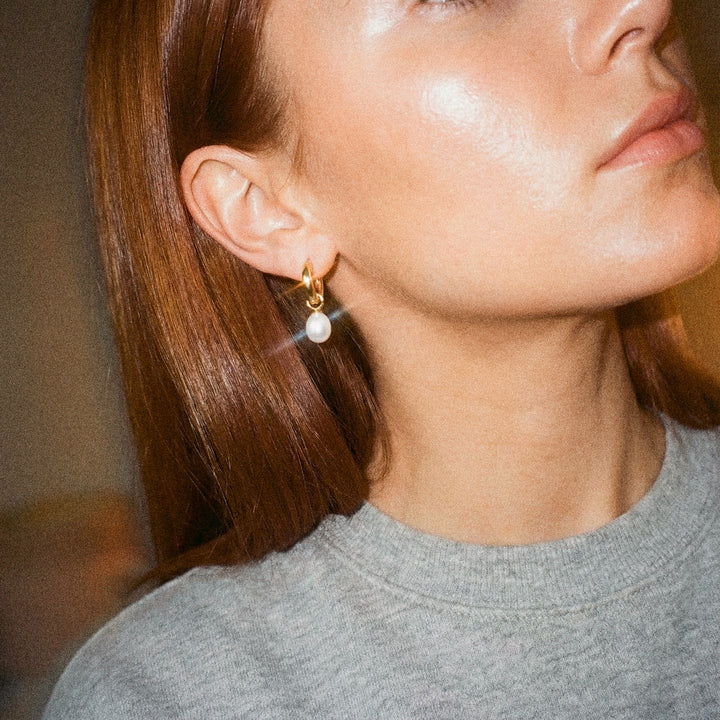
Choose earrings by proportion and finish: with a large pendant, wear small hoops, huggies, or studs so the face does not compete, and with a small pendant, select medium hoops to echo the pearl's roundness. Favour matte or brushed metal finishes when you want the pearl to remain the star, as they reduce reflected shine that could distract from the pearl. To assemble layered chains with minimal tangles, put on the longest chain first, use a chain separator or layering extender to keep strands parallel, and ensure the pendant bail clears other chains so the pearl can sit freely. These small adjustments preserve the intended silhouette, keep the pendant the focal point, and make the set comfortable to wear.
Layer a single delicate pearl for subtle collarbone shine

Image by Ari Roberts on Pexels
Harmonise bracelets and wristwear with layered necklaces
Layer necklace lengths so the pearl pendant remains the clear focal point. Wear a short chain just above the collarbone, set the pearl on a mid-length chain at or just below the collarbone, and add a longer chain that falls lower, aiming for 3 to 7 centimetres of vertical separation to prevent overlap and tangling. Choose a fine, unobtrusive chain for the shortest layer, a slightly sturdier chain for the pearl so it hangs straight, and a contrasting texture on the longest layer to add visual depth.
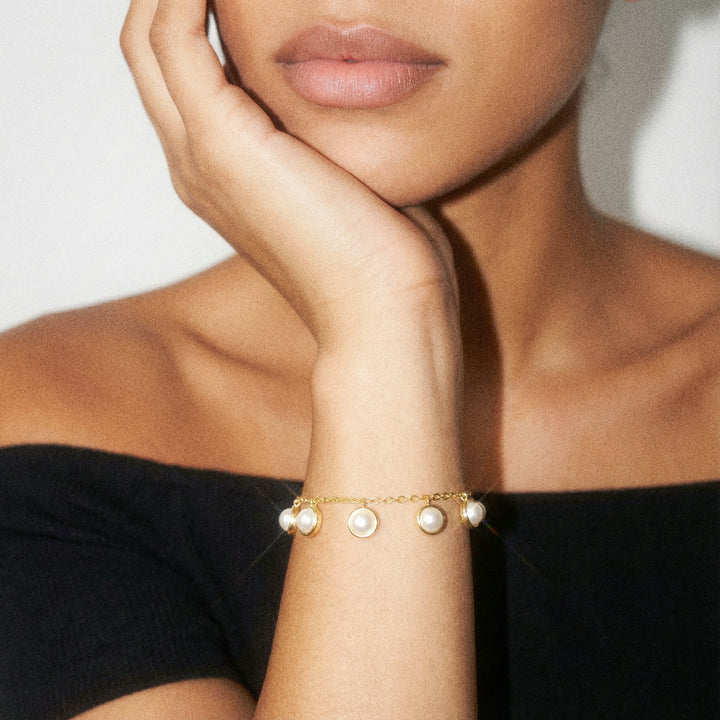
Echo metal and accent choices in wristwear to harmonise the look, repeating one metal across necklaces and bracelets or introducing a deliberate secondary metal for variety. Match scale between the pendant and bracelets by pairing large, ornate pearls with a single slimmer bracelet or a minimalist cuff, and stacking multiple slim bracelets to complement small, delicate pearls. Use short extension links on necklaces, choose adjustable bracelets, and test the set by raising your arms and moving naturally to ensure layers stay distinct and bracelets do not catch the longest chain.
Try a gold-plated pearl pendant for effortless layering.

Image by Rosa Rafael on Unsplash
Refine metal mix, texture, and care for your pearl
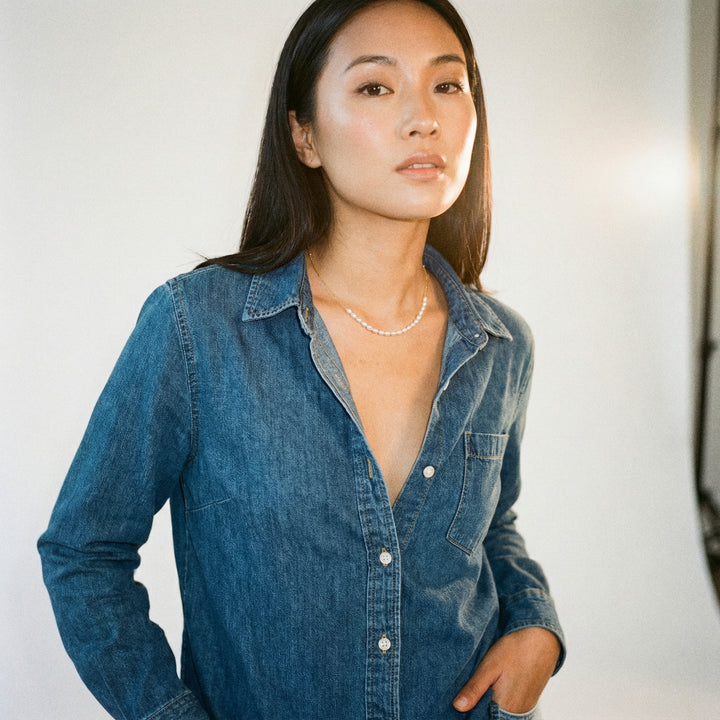
Start with clear length recipes: a short anchor layer of about 35 to 40 centimetres, a mid-length that places the pendant at the collarbone around 45 centimetres, and a longer line of 55 to 70 centimetres to elongate the neckline; space chains tightly for a clustered look or leave 5 to 10 centimetres between tiers to show distinct levels and increase a pendant's prominence. Match chain weight and texture to the pearl and its bail by choosing finer chains for small seed or drop pearls, mid-weight chains for coin or button pearls, and sturdier link styles for large baroque pearls, and always ensure the bail clears the chain's inner diameter. Use texture contrast, such as a smooth chain beneath a textured one, to highlight the pearl without overwhelming it, which helps the layers drape neatly and preserve proportion.
Create cohesion when mixing metals by repeating at least one metal across two layers, pairing warm-toned metals with cream or gold-tinged pearls and cool-toned metals with white, silver-leaning pearls, and carrying a secondary metal through a tiny bead or matching clasp. Anchor layers with multi-strand connectors, silicone stops, or small split rings, fasten heavier pendants to the sturdiest chain, and choose these fixes to reduce wear on silk knots and keep the pendant centred during movement. Remove layered necklaces before applying perfume, swimming, or exercising, wipe pearls gently with a soft, slightly damp cloth after wear, store necklaces flat or in separate pouches, and have knotted strands checked and restrung as soon as knots loosen because pearls are slightly porous and vulnerable to acids, chlorine, and abrasion.
Keep the pearl as your clear focal point by matching pendant width to the neckline and positioning the drop so it reads against the garment. Stagger chains by about 3 to 7 centimetres, vary textures and thicknesses, and test movement to keep layers distinct, prevent tangles, and let the pearl command attention.
Refer back to the practical headings on matching pendant size, building balanced layered lengths, pairing complementary earrings, and harmonising wristwear to choose lengths, metals, and textures that work together. Try combinations on, make small adjustments, and care for pearls after wear so your layered arrangements stay elegant, comfortable, and long-lasting.
See what AI thinks of this topic