






Choosing the first five pieces to form a timeless jewellery capsule can feel overwhelming when you face endless styles, materials, and fleeting trends. Which shapes, metals, and combinations will genuinely complement your wardrobe, daily life, and evolving taste?
This post guides you through defining a signature style, recognising quality markers and materials, and selecting versatile cornerstone pieces so each item earns its place. You will also learn practical mix and match strategies, and how to plan care, repairs, and warranty so your capsule moves seamlessly from day to night.

Image by Jasmin Chew on Unsplash
Define your signature style and everyday needs
Begin by auditing your wardrobe and daily routine: list the outfits you wear most, note common necklines, sleeve lengths, and fabrics, and match jewellery scale so pieces sit visibly and comfortably with those garments. Define three signature keywords, such as minimal, architectural, or romantic, and use them to filter shapes, finishes, and motifs, removing any candidate that contradicts all three to preserve cohesion. Decide on a metal strategy by choosing a primary metal for a unified look, or planning intentional mixed metals, and test each option against your skin tone and frequent clothing colours in natural light to judge harmony. Prioritise versatile silhouettes, such as studs, a fine pendant, a plain band, a medium hoop, and one adaptable statement piece, then confirm each suits at least three typical outfits.
Wear shortlisted combinations through a normal day to evaluate comfort, movement, noise, and snag risk, and record which pieces you naturally reach for and which you remove. Use those observations to refine your selection, favouring pieces that work across casual, smart, and leisure contexts and that complement your chosen keywords and metal strategy. The result is a tightly curated first five that sit well with your clothes, withstand daily life, and reflect a cohesive signature style.

Image by Dmitry Zvolskiy on Pexels
Recognise quality markers and choose materials
Start by scanning for purity stamps and hallmarks, then verify them visually: clear, deeply struck marks usually indicate solid metal, while faint or surface-only marks often point to plating. Check edges and inside surfaces for consistent colour and feel the weight for density, because a solid piece tends to feel weighty for its size and uniformly coloured edges signal solid construction rather than plating. Use simple tests such as a lightweight magnet check, and ask for an assay or composition report when available to confirm the metal without relying on appearance alone.
Inspect gemstones under good light or with a loupe to assess cut, symmetry, and internal clarity; crisp facet edges and precise symmetry create strong sparkle, uniform colour through the stone suggests natural hue rather than uneven dye, and visible inclusions or cloudiness indicate lower clarity or undisclosed treatments. Examine construction and finishing closely: smooth, even solder joints, flush settings, and secure clasps or pin closures show good workmanship. Gently press prongs and hinges to check stability, and look inside shanks and links for neat finishing rather than rough tool marks. Match the metal and gemstone properties to how you will wear the piece by considering hardness, maintenance, and skin reaction, since harder alloys resist dents while softer high-purity metals scratch more easily, and some metals develop a patina that requires upkeep.

Image by Anastasia Shuraeva on Pexels
Select cornerstone pieces for maximum versatility
Start with five cornerstone silhouettes—stud earrings, a simple chain necklace, a small hoop or huggie, a slim bangle or cuff, and a plain band ring—that cover the ear, neck, wrist, and hand to create a balanced, layerable base. Judge scale by holding pieces at arm's length so studs sit proportionally to your face shape and bracelets relate to wrist width, and select one subtle statement piece, such as a modest pendant with a small coloured stone, textured cuff, or signet-style ring, to act as focal point while the other four remain supporting basics. Choose settings and edges that lie flat against clothing to avoid catching and ensure the capsule layers cleanly.
Anchor the capsule in a single metal for cohesion, then introduce one complementary finish or a small mixed-metal accent to broaden outfit compatibility, for example pairing one warm-toned piece with two cool-toned pieces to test visual harmony. Prioritise wearability by checking clasps and hinges with a gentle tug, wearing pieces for an hour to assess comfort, confirming ring sizing by testing across the knuckles, and inspecting finishes for scratch resistance. Test each piece with three distinct looks—a casual top, a work-appropriate outfit, and a smarter evening look—and use this practical three-point checklist while trying them on. Confirm that each piece layers cleanly with others, complements at least two different colours in your wardrobe, and moves easily from day to evening without forced removal.
Add luminous pearl studs for a refined, layerable focal

Image by Alina Vilchenko on Pexels
Mix and match for day to night dressing
Begin with a pared-back stud and a fine pendant: wear the stud alone and tuck the pendant under a shirt for a low-key daytime look, then reveal the pendant and layer a second chain to create movement and a clearer focal point after hours. Choose one mid-sized hoop or drop earring that balances your face and typical hairstyles, since a smaller scale reads neat with hair up, while a longer drop or polished hoop catches light and frames the face when you remove outer layers. Include a thin bangle and one wider cuff or statement ring to alter wrist and hand presence, stack the bangle for subtle daytime shine, then add the cuff or slide on the statement ring to increase visual weight for evening, using contrast of scale and finish to change emphasis. Pick an anchor piece that doubles as focal and base, such as a signet ring, pendant, or bold chain, and keep other pieces minimal during the day so the anchor reads refined, then build complementary layers around it at night to create a deliberate, cohesive silhouette.
Consider proportion, neckline, and fabric when planning swaps: match necklace length to the neckline, keep earring size proportionate to collar width, and choose polished metals to read in low light while matte finishes sit back on textured fabrics. Photograph outfits under different lighting to confirm how each combination communicates and to refine which pieces work best for day or evening. Use scale and finish as tools to shift emphasis quickly, so a small change in layering transforms a simple daytime edit into a purposeful night look.
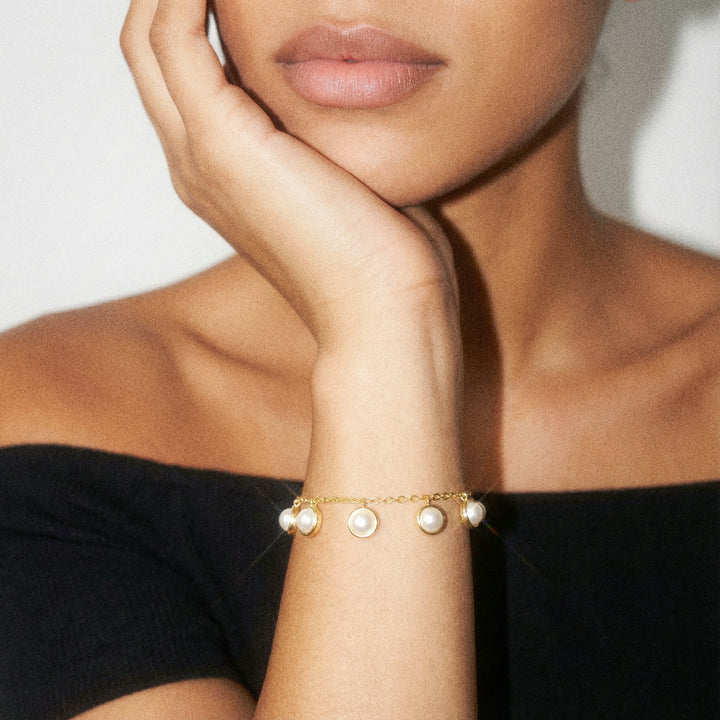
Tuck a delicate pearl for effortless day-to-night layers.

Image by Rosa Rafael on Unsplash
Care for your jewellery and plan repair and warranty
Clean solid metals and hard gemstones with a soft cloth and mild, soapy water, avoid soaking porous or treated stones such as pearls, opal, and turquoise, and never use abrasive cleaners on plated pieces. Store each item in its own soft pouch or lined compartment to prevent friction, scratches, and tangles, because contact causes visible wear and loss of plating at high-contact points. Regular, material-appropriate care preserves finish and reduces the need for invasive repairs.
Inspect pieces before and after heavy use by checking settings and prongs under strong light or a loupe, testing clasps and jump rings, and feeling chains for weak links, because early detection of gaps and wear prevents lost stones and breaks. Request clear, written warranty and repair policies that state what is covered, what voids the warranty, and whether routine maintenance such as polishing, stone tightening, or replating is included or excluded. Use repairers who can demonstrate trade accreditation or relevant experience, obtain itemised estimates and written authorisation before work begins, and record any replaced parts. Photograph each piece from multiple angles, note hallmarks and gemstone certificates, and store digital backups alongside receipts to speed up repair authorisations, insurance claims, and future resale verification.
A well-chosen five-piece jewellery capsule simplifies daily dressing while reflecting your signature style and practical needs. Prioritising durable materials, correct scale, and versatile silhouettes ensures each item earns its place across casual, work, and evening looks.
Use a wardrobe audit, hallmark and setting checks, and the three-point layering test to select pieces that integrate with your clothes and routine. Photograph combinations, store certificates and receipts, and inspect items regularly so your capsule stays cohesive, simple to maintain, and ready for resale.