



Ever felt like the perfect pair of pearls looks right on someone else but not on you? Choosing the right pearl shape can subtly alter how your face reads, turning a set that seems off into one that harmonises with your features.
This guide helps you identify your face shape, shows how round, drop, button, and baroque pearls lengthen, widen, or balance different features, and explains why shape matters. Clear recommendations on the best shapes, plus placement and styling tips for proportion and impact, will make selecting pearls straightforward and effective.

Image by cottonbro studio on Pexels
Discover why pearl shape matters
Pearl shape creates optical lines that change perceived face proportions, so try a quick mirror test: hold or imagine a necklace and note whether round pearls reinforce symmetry, or elongated pearls add vertical length to the face. Different shapes suit different features by example rather than judgement; for instance, round and oval pearls soften strong jawlines and angular cheekbones, while drop and rice shapes add length for round faces. Hold different shapes near your chin to see which balances or emphasises your natural angles.
Compare pearl size and strand placement to the distance from chin to collarbone and to the width of your face, and favour pearls that are narrower than your face so they complement rather than overwhelm your features. Uniformly round pearls sit evenly and remain centred for a stable, formal silhouette, whereas baroque and asymmetrical shapes create focal points and shift as you move, producing a livelier, contemporary effect. Smooth, symmetrical pearls reflect light evenly and read as a uniform colour, while irregular forms scatter light, introducing texture and contrast. View samples in daylight and indoor light to judge how surface and reflection flatter your skin tone and clothing, then choose shape and drape that produce the balance you want.
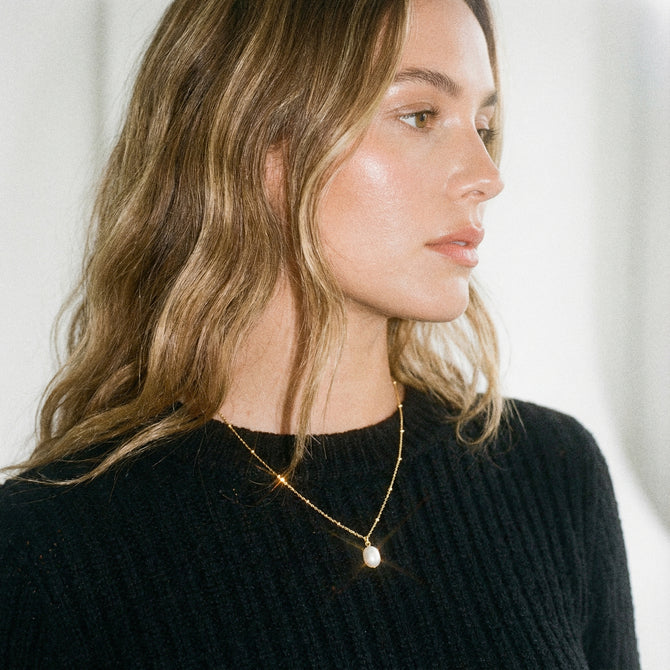
Try an 18-inch freshwater grey strand to balance your features.

Image by Andrea Piacquadio on Pexels
Identify your face shape
Begin with a simple measuring routine: pull your hair back, face a mirror or take a straight-on photograph in natural light, and measure across the forehead at the hairline, across the cheekbones at their widest point, across the jawline at the widest part, and vertically from hairline to chin. Compare the numbers to typical proportions; if length noticeably exceeds width you probably have a long face, while similar length and width with soft contours suggests a round face. Use concise feature markers to refine the result: an oval face shows a slightly wider forehead than chin with a gently rounded jaw, a square face has similar widths across forehead, cheekbones, and jaw with an angular jaw, a heart shape presents a wide forehead and a narrow chin, and a diamond has a narrow forehead and jaw with the widest point at the cheekbones. If measurements remain ambiguous, hold earring shapes or paper cut-outs next to a tied-back photograph to see which silhouette balances your proportions.
Control for variables by using consistent natural light, keeping a neutral expression, and removing hair and jewellery that obscure the hairline or jaw. Verify shape with low-tech tests such as overlaying oval, round, or long templates on a frontal photo, or photographing different earring styles to observe which outlines reduce or accentuate your jaw and forehead. Avoid angled selfies and close-ups that distort proportions, inspect your profile to assess chin projection and forehead slope, and repeat measurements on more than one day to account for normal variation.
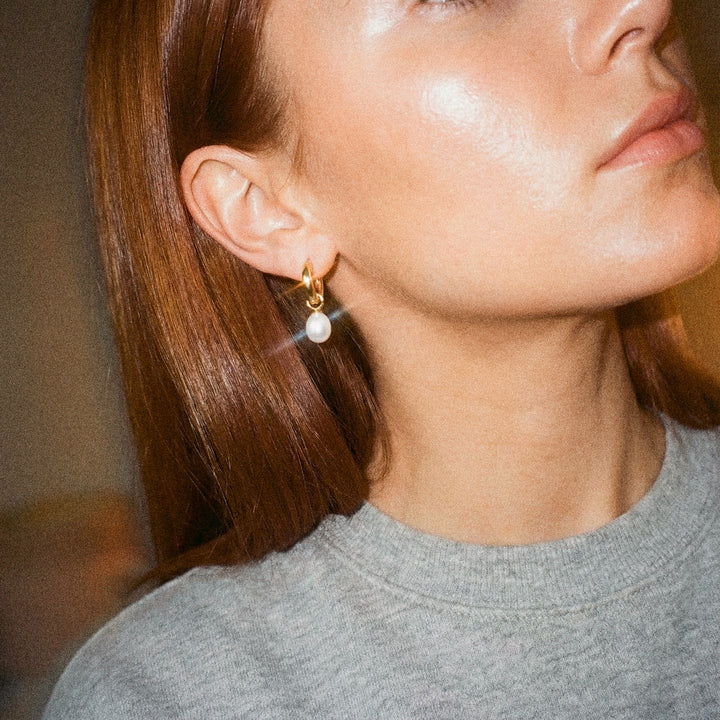
Wear pearl drop earrings to soften and balance your profile

Image by Mihaela Claudia Puscas on Pexels
See how pearl shapes change facial proportions
Match pearl shape to face shape by deciding whether you want to add vertical emphasis or horizontal width; elongated pearls lengthen the face, while round pearls soften angles and reduce perceived jaw width. For round, oval, square, heart, and long faces, choose teardrop or navette shapes to add length, coin or flat pearls to emphasise cheekbones, and round pearls to soften a square jaw. Baroque and asymmetrical pearls break the eye with texture and form, making them effective at distracting from facial asymmetry. These pairings rely on simple visual principles: vertical elements create a lengthening line, horizontal elements increase apparent width, and surface texture redirects attention.
Test ideas at home by taking straight on and full length photos while holding or sketching different pearl shapes at the jaw and neckline, then note changes in chin width and perceived forehead height. Match scale to bone structure by choosing smaller, closely set pearls for petite faces, medium proportions for average frames, and larger drops or clusters for broader faces so pearls neither disappear nor overpower features. Try short studs or chokers with hair that exposes the jaw to widen the face, and long drops with higher necklines to add length, and coordinate earring length with collar shape to control where the eye rests.
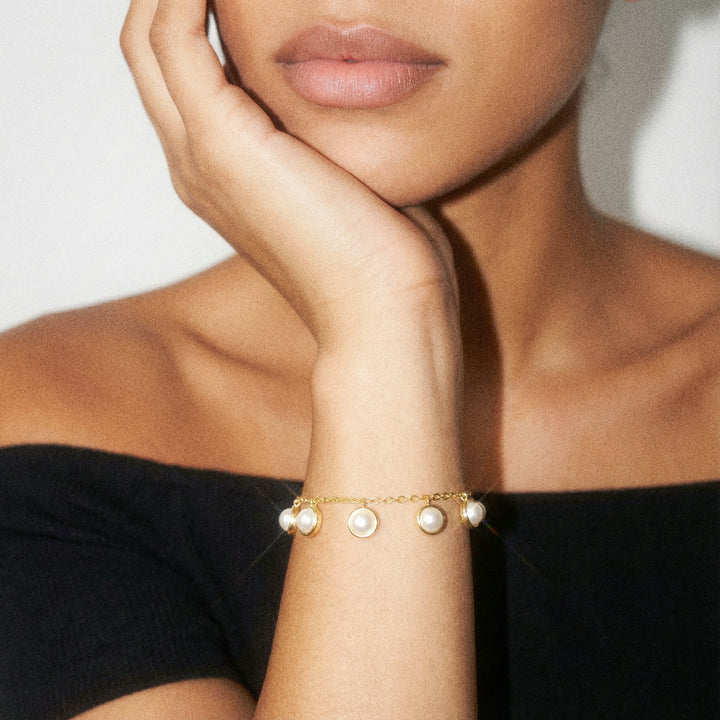
Add length with teardrop pearl earrings at the jawline

Image by Rene Terp on Pexels
Choose the best pearl shape for your face type
Measure your forehead, cheekbones, jawline, and face length, then compare proportions to classify your face as oval, round, square, heart, or long. Use that classification to choose pearl shapes that lengthen, widen, or soften the face: oval faces accept most shapes, round faces gain vertical balance from elongated drops or rice pearls, and square faces are softened by round or button pearls. Heart-shaped faces work well with teardrop or baroque pearls that add width low on the face, while long faces suit round studs or short strands that provide horizontal emphasis.
Match pearl shape to necklace length and neckline so the jewellery balances rather than competes with clothing; short, round strands create horizontal emphasis, while longer pendants and drops create vertical lines. Test pieces in natural light with hair pulled back, view straight on and from three-quarter angles at about one metre, and photograph them with the outfit to see where the pearl draws attention. Control visual weight by pairing delicate pearls with thin chains, and larger pearls with bolder settings, while mixing shapes for contrast but keeping scale appropriate to your face. Consider context too: classic round strands read as traditional at British holidays, and irregular baroque pearls convey a contemporary, relaxed tone, so choose pieces that support the look you want.
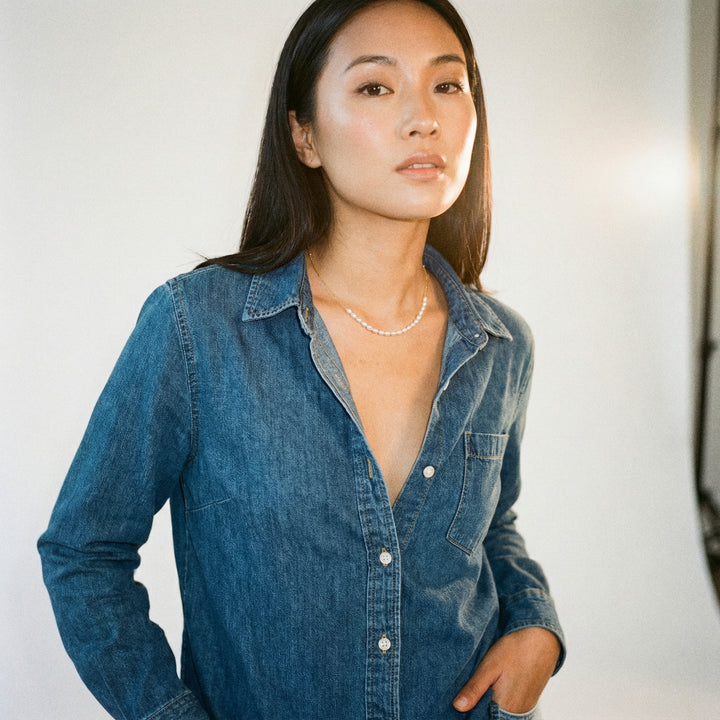
Choose a drop pearl to lengthen and soften your face.

Image by Andrea Piacquadio on Pexels
Style pearls for proportion, placement, and impact
Match pearl shapes to face shapes: round faces benefit from elongated drops or oval pearls to add vertical emphasis, oval faces tolerate round or button pearls because their balanced proportions suit most shapes, and square jaws soften with round, baroque, or coin pearls that introduce curves. Counter a heart shape with teardrop pendants or lower-hanging drops to shift attention from the forehead to the chin, while long faces gain perceived width from wider, shorter strands or clustered rounds. Choose pearl diameter and cluster size to relate to your features rather than arbitrary size, with petite faces favouring smaller studs and delicate strands, average faces working well with classic medium beads, and broader features using larger, clustered pearls to achieve balance.
Place the visual focal point where you want the eye to rest: chokers and collar-length pieces add width and draw attention to the neck, princess-length strands at the collarbone bring focus to the face, and pendants or long ropes create vertical lines that lengthen the silhouette. For earring effects, pick studs or small rounds to preserve symmetry and emphasise cheekbones, vertical drops or teardrops to elongate round faces, and softly contoured baroque shapes to soften square angles, while avoiding overly long, blunt forms on short necks that shorten the perceived line. Use mirror checks, turning to profile and three-quarter views, to judge whether an earring length alters perceived proportions, and experiment with one change at a time to identify the most effective adjustment. Combine a focal drop or pendant with a strand of smaller rounds, or mix baroque and coin pearls for texture, because highly lustrous, smooth rounds read lighter from a distance while irregular, textured pearls read heavier and can anchor a look.
Pearl shape alters perceived facial proportions, so selecting shapes and placement with your measurements and features in mind creates clearer balance and impact. Mirror checks, measured proportions, and photographs reliably show which pearls lengthen, widen, or soften the face, and surface texture and strand placement further direct the eye.
Follow the guide: identify your face shape, test different shapes at the jaw and neckline, and match bead size and strand length to your bone structure and clothing. Try one targeted change, photograph the result, and keep the option that best harmonises with your features so your pearls work with, not against, your natural proportions.